Category: English

  • SOCIAL IMPACT OF INTERNET OF THINGS( IoT)– BOON or BAN

    -K. HARINI

    Impact of IoT in Financial Services – Insurance Industry                   

    Introduction:

    Nearly Two billion people are connected to the internet.  During the last twenty years, the technology revolution had an intense and irreversible impact on Human life.  We all are aware of the internet.  IoT is the advancement of the internet.  IoT allows virtually endless connections and operations to take place. “Anything that can be connected, will be connected “by IoT.  The Primary objective of this research paper is to analyze the impact of IoT in the insurance Industry which is a major part of financial services.  The IoT made financial service available to more customers and eliminated geographical barriers.  This paper also discusses the origin of IoT, IoT in different types of Insurance and the application of IoT in the insurance industry by foreign Nations.

    What is IoT?

    IoT is the network or system of an interrelated computing device, sensors, living creatures or objects that have unique identifiers and can communicate with another device on the internet.  These objects or “things “are capable of transmitting data.  In other words, in IoT real, physical and virtual world interact with each other.  It is independent communication between objects that helps optimize operation, reduce cost, boost productivity and improve lives.

    “ IoT “ started life as the title of a presentation made by “Kevin Ashton”, an American scientist at European Union conference held at  “Proctor & Gamble   ( P & G )” in 1999.  According to Kevin Ashton, we need to empower computers with their own means of gathering information, so they can see, hear, smell the world for themselves, in all its random glory.  If we had computers that knew everything there was to know about things use data they gathered without any help from us.  We would be able to track and count everything and greatly reduce waste, loss and cost.  We would know when things needed replacing, repairing or recalling and whether they were fresh or past their best.

    Role of Iot in Insurance Industry:

    According to Robert mehr,” Insurance is a social device for reducing risk by combining a sufficient number of exposures to make their individual losses collectively predictable.  The predictable loss is then shared proportionately by all those in the combination”.

    Insurance is a  contract between two parties namely, the Insured and the Insurer.  Insured is the person who insures his life or property and insurer is the company which undertakes to compensate the loss incurred by the insured for a consideration called premium.  The contract of Insurance is also called a contract of indemnity except for life insurance, as the insured is only compensated and not allowed to  earn  any profit from the contract.

    As the Internet of Things begins to deliver gains in productivity and savings on everything from appliances and automobiles to turbines and pipelines, new opportunities have emerged in the realm of finance. The networks of sensors and Big Data analytics that help prescribe more efficient maintenance schedules and predict potential system failures can also deliver new levels of transparency to those who provide loans and insurance to these industrial and infrastructure investments.

    The  IoT plays an efficient role in house, life, vehicle, fire and marine insurance.

    1. A. Wearable or personal technology
    2. Sensors on objects
    3. Location Sensors
    4. Geographical information system (GIS) 
    1. A. Wearable or personal technology:

    Sometimes monitoring heart rate, steps walked and other health-related metrics. This technology is rapidly developing, with prototype patches already performing blood work and ECGs and automatically administering drug doses.

    2. Sensors on objects:

    It includes personal and commercial vehicles and shipping containers, that measure distances traveled, speeds and frequency and level of braking.

    3. Location Sensors:                

    Such as those in  sensors, including “smart thermostats,” security technologies, such as alarms and cameras, and industrial control systems.

    4. Geographical information system (GIS):

    As well and that may include drone and satellite imagery While this data is directly accessible by or streams to insurers via sensors or mobile devices, third-party organizations may also play a role in owning, aggregating, and distributing to insurers. All of these data types are potentially useful for the full range of products and lines of business, from commercial (which was an early adopter and has been an advanced user of such data for many years), to life, property and casualty and health.

    IoT in Life Insurance:

    Sensory devices such as wearables, nearables and Hearables have unique advantages, each with an aim of simplifying the human lifestyle.

    1. Wearables: 
    • Using body sensors for health monitoring to stay fit and guard against any health hazards.
    • Remotely manage equipment such as machinery on an assembly line, making the work place safer for employees.
    • Hands free access to data via smart glasses or a smart watch.
    1. Nearables: 
    • When entering a movie theatre for eg: beacons could be automatically silencing your phone.
    • Nearables deployed on a laptop send information regarding Laptop sense information laptop excess heating to smart phones.
    • Will remind the user through smartphone if he forgets the laptop at any place. 
    1. Hearables: 
    • It reelects light off to blood vessels near the skins surface to track heart rate, temperature, speed and distance while allowing the user to enjoy music simultaneously.
    • A user’s fitness data, including calories burned, can be sent to a smart phone through Bluetooth.

    Iot in House Insurance (Smart Homes):

    What do you get if you combine the Internet of Things with the business of home insurance? U.K. startup Neos is hoping the answer is prevention rather than (just) payouts.

    Its home insurance product is intended to lean on sensor tech and wireless connectivity to reduce home-related risks — like fire and water damage, break-ins and burglary — by having customers install a range of largely third-party internet-connected sensors inside their home, included in the price of the insurance product. So, it’s a smart home via the insured backdoor, as it were.

    Customers also get an app to manage the various sensors so they can monitor and even control some of the connected components, which can include motion sensors, cameras and smoke detectors.

    The Neos  app is also designed to alert users to potentially problematic events — like the front door being left open or water starting to leak under their kitchen sink — the associated risk of which a little timely intervention might well mitigate.

    It sees additional revenue opportunity there too — and is aiming to connect customers with repair services via its platform. So, the service could help a customer who’s away on holiday arrange for a plumber to come in and fix their leaky sink, for example (there are no smart locks currently involved in the equation, though — Neos customer can name trusted keyholders to be contacted in their absence).

    “The vision really is about moving insurance from a traditional claim, payout type solution… to one that’s much more preventative, and technology’s really the enabler for that,” says co-founder Matt Poll. “We also think that customers get quite a raw deal from their insurance company… for being a really good customer and not claiming… And no value.

    “So, what we’re trying to do is to provide value to customers throughout the term of their policy — allowing them to monitor their own homes, using our cameras and the devices that we give them. If there is an issue, they’ll get alerted. Most importantly they or us through our monitoring center and assistance service can put the things right… In that sense, both the customer and us benefit if we’re successful.”

    On the insurance cover front, Poll claims there’s no new responsibilities being placed on customers’ shoulders — despite all the sensor kit that’s installed as part of the package. “There’s no responsibility placed on the customer. We’re really clear about that,” he tells TechCrunch. “Customers do ask this question — oh what if I don’t arm the alarm, does that mean I’m not covered? And our answer is simply of course you’re covered.”

    The startup was founded 18 months ago by Poll, an ex-insurance guy, combining with a more technical co-founder. The team market tested their proposition last year in and around London, partnering with Hiscox on the insurance product offering for that trial. They’re now launching their own branded insurance offering nationwide.

    Neos is actually offering a range of home insurance products, including a combined content plus buildings insurance offering (or either/or) across three pricing tiers — aiming to support different levels of coverage and different types of customers, such as flat versus house dwellers, for example, or homeowners versus tenants.

    While it’s generally aiming to be tech agnostic when it comes to which smart home sensors can be used — supporting a range of third-party devices — Neos has developed its own smart water valve, for example, as Poll says it couldn’t find an appropriate existing bit of IoT kit in the market for that.

    “It uses machine learning to monitor an individual’s water signature within their property over a period of a couple of weeks and then we can identify from that if there’s any leaks — small or large.

    Impact of Iot in Insurance Industry:

    The IoT’s impact within insurance is coming fully into focus. At the highest level, better use of IoT and sensor data means insurers have the opportunity to:

    • Establish direct, unmediated customer relationships
    • Gain more granular and precise understanding of who their customers are and how their needs    change over time
    • Individualize offerings of products, features and access options For insurers that have relied on agents and brokers,

    customer data represents enormous change. Historically, much customer data was unavailable, and the information insurers could access was often subjective or inaccurate. Consider the common misrepresentation of data around certain behaviors driven per week) on insurance applications. The IoT opening up new possibilities in many functions. Coupled with advanced analytics capabilities, new data streams and sources have set the foundation for entirely new business models. Usage-based insurance (UBI) — so-called “pay-as-you-live” or “pay-as-you-drive” business models — have quickly moved out of pilot phases and proved their viability and value around the world. In fact, there are an estimated 5 million active UBI policies in 35 different countries. From this relatively low base,

    EY estimates that UBI policies will reach 15% market penetration by 2020 in Europe, Asia and the Americas. 

    Conclusion: 

    IoT made close relationship between insurer and customer.  This helps the insurer to understand their customers well and in an expansion of the business.  Through the service rendered by the insurance company, customers able to lead a safe and comfortable life.  Thus, IoT creates a positive impact on both the customer and insurer’s life.

    REFERENCES:

    1. RFID journal
    2. IoT – enabled Banking services – INFOSYS
    3. Wearable Devices and their Applicability in the Life Insurance Industry –  CAPGEMINI Consulting.
    1. The Internet of Things in insurance – EYGM Ltd., Article.
    2. Financing the internet of Things: An early Glimpse of the potential – HARVARD,   Kennedy School.
    1. Financial Services (Indian Financial system) – Mr. Santhanam – Margham  Publications, 24, Rameswaram Road, T. Nagar, Chennai-17.

    *****

    The writer is an II – B.Com., student                                                                 Theivanai Ammal College for Women.

     

    Share
  • Conceive, Believe and Achieve your Goals

     Muthu G Mudaliar, MS, MBA, RFC


    WHAT are your goals for the future. Having a clear vision of a desirable future destination is a must. It also usually includes a time frame in which you are committed to make it real

    When we use our intuition to help ourselves achieve our long-term goals, one of the two things will happen:

    1. We get the results we want and achieve our goal or
    2. We learn the lessons that are required to ultimately reach our goal.

    The important thing to observe here is that you cannot really lo


    Clear vision of desirable future will allow your brain to get specific about identifying what stands in the way and forces you to create some higher capability and increase confidence.  It must be something you are very passionate and committed with enough time, efforts and resources.


    WHY you want it. You should do enough research to support your goals with lots of reasons.

    The economic failures after 9/11 and 2008 taught most of us that we are not protected by any one career or company. As we watched our friends and parents lose their jobs, we realized that we need to diversify our skill sets, multiple income sources and rely on ourselves.

    Ask yourself the following questions when Conflict begins?

    1. Are you happy with your life the way it is, or do you feel a calling for more control over your personal satisfaction and self-fulfillment?
    2. Would you be willing to trust that what feels intuitively right is really coming from a bigger perspective of who you really are.


    We hear success stories of the people who lost their job or wealth and took a chance to start their own company. If you Start your own company, you can control your career and your life. As an entrepreneur you will take steps do something on the side or full time with a big source of inspiration, creativity and liberating feeling. Learning how to listen to your intuition and invest in yourself to learn new knowledge is a must.

    The fear of Disapproval:

    1. One of the most powerful forces that keeps us from acting on what feels right is the fear of disapproval.
    2. If what you felt right were in conflict with getting that approval    we often chose to go for the approval rather than to be punished in some way. 


    Ask yourself these questions:

    1. Are you willing to trust and act on what you feel intuitively right and make few more mistakes in the process, if you know you will achieve your goals faster?
    2. How would you approach your life and work differently if you knew you could not lose?


    What is required to unlock the power is the right mind set and skills that all emerging entrepreneurs possess. 

    Learning how to listen to your intuition & being able to sense what feels intuitively right can be a  challenge.  


    You cannot control what is happening to you, but you will have more control on how to react to face the challenges and win. It requires courage to go from comfort zone into unknown territory. Proper habits and discipline will help you.


    WHAT you want is clear vision of desirable future will allow your brain to get specific about identifying what stands in the way and forces you to create some higher capability and increase confidence.  It must be something you are very passionate and committed with enough time , efforts.

    HOW to  achieve what you want from your experience and not discouraged by the fear of unknown.                            

    You will discover HOW If you commit enough time, effort and resources. Identify individuals who have already achieved WHAT you want and learn their habits, experience and achievements. You do not have to re-invent the wheels. Please read the books, watch videos from thought leaders like Brian Tracy and watch the Maximum Achievement Movie to Learn the 7 secrets of success.

    In spite of all your well-planned efforts and successful executions, you will face challenges and failures.   Emerging technology, government regulations etc. can cause Major disruptions to your target market. You can not control what is happening to you and your businesses, but you can control how to respond.

    4 PILLARS OF WEALTH: Money, Health, Happiness and Wisdom

    MONEY is something you earn from your profession, your investments and inheritance, It is essential that everyone has sufficient money to provide the food on the table, roof over your head, clothes to cover your body and make a living with a lifestyle you want. Divorces and suicides are common among wealthy. Money is not a requirement to nurture healthy and happy relationships. You also need wisdom to nurture happy relationships and manage money with trusted advisors.

    HEALTH is very important to enjoy wealth. You have to eat right, exercise regularly and have healthy habits. Abusing body with excessive simple pleasures and bad relationships can bring misery, sickness, disabilities and pre-mature death.

    HAPPYNESS can truly achieved only with loving relationship with your kids, spouse, parents and respect from your community of friends you have. Abusing money and authority can bring mistrust and misery.

    WISDOM is the most important pillar and more difficult one to achieve than all other pillars.

    Wisdom is to strike a proper balance in making money, maintain health and nurture relationships.

    Wisdom is to know that we have more control only on our efforts but not  in achieving desired results.

    Wisdom is to capitalize our talents, knowledge and strength to focus our efforts on tasks on hand.

    Wisdom is to know what we can change and what we cannot change given the challenges we face everyday.

    RETIREMENT PLANNING and SAFE-MONEY CONCEPTS.

    Let us take a critical look at the traps of traditional 401K, Pensions and IRA Plans. Traditional retirement plans are subject to ERISA Contribution limits, penalties, restrictions and stock market losses.

    Most persons love instant gratification of saving taxes by tax deferral on contributions today. But you are not saving any taxes and only deferring taxes and tax calculations. It is wise to pay $ 1 taxes today on contributions or seed instead of paying up to $ 10 in taxes on future retirement income or harvest.  Please browse the Website   http://livingbenefitsexperts.com/muthu  and watch videos & testimonials.

    Please click the links below to watch these videos to learn about Retirement and safe money concepts.

    Click the links be;ow ro watch Safe Money Concepts websites
    webprez.com/6913/51 Tax Free Retirement Income
    webprez.com/6913/50 Life Time Tax Strategy
    webprez.com/6913/44 Bank yourself to Wealth
    webprez.com/6913/31 Corporate Benefits for CEO & Key Executives.
    webprez.com/6913/69 Living Trust Benefits


    Share
  • கொரிய நாட்டுக் கவிக்குயில் கிம் யாங் – ஷிக்


    பவள சங்கரி


    கொரிய நாட்டின் குறிப்பிடத்தக்க உன்னதமான கவிஞர்களில் திருமிகு கிம் யாங்-ஷிக் முக்கிய இடத்தில் உள்ளவர். இவர்தம் மனித நேயம், மனித வாழ்க்கை குறித்த ஆழ்ந்த உள்ளுணர்வு போன்றவை இவருடைய படைப்புகளை இவர்தம் சமகாலக்  கலைஞர்களின் படைப்புகளிடமிருந்து வேறுபடுத்திக்காட்டுகின்றன என்றால் அது மிகைக்கூற்றல்ல. இவர்தம் எழுத்துகள் இவர் கொரிய நாட்டின் மீது மட்டுமின்றி அனைத்துலக மனிதர்களின் மீதும் மிக நெருங்கிய நேசம் கொண்டவர் என்பதை வெளிப்படுத்துகின்றன. மனித வாழ்க்கை குறித்த ஆழ்ந்த புரிதலை வெளிப்படுத்தக்கூடியவை இவர்தம் கவிதைகள். மெய்யியலும், ஆன்மீகவியலும் ஒருசேர இணைந்த கவின்மிகு படைப்புக்களாக உள்ளன.

    இந்திய அரசிடமிருந்து பத்மஸ்ரீ விருது பெற்றுள்ள கவிஞர் கிம் யாங் – ஷிக் அவர்கள் கொரிய நாட்டின் சியோல் நகரில் 1931 ஆம் ஆண்டில் பிறந்தவர். ஆங்கில இலக்கியத்தை ஈஹா பல்கலைக்கழகத்தில் பயின்று,  இந்தியத் தத்துவங்கள் குறித்த முதுநிலை பட்டப்படிப்பை சியோல் நகரின் டோங்குக் (Dongkuk) பல்கலைக்கழகத்தில் பயின்றவர். 1998இல் Academy of International Congress of Poets மூலமாக H.Phd. Lit, என்ற உயரிய பட்டம் பெற்றவர். கிம் யாங் – ஷிக் கொரிய மொழியில் பல இலக்கியப் படைப்புகளை வெளியிட்டுள்ள மிகச்சிறந்த கொரிய கவிஞரும், தற்போதைய, கொரியாவின் தாகூர் சங்கத் தலைவரும், இந்தியக் கலை அருங்காட்சியக இயக்குநரும் ஆவார். சியோல், சர்வதேசக் கொரிய எழுத்து மையத்தின் (The International Pen-Korean Centre) உறுப்பினர், ஈஹா இலக்கிய எழுத்தாளர்கள் கூட்டமைப்பின் ஆலோசகர், கொரிய பெண் எழுத்தாளர்கள் கூட்டமைப்பின் ஆலோசகர் என்பன போன்ற பல சமூக, இலக்கியப் பொறுப்புகளில் இவர் ஆர்வமுடன் செயல்படுபவர்.

    இவர் பெற்றுள்ள விருதுகளுள் The current Literature of korea ’69/’Mse’ of World Poetry – 2nd World Congress of Poets in Taipei, ‘Diploma Aureun Honoris Causa’ – 3rd World Congress of Poets in Baltimore, USA, பத்மஸ்ரீ விருது, ‘PEN Literary Award’ போன்ற விருதுகள் குறிப்பிடத்தக்கன. இவர்தம் அற்புதமான கவிதைகளைத் தமிழில் மொழிபெயர்ப்பதில் பெருமிதம் கொள்கிறேன். அம்மையார் கிம் யாங் ஷிக் அன்புகூர்ந்து தாம் கையொப்பமிட்டத் தமது கவிதை நூலை தென் கொரியாவிலிருந்து எனக்கு அனுப்பியிருந்ததை நன்றியுடன் வாசகர்களுடன்  பகிர்ந்துகொள்வதோடு அதை அவர் எனக்களித்த கௌரவமாகவும் கருதுகின்றேன்.

    சில ஆண்டுகளாகக் கொரிய – தமிழ் மொழித்தொடர்பு, பண்பாடு, கலாச்சாரம், பாரம்பரியப் பழக்கவழக்கங்கள் போன்றவற்றில் ஏற்பட்ட ஆர்வம் காரணமாகப் பல்வேறு மொழிகளில் மொழிபெயர்க்கப்பட்ட கொரிய மொழி இலக்கியங்களைப் பயிலவும், சிலவற்றை ஆங்கில மொழிபெயர்ப்பிலிருந்து தமிழில் மொழிமாற்றம் செய்யவும் முனைந்துள்ளேன். சமீபத்தில் கொரிய-தமிழ் கலாச்சார உறவுகள் தொடர்பான, ‘சாம்குக்யுசா’ என்ற கொரிய நாட்டுத் தொன்மத்தின் அடிப்படையிலான, “கடைச்சங்கத்தில் கொங்கு கலாச்சாரம்” என்ற நூல் வெளியிட்டுள்ளேன். இவற்றின் மூலம் சில கொரிய நண்பர்களைப் பெறும் நல்வாய்ப்பும் அமையப்பெற்றேன். அந்த வகையில் பண்டைய கொரிய மொழி  தமிழ் மொழி ஆகியவற்றிற்கு இடையே உள்ள பண்பாட்டுப் பரிமாற்றம்  குறித்த ஆய்வுகளை  மேற்கொண்டுவரும் திரு யங் கிமுன் அவர்களின் மூலம் அறிமுகமான கொரிய கவிஞர் கிம் யாங்-ஷிக் அவர்களின் கவிதை நூலைத் தமிழில் மொழிபெயர்க்கும் வாய்ப்பு கிடைத்ததைப் பெருமையாகக் கருதுகிறேன்.

    1981ஆம் ஆண்டு நிறுவப்பட்டு முழுமையாக இந்தியாவிற்கும், இந்தியர்களுக்காகவும் அர்ப்பணிக்கப்பட்ட, கொரிய தாகூர் சங்கத்தின் நிறுவனரும், தலைவருமான திருமிகு கிம் யாங்-ஷிக் இந்திய நாட்டின் பெருங்கவி இரபீந்திரநாத் தாகூர் மற்றும் தன்னிகரில்லாத் தலைவரும் சுதந்திரப்போராட்ட வீரருமான காந்தியடிகள் ஆகியோர் மீது மிகுந்த மரியாதை கொண்டிருப்பவர்.  தாகூர் சங்கத்தின் நிழற்குடையின் கீழ் இந்திய ஓவியங்கள், பரதக்கலை, நாடகம், இலக்கியம், மதங்கள், தத்துவங்கள் குறித்த ஆய்வுகள் நடத்தப்பெறுகின்றன. முதன்முதலில் இந்தி மொழியில் மொழிபெயர்க்கப்பட்ட கொரியக் கவிதைகளை இயற்றிய கவிஞர் என்ற பெரும்பேறும் இவர் பெற்றுள்ளார். இந்தியத் திருநாட்டிற்கு 30 முறைகளுக்கும் மேல் வருகைபுரிந்துள்ள மீப்பெரும் கொரிய இலக்கிய ஆளுமை கொண்டவர் இவர் என்பதும் குறிப்பிடத்தக்கது. தம்முடைய இளம் வயதிலிருந்தே தாகூரின் கவிதைகளைத் தொடர்ந்து வாசித்து வருவதோடு அவர்தம் கவிதைகள் மீது அதீத ஈடுபாடு கொண்டிருப்பவர் என்பதை அவருடைய சொந்தக் கவிதைகள் மூலம் அறிய முடிகின்றது. மனிதர்களின் துன்பங்களைக் கண்டு ஆழ்ந்த இரக்கம் மேலிட, வாசகர்களின் உள்ளத்தை உருகச்செய்யும் படைப்புகள் மூலம் அதை வெளிப்படுத்துவதிலும் வல்லவர் .

    தாகூரின் கவிதைகளின் தாக்கம் இவர்தம் படைப்புகளிலும் மிளிர்வதையும், நிமிர்ந்த நன்னடை, நேர்கொண்ட பார்வை கொண்ட பாரதி கண்ட புதுமைப் பெண்ணாக இருக்கின்றார் என்ற எண்ணத்தையும் இவர்தம் படைப்புக்கள் நமக்குள் விதைக்கத்தான் செய்கின்றன! மெல்லிய மலர் இதழ்களால் வருடுவது போன்ற இதமானதோர் உணர்வை படிப்போர் உள்ளத்தில் ஊடுருவச் செய்யும் இவர்தம் கவிதைகள் தாகூரின் படைப்புகளை நினைவூட்டத் தவறுவதில்லை. சகோதரர், அன்னை, அன்புக்கணவர் என மனித உறவுகளை உயிராக மதிக்கும் இவர்தம் இளகிய அன்பு மனத்தை இவருடைய படைப்புகளின் மூலம் நாம் உணர முடிகின்றது. கவிஞர் கண்ணதாசன் தமக்குத்தாமே இரங்கல் கவிதை எழுதிக்கொண்டதை நினைவூட்டும் விதமாக கவிஞர் கிம் அவர்களின், ‘புனையா ஓவியம்’ எனும் கவிதையைக் குறிப்பிடலாம். இப்படி பல்வேறு நிலைகளில் படிப்போர் உள்ளத்தில் பெருந்தாக்கத்தை ஏற்படுத்தும் கவிதைகளாக  விதி, இரங்கற்பா, இலையுதிர் காலம் எனும் தலைப்பில் அமைந்த கவிதைகளைக் குறிப்பிடலாம். இவர்தம் இயற்கைக் காதலை வெளிப்படுத்தும்வண்ணம் இவர் படைப்புகளில்  மலர், பசும்புல்,  பனித்துளி, மேகம், வானம், மரங்கள், பறவைகள் தொடர்பான காட்சிப் படிமங்கள் பெரும் பங்கு வகிக்கின்றன. இயற்கையின் உன்னத படைப்பான மனிதர்களின் மீது அதீத அன்பு கொண்ட இக்கவியுள்ளம் மனிதர்களின் இன்ப துன்பங்களை அழகுறப் படம்பிடித்துக் காட்டுவதோடு, வேதனையில் வாடும் உள்ளங்களுக்கு நம்பிக்கை விதைகளையும் விதைக்கத் தவறவில்லை.

    தமிழில் மொழிபெயர்க்கப்பட்டுள்ள இவரது பனுவல்களை உள்ளடக்கிய இத்தொகுப்பு கொரிய மக்களின் கலாச்சாரம், பண்பாடு, மனித நேயம் என அனைத்தையும் ஒருசேர படம் பிடித்துக் காட்டுகின்றது. இந்தியாவைப் பற்றிய இவர்தம் கவிதைகள் அனைத்தும் நம் நாட்டின் மீதும் நம் நாட்டு மக்களின் மீதும் இவர் கொண்டுள்ள அதீத அன்பையும், பாசத்தையும் வெளிப்படுத்துகின்றன. இந்திய மக்களின் மீது, குறிப்பாக இந்தியச் சிறார்களின் மீது அவர் கொண்டுள்ள அக்கறையையும், பாசத்தையும் வெளிப்படுத்துவதாகவே இத்தொகுப்பின் சில கவிதைகள் அமைந்துள்ளன.

    தெற்காசிய நாடுகளின் கொரிய மொழிக்கல்வித் திட்டங்களுக்குத் தமது சிறப்பான பங்களிப்பையும் இவர் அளித்து வருவது வரவேற்பிற்குரியது. கொரிய – இந்திய அறிவு சார்ந்த, பண்பாட்டு கலாச்சார உறவுகளை வலுப்படுத்துவதில் இவருடைய பங்களிப்பு அளப்பரியது. தில்லி, ஜவஹர்லால் நேரு பல்கலைக்கழகத்தின் மீது தனிப்பட்ட அன்பு கொண்டவரான இக்கவிஞர், அங்கு கொரிய கல்வித் திட்டங்களை வலுப்படுத்தி ஊக்குவிக்கும் முகமாக தமது உதவிக்கரங்களை நீட்டியுள்ளது பெருமைக்குரியது. ஆயிரக்கணக்கான கொரிய மற்றும் உலக இலக்கியங்களின் மிகச்சிறந்த நூல்களையும், இதழ்களையும் மனமுவந்து அளித்துள்ளதோடு, ‘கிம் யாங் – ஷிக் ஊக்கத்தொகை’  என்ற பெயரில் நிதி நல்கையும் வழங்கியுள்ளார் என்பது குறிப்பிடத்தக்கது.

    இவர் இந்தியாவின் கலாச்சாரத் தொன்மை மட்டுமன்றி, தத்துவம், சமூகம், படைப்பாற்றல் மற்றும் அழகியல் பரிமாணங்கள் போன்ற அனைத்திலும் விழிப்புணர்வு ஏற்படுத்தி வருவதை இவர்தம் படைப்புகள் மூலம் உணர்ந்துகொள்ள முடிகின்றது. இவருடைய பல படைப்புகள் ஆங்கிலம், சீனம், ஜப்பானியம், உருசிய மொழி, போலிஷ், இந்தி போன்ற பல மொழிகளில் பெயர்க்கப்பட்டுள்ளதும் குறிப்பிடத்தக்கது.

    இந்திய எழுத்தாளர்கள், கவிஞர்கள், கொரிய – இந்திய உறவில் நாட்டம் கொண்ட நல்லுள்ளங்கள் சார்பில் திருமிகு கிம் யாங்-ஷிக்  அம்மையார் அவர்களை, இன்னும் பல்லாண்டு இலக்கிய உலகில் திறம்பட வலம்வந்து,  இந்திய நாட்டின்மீது ஆழமான அன்புடன், நீண்ட ஆயுளும், நிறைவான உடல் நலமும் பெற்று வாழ  உளமார வாழ்த்தி வணங்குகிறேன்.

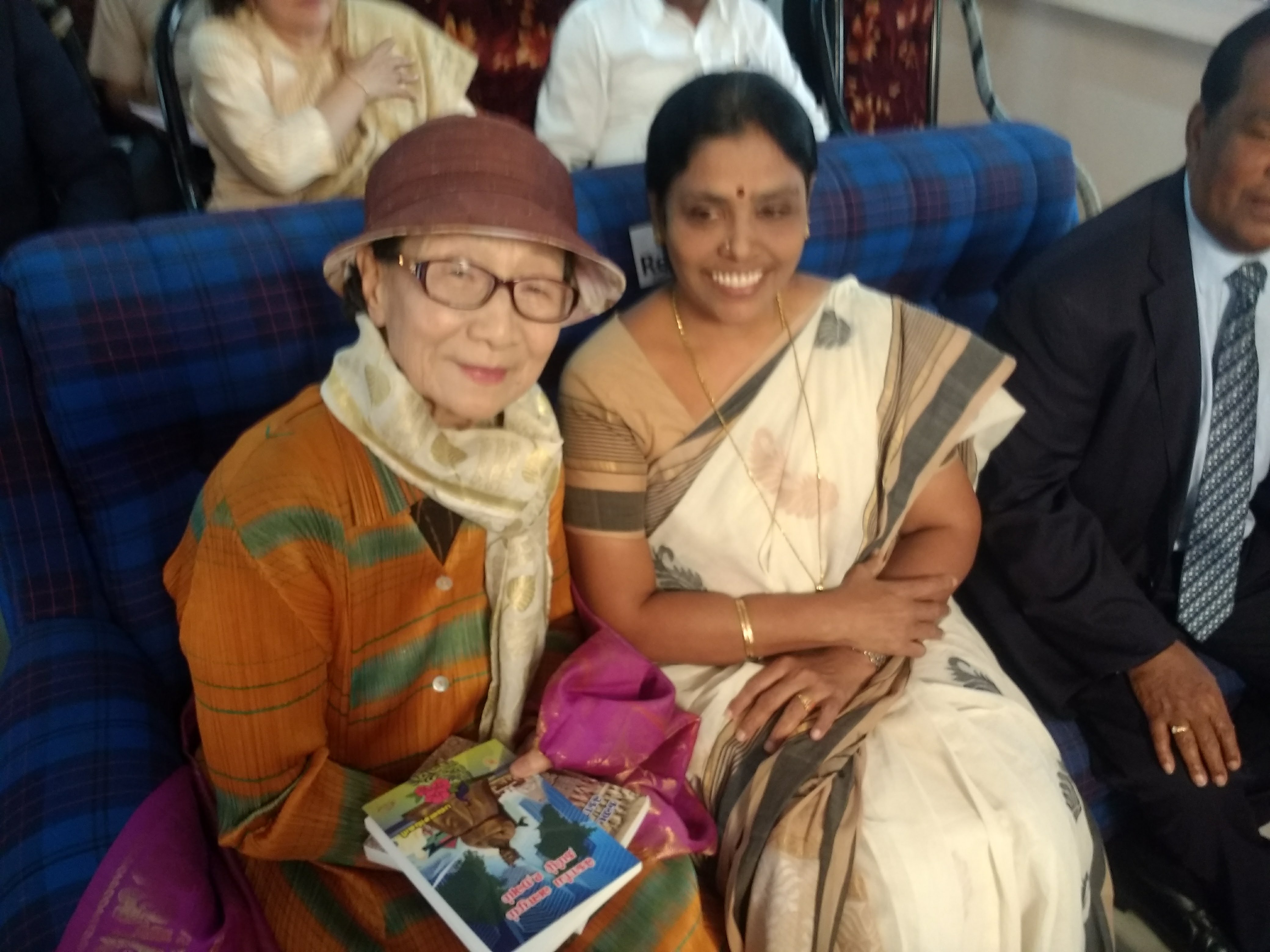
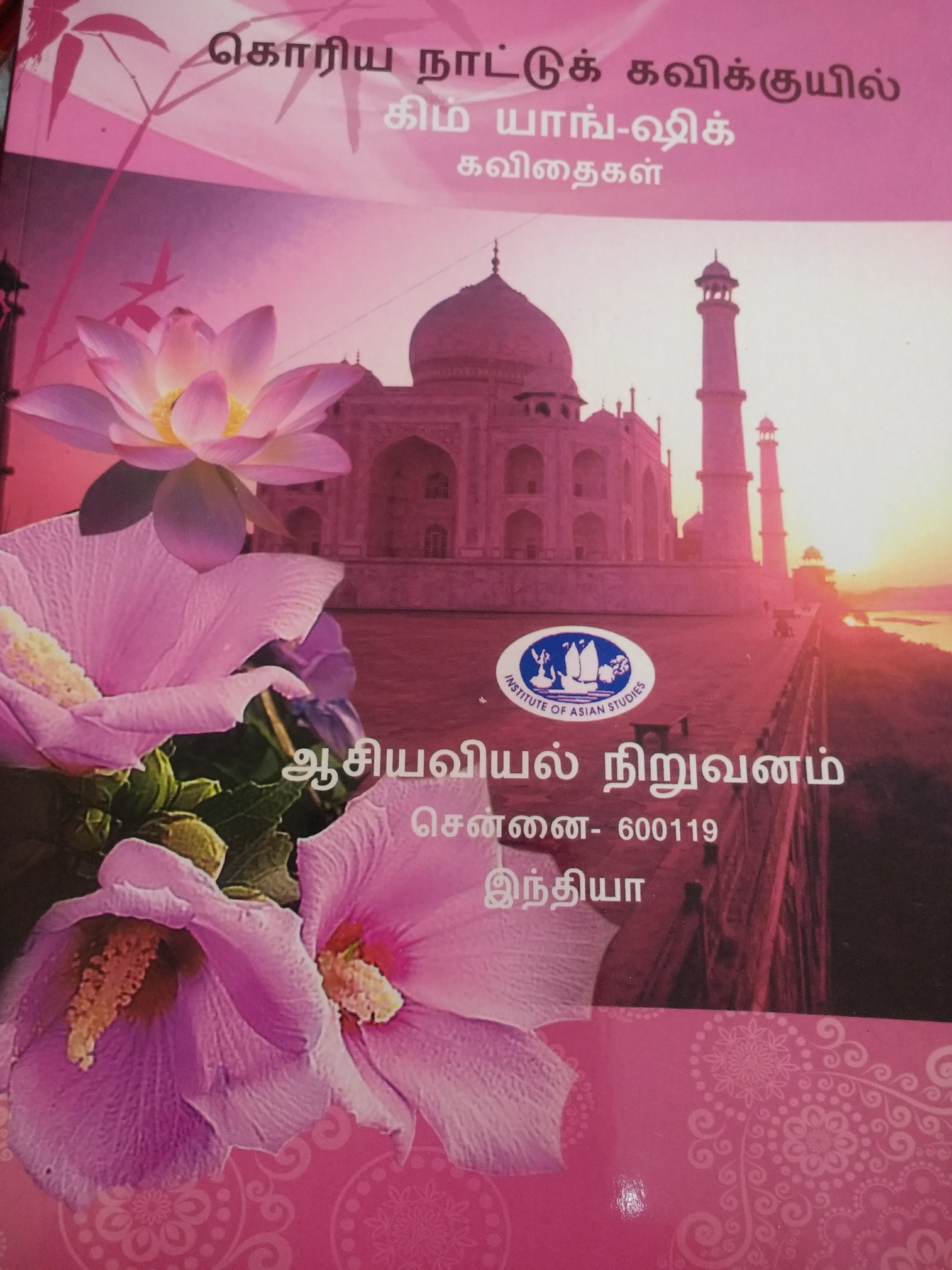
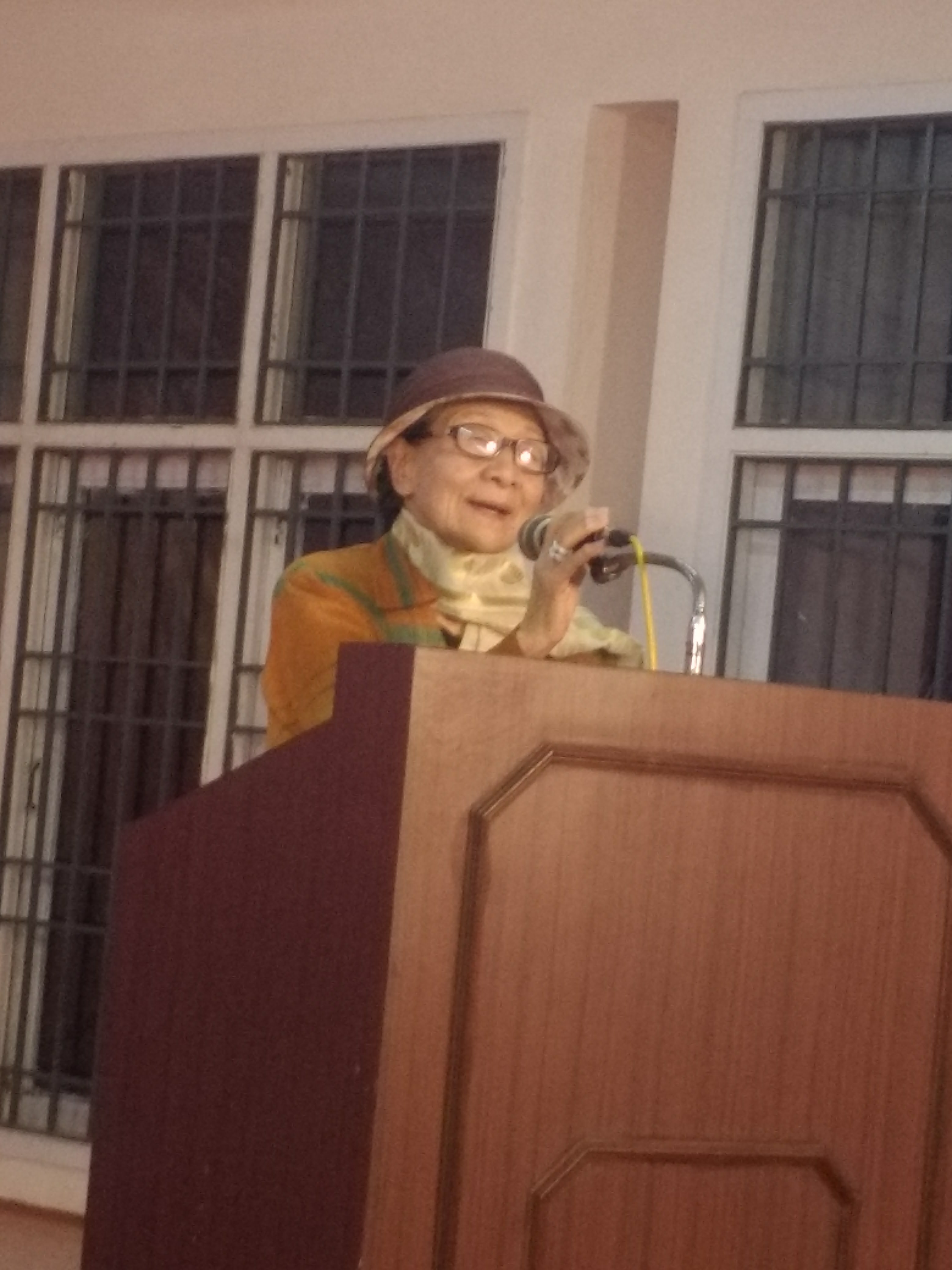
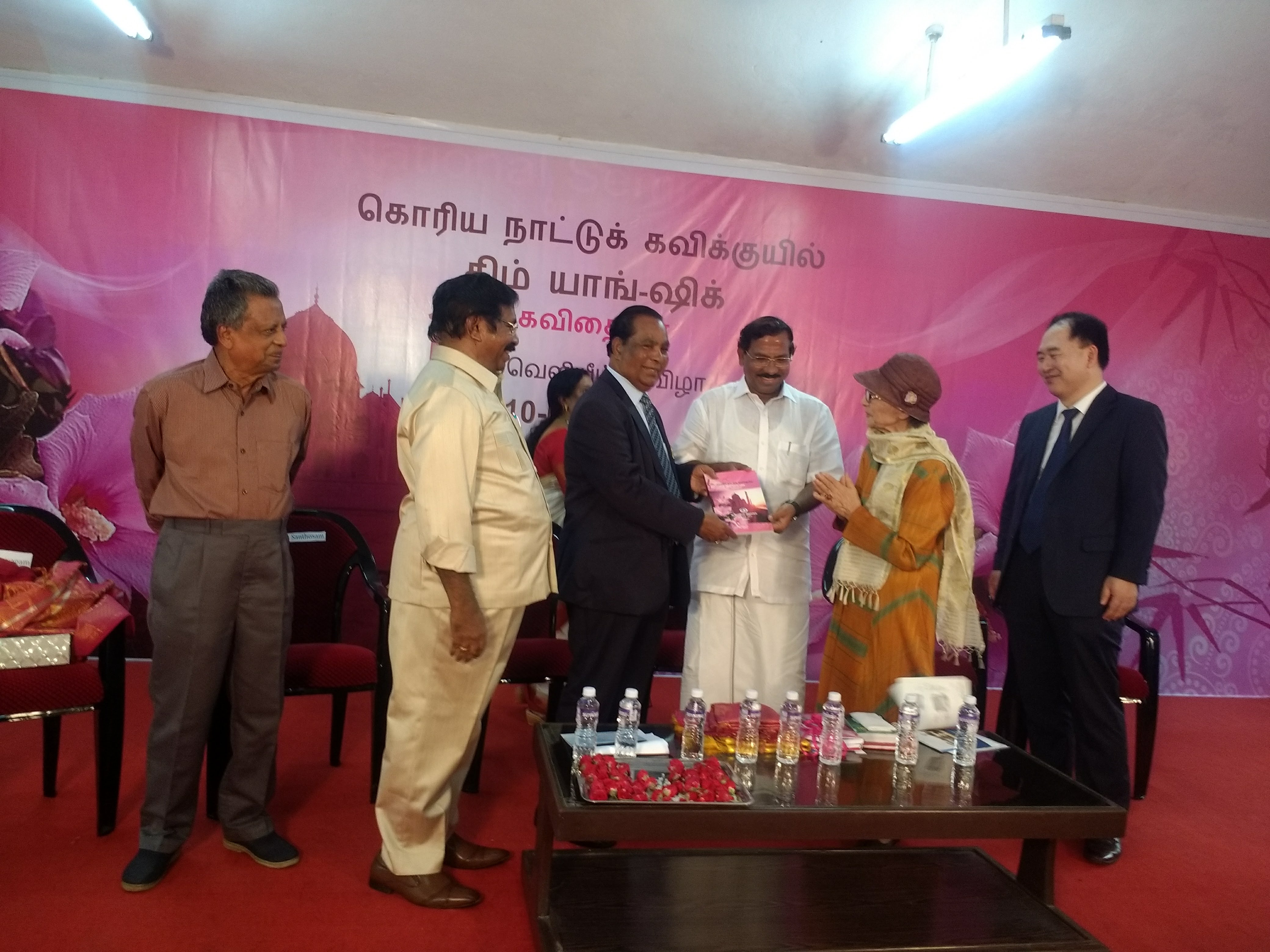
    கொரியநாட்டுக் கவிக்குயில் கிம் யாங் – ஷிக் கவிதைகள் – தமிழாக்கம் – பவள சங்கரி , நூல் வெளியீடு மார்ச் 10, 2018 அன்று தமிழக அரசின் மாண்புமிகு திரு க. பாண்டியராஜன், தமிழ் வளர்ச்சி, தமிழர் பண்பாடு மற்றும் தொல்லியல் துறை அமைச்சர் அவர்களால் வெளியிடப்பட்டது. முனைவர் வி.ஜி.சந்தோசம் அவர்கள் முதற்படியைப் பெற்றார். கொரிய குடியரசுத் தூதர் திரு.ஹியூங் டே கிம் அவர்கள் வாழ்த்துரை வழங்கி சிறப்பித்தார். 87 அகவை நிரம்பிய, கொரிய தாகூர் சங்கம் மற்றும் இந்தியக் கலைக்காட்சியகம் நிறுவனர், சியோல், தென் கொரியா, முனைவர் கிம் யாங்-ஷிக் அவர்கள் நேரில் வந்து நிகழ்ச்சியில் கலந்து கொண்டு ஏற்புரை வழங்கி சிறப்பித்தார். இந்த நிகழ்வில் மாண்புமிகு அமைச்சர் க.பாண்டியராஜன் அவர்களின் அற்புதமான உரை இது.

    தமிழ்ப் புலமை மிக்க கொரிய அறிஞர்கள் இன்று உருவாகும் காலம் என்றே தோன்றுகிறது. கொரிய – தமிழ் கலாச்சார உறவு குறித்து பரவலாகப் பேசப்படும் இக்காலகட்டத்தில் தமிழ் அறிஞர்கள் கொரிய மொழி கற்கவும், கொரிய மொழி அறிஞர்கள் தமிழ் மொழி கற்கவும் ஆர்வம் காட்டுவது இயல்பானதே. கொரிய நாட்டு அறிஞர்களோடு இணைந்து தமிழ் கொரிய மொழி ஒப்பாய்வில் ஈடுபடுவதற்கான தக்க தருணம் இது என்றே கொள்ளமுடிகிறது.  இத்துறையில் குறிப்பிடத்தக்க நல்ல ஆய்வுகள் தோன்றவேண்டும். கொரியா என்றால் மின்னணுப் பொருள்கள் (Electronics) மற்றும் கார் உற்பத்தி என்ற அளவில் மட்டும் நினைத்துக் கொண்டிருந்த தமிழர்களுக்குக் கொரிய மொழியின் நீண்ட நெடும் வரலாற்றுப் பின்னணியினையும் அத்தகைய வரலாற்றுப் பின்னணியுடைய கொரிய மொழியுடன் தமிழ் மொழி பின்னிப் பிணைந்துள்ள நிலையினையும் கொரியப் பண்பாட்டுப் பெருமையினையும், கலைத்துறையில் அந்நாடு ஏற்படுத்தியுள்ள சாதனைகளையும் தெரிந்து கொள்ளவும், கொரிய தமிழ் இந்தியா உறவும், கொரிய தமிழ்நாட்டுத் தொடர்பில் உருவாகும் நட்புறவும் பெருகி வளரவும் நற்காலம் கனிந்துள்ளதாகவே எண்ணமுடிகிறது. அந்த வகையில் கொரிய மொழி அறிஞரும், கவிஞரும், கட்டுரையாளரும், இந்தியக் கவிஞர் தாகூர் மீது மிகுந்த ஈடுபாடு கொண்டவரும், தாகூர் சங்கத் தலைவரும், இந்தியா மீதும், இந்திய மக்கள் மீதும் தனிப்பட்ட ஆர்வமும், அன்பும், அக்கறையும் கொண்ட திருமிகு கிம் யாங் – ஷிக் அவர்களின் படைப்புகள் தற்கால ஆசிய இலக்கிய உலகில் ஒரு புதிய பரிமாணத்திற்கு வழி கோலியுள்ளது என்றால் அது மிகையல்ல.

    கொரிய மொழியில் மட்டுமன்றி, ஆங்கிலத்திலும் பல படைப்புகளை வெளியிட்டுள்ள அம்மையாரின் பல படைப்புகள் பல்வேறு மொழிகளில் பெயர்க்கப்பட்டுள்ளதும் சிறப்பு.


    இவரது சில கொரிய படைப்புகளின் பட்டியல்:


    கவிதைத் தொகுப்புகள் – Legend of Chongup – Fusa, Cho-ee collection ’74, Bird’s Sunrise 86, Sparrows in Seocho Village ’90, To be Grass Flowers, Grass Leaves ’92, A collection of poetry in English and Korean, They are Never Lonely ’98, A Book Of Long Epic Poetry, Hymn Of Elegy On The Tomb Of An Arm ’99, The whole collection of Kim Yang-Shik’s Poetry, Brightness of Sunset ’02, As Tree Limbs Turn Towards Winter ’05, A Floating Cloud In The Distant Sky ’09.

    நூல்களும் கட்டுரைகளும் : An Encounter with Foreign Poets ’78, Along the stream of Ganges ’90, Spring, Summer, Autumn and winter ’00.

    மொழிபெயர்ப்புகள் – கொரிய மொழியில்: R. Tagore’s Books Of Poetry Gitanjali ’82, Modern Indian Literature ’82, by K.Kripalani, Tagore: A Life ’82, by Kripalani, Tagore’s Last Poems ’83, R. Tagore’s Bhuddism ’96, Crescent Moon ’92, Tagore’s Essays Sadhana ’93, Tagore’s Drama selected Seven works; Sanyasi, King and Queen, Chitrangada, Post Office, Cycle of Spring, Kingdom of Card, Chandarica ’13, Bird’s Wedding ’97, Poetry by D.Ramesh, Silk Empress ’07, Novel by N.Parthasarathi, A book of Poetry in English and Korean Gitanjali.

    அம்மையார் கலந்துகொண்ட பல்வேறு நாட்டின் கருத்தரங்கங்கள், மகாநாடுகள், வாங்கிய விருதுகள், பாராட்டுப் பத்திரங்கள் போன்றவை ஏராளம். இவரைக் கொரிய நாட்டைச் சேர்ந்தவர் என்று மட்டும் அடையாளம் காண்பது உண்மையில் நியாயமற்ற செயலாகும். இவர்தம் மனிதநேயப் பண்புகள், பரந்த மனப்பான்மை, சக மனிதர்களிடம் கொண்டுள்ள ஆழ்ந்த அன்பும், அக்கறையும் எத்தகைய அரசியல் எல்லைகளையும் உடைத்து நொறுக்கிவிடும் வல்லமை பெற்றது. இவரை உண்மையில்  இந்த பிரபஞ்சத்தின் சொத்தாகவே அடையாளம் காணமுடிகிறது. பெரும்பாலான ஏனைய கொரிய எழுத்தாளர்கள் போலவே அம்மையாரும் இயற்கை காதலராகவே இருக்கிறார். போர், தீவிரவாதம், கொடுஞ்செயல்கள் புரிவோர் போன்றவற்றில் மிகுந்த வெறுப்பும், வருத்தமும் கொண்டுள்ளதை இவர்தம் படைப்புகள் மூலம் அறியமுடிகிறது.

    வாழ்க்கையைச் சரிவரப் புரிதல் என்பது மனிதராகப் பிறந்தோருக்கு கிடைத்தற்கரிய வரம். அத்தகைய வரம் அருமையாக அமையப்பெற்றவர் இக்கவிஞர் என்பதற்கு ஆதாரம் இவருடைய படைப்புகளே சான்று. இவருடைய கவிதைகள் இலக்கியச் சுவை மட்டுமன்றி பக்தியோடு, முரண்பாடற்ற ஒத்திசைவோடு கூடிய எளிமையும், சிறிதளவு உலகாயதமும் கலந்த அற்புதமான படைப்புகளாக மிளிர்வதைக் காணமுடிகிறது. ஆன்மீகமும், இயற்கை வாதமும் கலந்த வித்தியாசமான இப்படைப்புகள் வாசகர்களுக்கு நல்ல அனுபவங்களை வழங்கக்கூடியது.

    இந்திய மக்களின் அடித்தட்டு வாழ்க்கையின் இரணங்களை உளப்பூர்வமாக உணர்ந்ததன் பாதிப்பு அவருடைய படைப்புகளில் வெளிப்படுகிறது. இந்திய மண்ணின் வளத்தோடு சேர்த்து அதன் ஏழ்மையையும், எளிமையையும் கூட மிக இயல்பாக வெளியிட்டுள்ள விதம் அவருடைய யதார்த்தமான மனித நேயப் பண்பிற்கு சிறந்ததொரு எடுத்துக்காட்டு எனலாம். தாகூரின் படைப்புகள் ஏற்படுத்திய பாதிப்பில் எழுந்த கவிதைகள் அனைத்தும் தாகூரின் படைப்புகள் போன்றே காலங்கடந்து பல நூறு ஆயிரம் ஆண்டுகளுக்கு மக்கள் மனதில் சிம்மாசனமிட்டிருக்கும் என்பதில் ஐயமில்லை.

    இவர்தம் படைப்புகளில் நவீன பிரபலமான கொரிய கவிஞர்களான மன்ஹே ஹேன் யாங் -யுன் மற்றும் மிடாங் சோ சோங்-சூ ஆகியோரின் செல்வாக்கு உள்ளதைக் காணமுடிகின்றது. பிரபஞ்சம் முழுவதையும் குறித்து அவர் எழுதித்தீர்வது என்று கங்கணம் கட்டிக்கொண்டவராக இருந்தாலும் அடிப்படையில் அவருடைய படைப்புகள் அனைத்தும் கொரிய மண்ணின் அனுபவங்கள் சார்ந்ததாக உள்ளதென்பதே நிதர்சனம்.

    கொரிய கவிஞர் மிடாங் சோ சோங்-சூ  கவிஞரின் படைப்புகள் குறித்து கீழ்கண்டவாறு குறிப்பிடுவது ஒரு நேர்மையான திறனாய்வாக அமைகின்றது.

    “அவர் கவிதைகள் தமது புத்திசாலித்தனமான அறிவுக்கூர்மையின் முடிவற்ற கன்னிமை கொண்டவை. ஒரு நாளும் அவர் தம் பணிகளின் இயக்கத்தை நிறுத்தவோ, அல்லது முடிவற்று முன்னேறிக்கொண்டிருக்கும் தமது ஆன்மாவிற்கு ஓய்வு கொடுக்கவோ முனைந்ததில்லை. ஓய்விற்கும், பணிக்கும் இடையில் வேறுபாடுகள் ஏதுமில்லை என்பதை நன்கு உணர்ந்திருப்பவர் அவர். என்னைப் பொறுத்தவரை, சாத்தானும், தேவதையும் கூட நெருங்க முடியாத அந்த அதிசயமான உள்ளுணர்வு நிலையை எப்படி அடைவது என்றே தெரியவில்லை. வெற்றிகண்ட அவருடைய சிந்தைகள் அவருடைய யதார்த்தமான கண்ணிற்குப் புலப்படாத சக்தியின் அழகிற்குள் பொறிக்கப்படலாம்” (பங்கஜ். என். மோகன், உதவி பேராசிரியர், கொரிய கல்வி, சிட்னி பல்கலைக்கழகம்)

    உணர்வுகளின் குவியலாக மட்டும் இல்லாமல் அவர்தம் கவிதைகள் தெளிந்த நீரோடையாக, அமைதியின் அங்கமாக, குறுகிய சொற்களில் பெரும் தத்துவங்களை விளங்கச் செய்வன.


    Beyond Time & Space-Kim Yang Shik

    Share
  • Nature

    -Niveditha

    Caves dotted every inch of the land
    Filling its thirst with dew drops
    Flowers bloom with fragrance
    Attracting me from every view
    Green grass soft under my feet
    Crushing down with every step
    I wouldn’t mind if it rained
    I wouldn’t mind if it snowed
    At least I’m here in this place
    And that’s all I need
    For it fills my heart with joy


    Share
  • A TREATEMENT OF VINAIYECCAM IN TAMIL GRAMMATICAL WORKS

    A TREATEMENT OF VINAIYECCAM IN TAMIL GRAMMATICAL WORKS

    -Dr. HEPSY ROSE MARY. A

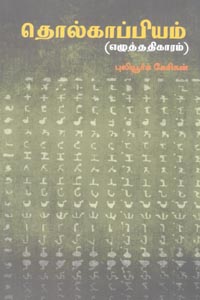
    Tolkappiyam the earliest extant grammatical work in Tamil deals with the vinaiyeccam or verbal participle in vinaiyiyal section of collatikaram.  Further it speaks about the Vinaiyeccam of various ending in eluttatikaram and discusses the miscellaneous aspects of vinaiyeccam in ‘ Eccaviyal’.  Viracoliyam of 11th century A.D treats the vinaiyeccam in tatuppatalam’ in two karaikas.  Neminatam of 12th century and Nannul of 13th centuru A.D deal with it in vinaiyiyal.  Prayokavivekam of 17th century A.D. treats it in tinnuppatalam in two  karikas .  Ilakkana Vilakkam and Ilakkana Kottu of 17th century A.D deals with it in collatikkaram.  Muttuviriyam and Saminatam 19th century A. D treats it in vinaiyiyal and vinaimarapu.  An evaluation of the description of vinaiyeccam by these different grammatical works in attempted here.

    Definition:-

              The term vinaiyeccam refers to a set of verbal forms that includes the infinitive, the adverbial participle, the conditional and other.  What all members of the category of vinaiyeccam share in common is that they lack oppositions of tense, person, number and gender; that they are subordinate verb forms incapable of constituting a complete predication by themselves; and that they must combine with other verb forms to make up a coherent sentence.1   This is how Stanford B. Steever defines Vinaiyeccam.

    1. “On the Semantic properties of Vinaiyeccam” – Selected papers on Tamil and Dravidian Libguistics- Sanfor B -0 Steever. P:64, 1981.

    Classification of vinaiyeccam:-

    Tamil Grammatical works do not define the vinaiyeccam explicitly but they classify it in to so many types or patterns in the form of a formula.  Tolkappiyam lists nine primary patterns of vinaiyeccam.  They are as follows:\

    1. Ceytu, 2. Ceyyuu, 3. Ceypu, 4. Ceytena, 5. Ceyyiyar, 6. Ceyyiya, 7. Ceyin, 8. Ceya, 9. Ceyarku.

    These nine patterns and the six terminations of adverbial participles listed and two other types ( ati, ceyya) of the same, referred to in Toilkappiyam may be classified into sub-groups according to their different usages.2

              Viracoliyam speaks about the two formulas ‘tumanta’ and tuvanta’ pratyams following Sanskrit model.  Tumanta pratyam includes participles with the following terminations poruttu, ka, paan, tarku, vaan, aa.  Tumanta pratyam includes participles with the terminations such as aa, ittu, tu, u, i.  Tonnull vilakkam talks about fourteen termination such as i, u, ena, u, pu, a , il, in, iya, iyar, van, paan, paakku.

              Tolkappiyam and Muttuviriyam talks about fifteen patterns of vinaiyeccam.  Neminatam and Nannul talk about twelve formulas.  Ilakkana vilakkam lists eighteen formulas and Saminatam has thirteen formulas.  Ilakkana kottu does not talk about this.  Neminatam, Ilakkanavilakkam, Tonnul vilakkam and Saminatam added the vinaiyeccam with the suffixes paan, paakku etc to the list which are not found in Tolkappiyars pattern.  The vinaiyeccam vaan mentioned by Nannul Ilakkanavilakkam, Muthuviriyam, Tonnul vilakkam and saminatam is not at all found in Tolkappiyam and Neminattam but Viracoliyam mentions vaan and paan.   These participles are latter developments in the language.

    1. “Non – finite verbs” – The trteatment of Morphology in Tolkappiyam : Dr. M. Israel. P: 210 – 1973

    Table of Vinaiyeccam patterns enumerated by the Tamil Grammatical works

    Tolkappiyam does not mention the pattern ‘Ceyyaa’ in the nine primary patterns in vinaiyiyal.  But in Eluttatikaram, this is mentioned in 223 sutra.

    “Ceyya ennum vinaiyencu kilaviyum

    Avviyal tiriya tenmanar pulavar ” ( Tol.223)

              Cenavaraiyar opines that ‘ceyya’ is the later varient  from of ceyyuu. But Nannul, prayokavivekam,IIakkana Vilakkanam and Saminatam considers these two as  separate.

          (ex.)      unna vantan,              unnu vantan

    Prayokavivekam introduces ‘tuva’ and ‘tumun’ as two types of vinaiyeccam patterns. The author- commentator includes nine patterns in the commentary in addition to whose referred to above.  They are,

                       tuva            –         ceytu

    tumun            –          ceya

    Kamun          –           ceyya

    namul           –          ceyyu

    yap              –          ceypu

    iti                –          ceytena

    aticet            –           Ceyin, ceytal

    nuvil             –           Ceyyiya

        He employs the Sanskrit technical terms to the designate each of vinaiyeccam types.  But Viracoliyam which is   considered to be a Sanskrit based work. Like Prayokavivekam doesn’t talk about these patterns. It seems that Prayokavivekam follows Tolkappiyam in the classification but adopts Sanskrit technical terms to designate them.

    Morphological  analysis :-

    Dr. Caldwell classifies the verbal participles in to,

    1. Verbal participle patterns – Ceytu,Ceyyu ,Ceypu, Ceyya
    2. Purpose participle patterns – Ceyyiya,Ceyyiyar,Ceyarku
    3. Conditional participle patterns – Ceyin
    4. Infinitive participle patterns – Ceya
    5. Adverbial participles – Pin , mum , kaal , katai, vali, itattu3

    Ceytu pattern:-

              This pattern of the form may be segmented as Cey-t-u.  ‘ Cey’ verbal stem. ‘t’ – past tense marker and ‘u’ may be identified as verbal participle marker.  Viracoliyam and Prayokavivekam employs the word ‘tuva’ instead ‘ Ceytu’.  The tense of this participle pattern possess a difficult problem.  Tolkappiyanar says that the pattern ‘Ceytu’ which denotes past tense may also occur in the future tense.  Nannul, Ilakkana Vilakkam and Saminatam say that the pattern denotes only past tense.  But prayokavivekam says that it denotes three tenses.  Ilakkana Kottu and Muttuviriyam are of the opinion that there is no tense signification in the vinaiyeccam.

                       (ex.)   untu   –        vantaan

    Untu  –        Varukiraan

    Untu  –        Varuvaan

    Ceypu Pattern:-

              This pattern of form may be segmented into cey, -pu.  ‘Cey’ verbal stem ‘pu’ participle termination.  Nannuul , Ilakkanavilakkam and Saminatam mention that the pattern ‘ Ceypu’ denotes only past tense.  But Prayokavivekam says that it denotes three tenses.  Naccinarkiniyar points out that it denotes an action done previous to that of the following verb and rarely the future tense.

    Ceyyuu and Ceyyaa patterns:-

              Tolkappiyanar includes ‘ ceyyuu’ in the list of adverbial participle patterns but only refers to the pattern ‘ ceyyaa’ in Ezhutatikaram, while dealing with the external Sandhi changes of words with final ‘a’.  These patterns ceyyuu and ceyyaa may be segmented as ‘ cey-uu and cey- aa, ‘ cey’ verbal stem uu and aa participle markers.  According to Cenavarayar, the forms of the pattern ‘ceyyu’ denote the past tense.  Teyvacilaiyar mentions that they denote either past or present.  According to Naccinarkiniyar and Nannular they denote past tense.  Ilakkanakottu and Saminatam also say that it denote past tense.  As there is no tense marker in the above two patterns of forms they may be taken to denote different tenses.

    Ceytena pattern:-

              This pattern consists of the verbal participle pattern ‘ ceytu’ and the infinitive participle pattern ‘ena’.  The form ‘ena’ may be analysed into ‘en-a’,  en – verbal stem a infinitive participle marker.  Nannul and Ilakkanavilakkam say that it denotes past tense.

              (ex) Unnena

    Ceyyiya and Ceyyiyar patterns:-

              These patterns consist of the verbal stem cey and the suffixes ‘iya’ and ‘iyar’ Ilampuranar is silent regarding the tense of these patterns of these forms.  All the other commentators and authors are agreed in attributing the future tense signification to them.  There is no overt marker to denote the tense in them.

    Ceyarku pattern:-

              This pattern is used to denote a purposive significate.  This consists of the verbal noun ceyal and dative marker ‘ku’.  According to Cenavaraiyar and Teyvaccilaiyar the forms of this pattern but it does not talk about its tense signification.   Viracoliyam , Nannul, Prtayokavivekam, Ilakkana kottu and Saminitam do not include this in the list of adverbial participle patterns.

    Ceyin pattern:-

              This participle pattern consists of the verbal stem and the suffix ‘n’.  According to Cenavaraiyar, the form of this pattern denotes three tenses but according to Teyvaccilaiyar, Naccinarkiniyar, Nannular and Vaitianatatecihar denote only the future tense.

    Ceya Pattern:-

              The Dravidian Linguistics Dr. Caldwell, L.V. Ramaswamy Aiyar and others also consider ‘ ceya’ as the pattern of infinitive participles4.  The form ceya consists of verbal stem ‘ cey’ and the suffix’a’.  The ‘ceya’ is called as ‘tuman’ in Viracoliyam and ‘ tumun ‘ in Prayokavivekam.  It is evident that tense is not marked in this form and it say that the pattern ‘ceya’ denote only present tense, but the commentator of Nannul and prayokavivekam say that it denotes three tenses.

    (ex)    ter tara vantan, ter tara vrukiran, ter tara varuvan

    Neminathan and Ilakkanavilakkam do not elaborate this aspect.

    Adverbials:-

    Tolkappiyam and Ilakkana vilakkam list six forms as terminations of adverbial participles and Neminatam lists two forms ( pin, mun).  Viracoliyam, Nannul Prayokavivekam and Saminatam do not talk about this.

    Muttuviriyam list four or ( Pin, mun, kal, and katai) .  The commentators cite following examples as adverbial participles.

    (ex)    vanta – pin, varu- mun, vanta-k-kaal, vanta-ka-katai, vanta-vazhi, vanta- idattu

              The above are the patterns of some of the adverbial expressions.  On investigation it is found that the forms are not terminal suffixes but are real free forms.  They are nous denoting place or time.  This will be alternative analysis to this type of Vinaiyeccam.  Hence it will a case of relative participle + noun.  It seems that Nannul and Ilakkanal vilakkam are of this view.

    For example,

              Neer poy kuriyapin mey kuruvaar yaar

              Cenavaraiyar comments that ‘kuriyapin’ is taken as one word meaning kurinal ‘if you utter’ and that is labeled vinaiyeccam.  Whilst others taken as two words kuriya and pin where kuriya is labeled as peyareccam.  The commentary of Cenavariyar gives these views and one should examine it in detail.

    Syntax and Semantics of vinaiyeccam:-

              Nannular elaborately explains that vinaiyeccam shows the tense.  He also explains ceytu, ceyya, ceypu, ceyyu and ceytena show past tense.  Ceya shows present tense and ceyin, ceyyiya, ceyyiyar, vaan, paan and pakku show future tense.  Tense signification of vinaiyeccam is elaborately explained in Morphological analysis shown above.  The six patterns in ‘tumanta’ pratyam ( ceya) explained in viracoliyam denote the meaning of dative case or fourth case

    (ex)    Unnutar poruttu – poruttu

    Karkat tarpariyattaan – ka

    Unpaan vantaan – tarku

    Arivan Karuttuntu – vaan

    Unna vallan- a

    All the tuvanta pratyam in viracoliyam expect a shows the past tense.

    (eg)    Untittup ponan – ittu

               Pukuntup ponan – u

               Pukkup ponaan – u

               Colli ninraan – i

              Prayokavivekam states that ‘ tuman’ as called ceya and ceyin can be changed.  Neminatam and Nannul explain that one vinaiyeccam becomes another vinaiyeccam in deep structure ( ceya – ceytu) .  Eventhough they are formally different, the meaning is same.

    (ex)    nayiru pattu vantaan – nayiru pata vantaan

    Kolikuvip polutu pularnthatu – kolikuvap polutup pularntatu

    ‘ pattu’ and ‘kuvi’ are the verbal participle of the ceytu pattern.  Tamil scholars interpret this verbal participle as verbal infinitive ‘ceya’.  In both cases according to them ceya form has become ceytu form.  Cenavaraiyar and Naccinarkkiniyar also explain these usages under the two sutras. ( Tc.Vi 34,35).  Prayokavivekam mentions seven characteristic features of verbal participle of the pattern ceytu, ceyya, ceyu and ceypu (Pv,39) .  There are,

    1. Manner adverbial clauses
    2. Negative verbal participle clauses
    3. Reduplication of participles
    4. Interpretation of three tenses
    5. Inversion
    6. Samaana Karta as against pinna karta
    7. Verbal participles in the form of finite verb

    1. Manner adverbial clauses:-

    The verbal participles clause occurs also as manner adverbial clause.  It occurs as the first part of the compound root.  But in some cases the first member of this compound root is in the pattern of ceytu, the verbal participle.  Ordinarily when a verbal participle and another verb come together, it means that the action of the verbal participle occurs first and then the action of the verb,

    (ex)         Kan mutic cirittan

    Here the closing of the eyes and laughter occur togethers.

    2. Negative verbal participle clauses:-

    The verbal participle and predicate which complete it my negute each if there is a verbal participle and the predicate (a).  The first may be negative and the second positive.

    (ex) unnatu vantan .

    The first may be positive and the second negative.

    (ex) untu varan

              Tolkappiyam does not illustrate the Negative verbal participle pattern.  But the commentator of Tolkappiyam and Tonnul Vilakkam cited the following negative verbal participle (with the following suffixes aamal, aatu aamai, aa

    (ex):   ceyaamal      –        aamal

              Ceyaatu       –        aatu

              Ceyaamai     –        aamai

    Ceyyaa        –        aa

    3. Reduplication of Verbal Participles

    The verbal participle occurring as predicate of verbal participle clause with verbal complement, casual adverbial, an manner adverbial function can be reduplicated.  Verbal participles consisting of the same words are repeated.

    (ex) Vantu vantu

    Verbal participles consisting of different word may be piled up.

    (ex) Kantu  kettu untu uyirttu urrariyum

    Tolkappiyam, Viracoliyam and Nannul explain this pattern.

    4. Interpretation of three tenses:-

    The verbal participles of the ‘ceyty’ pattern comes with of three tenses.

    (ex)    untu vantaan – past

    Untu varukiran – present

    Untu varuvaan – future

    Thus it is concluded that untu can occurs in three tenses.

    5. Inversion;-

      1. The verbal participles sometimes inverted.
      2. (ex) Kolunnar tolutezhuvaal

    According to the author ‘ tolutezhuval’ as an inversion of Elunthu tozhuval.  Ezhutal is to wake up’. ‘tolutal’ is to worship’ because he feels one cannot offer physical worship before waking up from sleep.  Only the Prayokavivekam explains this point.

    6. Samana Karta as against pinna kartaa:-

    Verbal participles of the pattern ceyyuu and ceypu take samana karta the predicate of their own subject.

    (ex) Untu vantaan caattan

    7. Verbal Participles in the form of finite verb;-

    The verbal participle ‘ceytu’ changes its form to that of finite verb, but that finite verb has to be interpreted as a verbal participle.

         Moyinal uyirtta kalai – Montu uyitta kaalai’ moyinal which is the finite form has to be interpreted as the verbal participle ‘montu’.

         Tolkappiyam , Neminatam, Nannul, Prayokavivekam, Ilakkana Vilakkam, Muttuviriyam and saminatam state that verbs may occurs as the verb of the whole.  Sometime as a verb of the whole becomes verb of the part.  But Viracoliyam Ilakkana kottu and tonnul Vilakkam do not talk about it.

    (ex)         Untu vantaan, Unnu vantan, Unkupu vantaan  – verb of the whole

    Kai irru viluntan, kai irru viluntaan, Kai irupu viluntaan – verb of the whole becomes verb of the part.

    Conclusion:-

         While going through the treatment of vinaiyeccam in Tamil Grammatical works we can see that generally Neminatam, Nannul, Ilakkana vilakkam, Muttuviriyam and Saminatam follow Tolkappiyam.  But the Nannul and Saminatam do not talk about adverbial markers like kaal, katai, vali and itattu.  For them it is a case of relative participle + Noun.  Neminatam and Muttuviriyam accept the view of Tolkappiyam and Neminatam include mun and pin only and Muttuviriyam include pin, mun, kaal and katai.  Tonnulvilakkam illustrates Negative verbal participle marker.  Eventhough Viracoliyam and prayokavivekam follow the Sanskrit models, Prayokavivekam in most cases follows Tolkappiyam.  Viracoliyam classifies vinaiyeccam into two types that is tuva and tuman.  Viracoliyam Neminatam and Muttuviriyam do not talk about the tense signification of vinaiyeccam.  The others differ in their interpretation of tenses.  The syntactic aspects of vinaiyeccam are also elaborated in these works except vinaiyeccam, where there is only a brief remark is fond.  Prayokavivekam is unique that it gives a nine way classification with Sanskrit terms.  It also summaries the syntactic aspects of vinaiyeccam under seven heads.

    Bibliography

    • Gunavirapandithar – Neminatham, S.I.S.S.W Publishing society, Tirunelveli ltd, 1956.
    • M, Treatment of Morphology in Tolkappiyam , DLA, Trivandrum, 1973.
    • Meenakshi Sundaram. T.P – Foreign Models in Tamil Grammar – D.L.A, 1974.
    • Muthuvira Appaiya Thedshidhar – Muthuviriyam , Appar Achakam, Chennai , 1972.
    • Pavananthimunivar- Nannul, Triplicane, 1951.
    • Subramania Thedshithar – Prayokavivekam, Madras the S.I.S.S.W Publishing society, Tirunelveli ltd, 1973.
    • Thomas Lehman – A Grammar of Modern  Tamil, PILC , Publication, 1993.
    • Vaithiyanada Desikar – Ilakkanavilakkam, Thiruvarangam Achakam, Madras, 1973.

    *****

    The writer is an Assistant Professor
    Department of Tamil, University of Kerala.


    Share
  • Yoga, India’s Gift to the World!

    -DR.C.N.VIJAYAKUMARI

    The International Yoga Day on June 21 is a reminder to the whole world of the vital role Yoga, if practiced daily, can play in an individual’s, and a nation’s life. A voluntary discipline, tailored to an individual’s needs, Yoga aims at the total growth – physical, mental, intellectual and spiritual – of a person.

    As the opening prayer above, a salutation to Sage Pathanjali who compiled the Yoga Sutra, indicates Yoga helps remove the impurities from a practitioner’s mind (thoughts), speech (words) and body (deeds). The daily practice of Yoga helps remove the internal and external impurities and bring in an order, balance and calm in an individual practitioner.

    As Lord Krishna told Arjuna in the Bhagavath Geeta, Yoga is dexterity, balance and coolness combined. Rife with tension, anxieties and lifestyle diseases, living today has become a terrible rat race. A peaceful, happy and contented existence has become almost a thing of the past. It’s here Yoga comes to our rescue.

    Our forefathers, over centuries, have figured out the unique relation between nature and man and have thought up a very simple system of physical, mental and spiritual discipline which we call Yoga today. Yoga aims at overall ‘swasthya,’ disease-free health of a practitioner. In 196 sutras (aphorisms), Sage Pathanjali’s Yoga Sutra, guides us through a series of physical, mental and spiritual practices that has mainly three parts, namely, pranayama, asanas and meditation. Breath is the bridge between our body and mind. Our entire life is conceived and planned first at the mental level. Body just executes the directive from the mind.

    Our forefathers knew this long time ago that the human body is but only an aide to the mind. Everything in our life happens first at the mental level. Without the mind, body is helpless. This awareness is central to the entire Yoga discipline. In that sense, Yoga is not just a physical exercise alone. It’s physical, mental, intellectual and spiritual. If practiced daily, the pranayama, asana and dhyana, will put the practitioner onto the right path of Swasthya. The practitioner has to take care of his/her food and rest too. He/she may not indulge in too much of either.

    So, our forefathers had thought up a perfect system that guaranteed our physical, mental, intellectual and spiritual growth. A daily yoga practitioner is ready to tackle any adversity. Nothing scares him/her. Yea, he/she will always be cool and active. And, most importantly, a daily Yoga practitioner will always be contented. He/she will have no interest in the daily rat race going on around.

    Yoga is especially a great health tool to our young ones. Living in often volatile and violent environments, many of our young ones are crying for help. The help these young ones need first and foremost is awareness about themselves, their surroundings, their potentialities and possibilities. A young person, practicing Yoga daily, will be completely at ease with his surroundings because nothing scares him/her. He/she can always find a solution through cool and bold thinking. He/she is aware of himself/herself. A daily Yoga/pranayama practitioner slowly gets steadiness of mind by restraining respiration and asana practices. When one learns to control breathing, one learns to control one’s mind, and through the mind, one’s body. It’s that simple. Daily pranayama and Yoga helps keep one’s youthfulness even when one hits 70.

    Yoga/Pranayama practitioners must be disciplined in their eating, sleeping and recreational activities, too. They must eat right, sleep/rest right and play right. Too much of any of these can cut their achievements from the daily Yoga/Pranayama/dhyana practices. As the United Nation’s World Health Organization says overeating is more dangerous than starvation.

    Remember what Lord Krishna told Arjuna in the Bhagavad Geetha:
    yuktahara-viharasya
    yukta-cestasya karmasu
    yukta-svapnavabodhasya
    yogo bhavati duhkha-ha

    At a time, harmful fast-foods are the “in thing” for the youth; satvik vegetarian food can keep a person healthier in the long run. Satvik food also helps one improve one’s emotional health. Clean eating guarantees a clean body and a clearer mind.

    Mahatma Gandhi and Sri Aurobindo and several others were well known for promoting the daily practice of Yoga and satvik lifestyle. Who can forget that famous picture of a smiling Gandhiji, sitting in Gomukha Asana and turning the charka wheel. Similarly there are several asanas, Padma Asana, for instance, one can use in their daily life, whether they are watching a television or doing some household chores. The famous Yoga Vasishta contains Sage Vasishta’s advice and counseling to Lord Rama when he was young. Bhagavad Geetha, too, is a counseling treatise containing advices Lord Krishna gave to his dear disciple Arjuna.

    One needs hardly an hour for the daily practice of Yoga/pranayama/dhyana. That is not too much for one’s self-improvement and a contented, happy living. An individual’s overall growth is what daily Yoga and pranayama practices, one of the greatest contributions from India to the world. Air, health and contentment have no caste or creed or religion. Yoga is secular in the sense it helps all people living anywhere in the world. A healthy individual contributes to a healthy family, society, nation and a world. Everybody, irrespective of religion and other man-made divisions benefit from practicing Yoga and Pranayama. Who doesn’t want peace and happiness in this world?

    Ref:

    1. Bhagavad Geetha
    2. Yoga Sutra by Sage Patanjali
    3. Hatha yoga Pradipika (trans. by Pancham Sinh, 1914)
    4. Yoga Vasistha by Sage Vasishta 

    *****

    The Writer is an:
    ASSISTANT PROFESSOR
    DEPARTMENT OF SANSKRIT
    UNIVERSITY OF KERALA
    KARYAVATTOM.P.O
    PIN 695581
    Email.vijayaisavasyam@gmail.com

    Share
  • MGNREGA ENSURING EFFECTIVE DECENTRALIZATION

    MGNREGA ENSURING EFFECTIVE DECENTRALIZATION

    Ashok Jacob Mathews
    Research Scholar,
    Dept. Of Political Science and Development Administration,
    Gandhigram Rural Institute,
    Gandhigram. 624302.
    ashokjmathews@gmail.com

    MGNREGA ENSURING EFFECTIVE DECENTRALIZATION

    MGNREGA has made its impact all over the nation in supporting the poverty alleviation measures. As a flagship programme, it has attracted the rural masses in such a way that the success of application illustrates acceptance among the people. The core idea behind schedule was to provide a supportive measure in eradicating poverty, but on the other side, the program has made a plethora of developmental activities from wage generation to the strengthening of the local governance. The schedule has created spillover effect in strengthening other plans. The village level outcomes are the real examples of the spillover effects made by the program beyond considering the household effects. The real stakeholders of the application are the rural masses who directly depend on agriculture for their income generation. These commonalities were having only minimum participation in the activities of the panchayat, whereas the involvement in the programme has made them to act as a real citizen by fulfilling their rights. The right-based actions made them participate in the activities of the gram panchayat from gram sabha to people’s election. When a person himself can portray himself in questioning the violation of his rights makes him empowered from the individual perspective. The programme has caused the people educate them self to be the part of deliberative democracy by making the community-based generation of awareness among the rural masses to produce effective public deliberation. The sustainable livelihood approaches have made the programme to be more viable among the masses as it created a feeling of public service delivery among them. MGNREGA programme itself made it as a quasi by law to the 73rd amendment as it provides better developmental scenario from poverty alleviation to environmental protection. Indian paradox of governance is entirely different from that of other countries in the world as we have to accommodate a large mass in the process where the programme has made its implication in transforming the real stakeholders towards it.

    Apart from providing the social security to the rural masses, the programme has brought empowerment to the women and thereby activated the gram sabha and promoted the developmental activities which resulted in the overall development of the villages. Panchayat Raj institutions are the backbone of Indian democracy whereas the community development programmes like MGNREGA has initiated powerful people movement which can ultimately result in transformation for a stronger and broader justice. Thus MGNREGA plays an essential role in deepening democracy and also provide social security for the poor through the creation of durable assets, improved water security, soil conservation and higher land productivity. From the time MGNREGA was implemented the programme has provided transformation to the society whereas also efficiently strengthened the governance at the grass root level where it is primarily performed thereby ensuring effective decentralisation. G. Palanithurai[1], in his work ‘Needing Social Action for Effective Panchayati Raj”, point out the fact that in the process of democratic devolution of powers the initiatives come from the centre and not from the people, But, to ensure success to this dispensation, the efforts have to come from the people. Social action, community participation, owning the institutions and taking responsibilities are the imperatives for the success of the Panchayati Raj institutions. In the process of devolution of power, people have to come to the forefront pushing the government into the background. He has underlined the importance of conscientization of the people on the role of the people in governance at the grassroots. The effectiveness of devolution depends on the participation of the people, and its efficacy judged on how they participated. The programmes like MGNREGA has made the people get closer to the government especially the panchayats as they are the primary implementing platform. The scheme has improved the lives of the people and has brought stability and assured income to the families that were until recently desperately poor (Vidya Subramanian)[2]. The application has initiated the people to get closer and work for the better deliverance. The people used to work on the schedule actively as it was a livelihood possibility for them and the work ensured them with better living conditions.

    The programme has made it be the platform for the poor people to engage themselves in a job which provides them with better livelihood options. The income earned from the programme ensured better living facilities for them. MGNREGA programme has its impact from the very base level as the people used to work in the schedule for better livelihood. According to OECD[3] “the primary objective is the provision of social protection to help the chronically poor at times of vulnerability by providing a form of income insurance”. The panchayats at the implementing level made the people to get closer to its activities and to make themselves active in the functions of the panchayat. The involvement of the panchayats caused the people participate in the activities of the panchayats. The participation of the people in Gram Sabha meetings has increased all over India as it was a platform which enabled them to demand their needs and concern. The rural women used to indulge in the household activities came forefront in lack of their demands. The programme made it be a platform for the women to empower themselves and to demand their needs. The act established the women be aware of their rights. The constitutional provisions have enabled them to be active and to participate themselves in the functions of the panchayat. The social audit provision made them to engage themselves in the transparency of the programme and to prepare themselves to be more concerned about the regulations which they have missed. The rights-based approach made the schedule to reach the people more close to their panchayats to raise their demands as the program caused the people get aware of their rights.

    The 73rd amendment made it possible to implement the decentralisation policies in India. It made India to transform the power from the governments to rural local bodies. It enabled the people to have adequate democracy as the participation of the rural people increased at the grass root level. According to G.Palanithurai[4] “The whole local governance system has to work for economic development and social justice. The reason for governing clause of the amendment to the Constitution of India. It should go through a participatory process”. Participation has got a broader and deeper connotation in this process. It has to enable every segment of the society to participate actively in governance and development process. The role of an ordinary man raised in the community with his higher level of involvement in the governance process. The decentralisation process was a revolution in the history of India as it enabled the people to have fruitful democracy. The decentralisation only allowed the people to have participated in the governance and to indulge themselves in the growth of their place. The decentralisation process with a higher level of involvement made the people think about self-sufficiency with a sustainable livelihood. The implementation of MGNREGA has also become a milestone in the history rural Indians as it provided opportunities for the rural people. The programme enabled the rural masses to gather together, and done by the functionaries of Panchayati Raj.

    The MGNREGA has promoted decentralisation in the country as the participation of the people has increased considerably. The participation increased among the women as the programme made them come out of their social structures and to make their own income. The opportunity to earn a better livelihood made them participate in the schedule for their goodness. In certain places especially during the lean season NREGA had been the only source of income (Sudha Narayan: 2008)[5].  The participation has enhanced the collective behaviour of the people as the cooperation among the people has increased. The increased collaboration made them to get together for their rights and to stand for it. Dreze[6] point out that NREGA is an unprecedented opportunity for the rural poor. The programme has promoted the people to deal with officials and representatives at the panchayat level and changed their hesitation to mingle with the officials. The panchayat involvement made them to initiate themselves towards their needs and to present it in front of the authorities. The implementation of the programme mainly targeted at promoting the livelihood of the people by ensuring the protection of the natural resources. The works focused on the protection of the environment by promoting sustainable development. According to P.S Appu[7] “NREGS has facilitated ‘people coming together’ irrespective of the sex and caste working together in creating productive assets.” The actions at the grass root level made the people close to the local institutors and thereby enabled them to have efficient decentralisation practices. The participation of the people in the MGNREGA made them engage more in the activities of the local institutions. According to Kaustav Banerjee[8] the right to work under NREGA could be a transformative right to bring about deep changes in the power structure of the rural society.  The assistance caused the people involve themselves more in the activities of local administration especially in Gram Sabha meetings and other events of the panchayats. The participation of people mainly focused on the effectiveness of the programme in reaching the people. The spillover effects created because of the programme are many and it not only gave results to the people but also made transformation to the whole panchayats where the programme was implemented. The effectiveness of the programme made the people to be closer towards the programme and to make it as a transformative measure for them to progress along with their locality. The participation made them to be close towards administrative institutions and to indulge them more in its activities all over India.  Thus the MGNREGA programme has initiated in ensuring effective decentralisation in the country.

    *Ashok Jacob Mathews, Research Scholar, Department of Political Science & Development Administration, Gandhigram Rural Institute, Gandhigram.624302.


    Reference      

    1. G. Palanithurai Needing Social Action for Effective Panchayati Raj, Kurukshetra, Vol.XLV; No.9, June 1993.
    2. G.Palanithurai, Decentralization: Critical Issues from the Field, New Delhi: Concept Publishing Company, 2009.
    1. Jean Dreze, NREGA: Dismantling the contractor raj, The Hindu, 20th November
    2. Sudha Narayan “Employment Guarantee Women’s Work and Childcare”, Economic and Political Weekly, March 1st, 2008.
    3. Kaustav Banerjee, The Right to Work in Theory and Practice: A case study of NREGA in India, Oxford University Press, 2010.
    4. Appu P.S, “Expand and reorient NREGA”, The Hindu, October 14th, 2009.
    5. Vidhya Subramanian, “Social and Political Dividend from NREGA”, The Hindu Oct 19th,
    6. OECD (2006, 2009), ‘What role for policy in tackling inequality?                                                      

    [1] G. Palanithurai ‘Needing Social Action for Effective Panchayati Raj’

    [2] Vidhya Subramanian, “Social and Political Dividend from NREGA”

    [3] OECD, ‘What role for policy in tackling inequality?

    [4] G.Palanithurai, Decentralization: Critical Issues from the Field

    [5] Sudha Narayan “Employment Guarantee Women’s Work and Childcare”

    [6] Jean Dreze (2007), NREGA: Dismantling the contractor raj The Hindu, 20th November

    [7] Appu P.S, “Expand and reorient NREGA”

    [8] Kaustav Banerjee, The Right to Work in Theory and Practice: A case study of NREGA in India

    Share
  • சைவ சமய வரலாற்றில் காதக்கல் Today is a milestone day in the annals of Saiva religion

    சைவ சமய வரலாற்றில் காதக்கல் Today is a milestone day in the annals of Saiva religion.

    ஐப்பசி 13, 2048 திங்கள் (30.10.2017)

    photo jeyaprakashtelugu
    திருப்பதி வேங்கடவன் பல்கலைக் கழக மேனாள் தமிழ்த்துறைப் பேராசிரியர், மதுரை காமராசர் பல்கலைக்கழக மேனாள் தெலுங்குப் பேராசிரியர், சங்க இலக்கியங்களைத் தெலுங்குக்கு மொழிபெயர்க்கும் செம்மொழி நிறுவனக் குழுத் தலைவர், பேராசிரியர் சிறீபாத செயப்பிரகாசர்.
    03.03.2011இல் முதன் முதலாகத் திருப்பதியில் சந்தித்தேன். பெரியபுரணத்தைத் தெலுங்குக்கு மொழிபெயர்க்கும் தொடக்கநிலையில் இருப்பதாகக் கூறினார். தருமை ஆதீனச் செயற்றிட்டத்தில் திருமலை திருப்பதி தேவத்தான நிதி வழங்கலுடன் மொழிபெயர்ப்பதை தொடருங்கள் எனக் கேட்டேன்.

    dharmapuram adheenam 04
    மொழிபெயர்ப்புகளைப் பகுதி பகுதியாக அனுப்பி வந்தார். இன்று அவர் அனுப்பிய மின்னஞ்சலில் 4274 பாடல் வரையான இறுதிப் பகுதி இணைப்பில் வந்தது.

    tnrgopalaaiyarsachi

    telugu jayaprakash0396
    அன்னாருக்கு நான் அனுப்பிய பதில்

    Vanakkam
    Today the entire text of 4274 hymns of Periyapuranam is in Telugu.
    An effort which squeezed the time, energy, scholarship and the multilingual capability of Prof Jayaprakash over a period of about 10 years.
    Today is a milestone day in the annals of Saiva religion.
    It is a day where Tamil – Telugu interaction provided a new bondage.
    It is a day for adorning the feather, another feather, in the cap of achievements of Prof. Jayapraksh.
    Let us celebrate the blessings of Lord Shiva Parvathi, Saraswathi, Lord Venkatesa Pathmavathi.
    Let us congratulate Prof Jayaprakash, a probable incarnate of Sekkizhaar.
    Let Devas shower the most fragrant choicest flowers on Prof.Jayaprakash, his family and Ms. Gayathri.
    Let us move to book making of this holy text and making it available at www.thevaaram.org site.
    I shall keep you informed.
    HH Gurumaha Sanithanam of Dharmapuram Adhenam, and
    Scholar par excellence, nature’s inbuilt translator, with every syllable of Tirumurai transposed in each cell of his physical form, Sekkizhaar Adipodi TN Ramachandran,
    were behind this blessed endeavor of translations (beginning 2000 CE) of Thirumurai to
    English (9, 11)
    German (portions of 1st Thirumurai),
    Telugu (1,2,3,4, 7,8,9, portions of 5,10, 11 and now the entire 12),
    Kannada (1, 8.1 and 9),
    Malayalam (8)
    Hindi (1, now 2 in progress)
    Sanskrit (4, 5, 6, 8.1 and portions of 10)
    Sinhala (8.1, 9)
    Chinese ( 1 hymn of Thevaaram with all of 8.1 now in progress)
    Malay (8.1 now in progress)
    Myanmar (thiruvembavai of 8.1)
    Thai (transcriptions of selected Tirumurai hymns in Thai language and Grantha to facilitate Thai Royality follow Saiva rituals)
    Grantha (Transcribing from Grantha to Devanagari the entire text of 12 Upamnayu Baktha Vilasam – digitized in Jaffna)
    Blessed are those universalizing the fathomless knowledge embedded in Thirumurai.
    Regards

    மறவன்புலவு க. சச்சிதானந்தன்
    Maravanpulavu K. Sachithananthan

    Share
  • Korea – Tamil cultural relationship

    Pavala Sankari

    1951-004-5B84B16E

    We find it is timely to focus on India-Korea relationship from an economical, historical, cultural and linguistic point of views. By doing so we can bring these two economical powers of Asia closer for mutual prosperity and healthy relationships. The most dynamic and fastest growing economic region of the world today, and as two great countries of Asia, Korea and India, have roots in their common values and interests. So the ongoing transformation of Korea-India relationships is not only a mere coincidence. As we know Korean companies like Samsung, Hyundai and LG are now household names in India already as their products have found an important place in most of our homes. This is because of Korean company’s confidence in the fundamentals of the Indian economy and its growth potential, they are investing in a big way.

    India maintained close trade and cultural relations with China by exporting coral, pearls, glass vessels and beads and in return importing jade and silk from China. Archaeologists have discovered Chinese coins made of copper or bronze in many places such as Mahabalipuram and Tanjavur in India as evidence. When ancient Indians refer to China, even though Korea had its own identity, it most probably included Korea as well, as there were times when it existed in truce with mighty Chinese dynasties in the past.

    18
    A missionary explorer in New Zealand named William Colenso, found a bronze bell among the Ma-ori tribes with Tamil inscriptions (Mohaiyideen Buk’s ship’s bell) indicating Tamil trader’s presence in the far east Asia in the year 1836 itself.

    An interesting  novel based on the old legend of an Indian princess marrying a Korean prince written by our India’s past Ambassador, Dr. Parthasarathy, in Seoul has pointed out several similarities between Korea and India such as Buddhism. The spread of Buddhism in South East and Far East Asia was essentially through the silk route established earlier by traders.

    Ofcourse, myths play a vital role in every society in retaining communal memory over ages.

    30
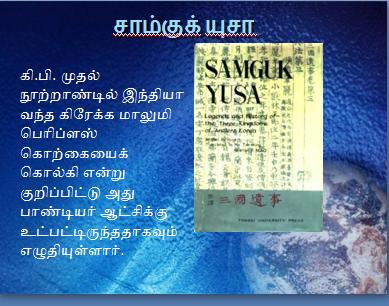
    The legend of the Indian princess is narrated in Samguk Yusa which was set in the Kaya kingdom in the first century CE. It says, in the south central Korean peninsula, was first ruled by nine elders, but there was no king. One day, due to a voice spoke from heaven at a place called Kuji and by following that, a plum-coloured cord descended from heaven with a gold chest filled with six golden orbs which transformed into a baby boy. The boy grew quickly and reached a height of nine feet. He was now called Kim Suro came to the throne of Kaya. After two years he built his own palace and ruled from there.

    “In the Indian tradition the sea is the source not only of eternal life but sovereignty and sanctity and thus many words and terms are related to Ocean in Rig Veda. Manusmrti states in the beginning , only the water was created and then in the waters he laid his seed. And this became a golden egg ….. from this egg Brahma the ancestor of all beings was born. Moreover magico – religious power lies at the bottom of the sea and is given to heroes by female beings, Nagi (or princess of smelling fish). Along with the Iron age megalithic cultural difference between northern and southern Koreas… this mythological narration of cosmogonic golden egg is also significantly different with that of northern kingdoms and it resembles the Indian tradition especially the legend of princess Heo reminds strikingly the story of Meenakshi in Madurai”. KIM YONGJUN (Ancient Indo – Korean Contacts: Archaeological perspective)

    When the king was adviced to take a bride he refused, saying that heaven had sent him to be king and heaven would take care of his marriage as well. At the same time in India, Huh Hwang-ok was a princess in ‘Ayuta’. The princess says that she was 16 years old when she reached Kaya, that her family name was Huh and her name, Hwang-ok which means Yellow jade. She says, according to her parent’s dream, in which God said, he has sent down Suro to be king of Kaya. Suro is a holy man, and is not yet married. So that their daughter had to become his queen’.

    Huh is said to have arrived in Kaya, along with her brother Po-ok, on a ship with a red sail and red flag. When she was presented to the king, with treasure and gifts she told him of the dream and the king understood at once that this was heaven’s chosen bride for him. As they were married in 49 CE and the queen was greatly loved by all her subjects and lived to the grand old age of 156! The couple had 10 sons and two daughters. As per the Queen’s wish and request, two of their sons were named Huh after their mother’s family name and the rest were called Kims, after King Kim Suro.

    Surprisingly, the same story in ancient Tamil literature the ‘Kuji’ mountainside is referred as ‘Kurunji’ and the prayer song “Guha, Guha” is practiced even today in Tamilnadu. Kurunji Ganam or the song of the mountains of Tamil Nadu resembles Kujiga, says research scholar Dr. Kannan . It is not a simple coincidence that the first Kingdom of Korea is named after Gaya where Buddha attained Nirvana. in celebration of his seven Buddhist monk sons reaching Nirvana. Queen Huh’s 5-metre high earthen mound tomb still stands in the Gyeongsang (South) province of Korea. At this royal tomb of Gimhae, in an archaeological survey researchers found that Koreans have DNA traceable to South or South East Asian ethnic groups like Indian, Malaysian or Thai. The place of origin of Queen Huh needs further research with the base of her Tamil ancestral culture.

    51
    When Korean historians found in Ayodhya paired fishes on the gates of Hindu temples, the gates of academies, government offices, military ranks, law enforcement helmets, and transportation registration centres and hence concluded that the root must be in the state of Uttarpradesh. To consider about the possibility of that Queen Huh might have come from South India rather than Uttarpradesh, which has better evidences of both linguistic as well as archeological, but they were not aware of the ancient Pandiyas ruled the South India with fish as their ruling symbol in their flag and Silk Road by sea was dominated by Pandiyas and not by Mishras of North India.
    Gimhae (Pandiyas) and Cholla (Cholas) suggest that these southern shores of Korea were visited by Pandiyas and Cholas from Tamilnadu in earlier times.

    55
    Thus, if a Pandiyan Queen of authority travelled with a name Pavalambigai. Red Jade would have been called in ancient Korean as Huh Hwang-ok. Since then Koreans started calling their parents as Amma and Appa like Tamil people. Now more than 6000 tamil words have been used by Koreans in day to day life. If Queen Huh had reached the Korean shores from Ayodhya which is a Hindi speaking country they might not have called their parents as Amma and Appa. A portrait of Huh which is depicted at the royal tomb in Gimhae is a peculiar feature of Queen Huh who had a long ear lobe like women of Tamil country side which have been regarded as a sign of superior status and spiritual development .

    As in Tamilnadu, in Korea also marriage is considered as an important relationship between families rather than individuals and also respect for elders. After the father the elder son has the responsibility for the family in Korea as in Tamilnadu and also ancestral worship is still a primary function in Korean families.

    The staple diet for Koreans and Tamils is the same as rice . Several food items like rice cakes, rice puff, lentil cakes etc are similar in both cultures.

    3
    According to my knowledge Pandiyan princess Pavalambigai might be the native of Kongu Nadu which is referred as Aykongu in ancient Italian map.

    Travelling several thousand miles alone in that olden days, a young woman needs to have guts and should be aware about her tradition as well as culture. The history shows that in Tamilnadu, Kongu Nadu women have their family responsibilities, religious practices, social relations and expert in agricultural work. Yes, there are some special properties for certain places. People who have appeared in some places have the unique characteristics of that place. It has been proved with Sangam Literature and archealogical evidences, cultural resemblences, traditions, Iron casting works, beads collection etc… and published the book in Tamil named, “கடைச்சங்கத்தில் கொங்கு கலாச்சாரம்”.

    Kongu nadu comprises the modern day districts of Coimbatore District, Nilgiri District, Tirupur District, Erode District, Namakkal District, Salem District, Karur District, parts of Dindigul District in the South Indian state of Tamil Nadu and also parts of South-western India including parts of Palakkad District in the Kerala state and parts of Chamarajanagar District in Karnataka state. The Western Ghats mountain range passes through the region with major rivers Kaveri, Bhavani, Amravati and Noyyal flowing through the region.

    In order to find out the exact silky route of the Princess, Universities and Research Institutes in Tamilnadu should focus more on topics dealt in this article. Substantial research is due.

    Surprisingly, we could find some evidences regarding this interesting research at Bhavani, a small town near Erode, Kongu nadu with a main river of the same name.

    62
    Bhavani, which is the second longest river in Tamil Nadu and a major tributary of the Kaveri River is a major river in Kongu Nadu region of Tamil Nadu, India. Bhavani river originates from Nilgiri hills of the Western Ghats and 217-kilometre long . 0.62 million hectares of area spread over Tamil Nadu (87%), Kerala (9%) and Karnataka (4%) have been watershed by Bhavani river. The majority river courses mainly through Coimbatore district and Erode district in Tamil Nadu. About 90 per cent of the river’s water is used for agriculture irrigation.

    Bhavanisagar dam which is located on the Bhavani river in Erode district, Tamil Nadu, India is one of the largest earthen dams in the world. This dam is situated some 16 km west of Sathyamangalam and 35 km from Gobichettipalayam. The Lower Bhavani Project was the first major irrigation project initiated in India after independence in 1948.

    Once upon a time in ancient days people say Bhavani river was flooded many times. During this flood Gautama Bhudda’s daughter Sangamithirai drowned in this river. Evidences for this local belief should be searched through researches. There is also a strong belief that in ancient days one of the charroits of a princess was drowned in this Bhavani river with full of valuable wealths. Even now some people take much pain to find out this charriot illegally. This might also be taken in to account for research.

    Anthiyur near Bhavani, Erode is a major horse market in Tamil Nadu. It has a very long history for attracting buyers from Arabia too, long back.

    Near Bhavani we could find some more evidences like Pandya thittu (stage), ancient village temples with Pandya fish symbols, beads collecting areas etc…

    37

    At Bhavani every year they celebrate mud festival as like Korean festival, that too around the same time! Its really a much surprising news for Korea – India relationship researchers!

    A thorough study of the ancient and ethnically enhanced Kongunadu for more than three thousand years is an essential requirement for the excavation. Kodumanal excavations and Pattinam excavations prove this. The ruined old towns of Kongu Nadu are the longest paths of their domestic overseas trade with their Jain Buddhist Pilgrimage through Waterway, landway and seaway. If new study of weaving and iron casting industry has been made possible, it can be proved that both South Kongu and Gaya had been developed relatively by Tamil merchants.

    The hypothesis is that the idea that Tamil bhuddism might have been introduced by the tamil traders, particularly by the Aykongu traders in the Gaya country of 50 BC.

    There is another assumption that the iron weapons, statues made of melted gold and the iron casting made in kongunadu spreaded in kadaram and the Korean’s Gaya country, from which the Koreans made the iron weapons like sword. Through tamil traders iron casting, colour beads, red corals, golden ornaments might have been exported to korea.

    Tamil traders, for their business purpose introduced Buddha’s numerical routes to Afghanistan in the northwest of India and introduced it to Tamil Nadu and neighboring northern Sri Lanka. Tamil traders who became the Buddhist witnesses to the Tamil Buddhist Ministries prior to Ashoka introduced the Buddha’s propagation.

    Before the advent of Ashoka’s bhuddism Tamil Buddhism could reach Korea and collect data to spread and the Tamil Buddhism went to Korea through China. Korean researchers also have reported that it is possible that the girl might have crossed the sea in the western direction of South Korea and married Gaya king.


    Share
  • What gets Tamil audiences rolling in the aisles? Crazy Mohan knows

    Sruthi Ganapathy Raman

    ‘Return of Crazy Thieves’ is the latest sidesplitter from the Tamil playwright and movie dialogue writer

    69622-jceksteoyk-1506599554

    On April 11, 1976, Rangachari Mohan’s play Crazy Thieves in Palavakkam was premiered in Chennai through fellow playwright SV Shekar’s drama troupe Nataka Priya. The heist-gone-wrong comedy became an instant hit and gave Rangachari a new name, one he has been known by ever since: Crazy Mohan.

    Over four decades later, Crazy Mohan is still going strong, nearing almost 1,000 productions of the immensely popular Chocolate Krishna apart from headlining Return of Crazy Thieves, a sequel to the play where it all began. This apart from writing a new script based on his novella KPT Sirippu Rajan.

    “I would call writing an accident,” Mohan said, sitting beside a figurine of Krishna, a character he frequently plays in his skits, at his home in Chennai. “Usually you lose your life in an accident, but I got my life in this accident.”

    Chocolate Krishna

    Mohan’s troupe Crazy Creations, created along with his brother R Balaji in 1979, has staged numerous plays as well as tapped into the Crazy Mohan brand of comedy for television through the serials Here is Crazy and Siri Siri Crazy. Movies were the next logical step. Introduced by Kamal Haasan to the big screen, the engineering graduate has written dialogue and screenplays for numerous films, including Apoorva Sagodhargal (1989), Michael Madana Kama Rajan (1990), Sathi Leelavathi (1995), Avvai Shanmughi (1996), Kaathala Kaathala (1998) and Vasool Raja MBBS (2004). His dialogue provides wisecracking commentary on daily life. In an interview, he reveals some of his trade secrets.

    In February 1972, you wrote your first skit ‘Great Bank Robbery’ for an inter-collegiate contest.
    I was not a writer back then. My first nature is not writing. My first nature is painting. Writer Sujatha Ranganathan used to say that every writer has an inclination for painting. Probably it was that. There was no big writer in my family as well.

    Your play ‘Crazy Thieves at Palavakkam’ became an overnight sensation. Is that where it all began?
    Yes. After Crazy Thieves in Palavakkam, I had written a lot of other scripts. Katchatheevu, Cleopatra Swayamvaram are some of them. Kamal Haasan subsequently performed in my drama Yamane Nee Vazhga in Singapore, with Nagesh.

    Once that came out, Kumudam magazine featured my name and my brother Balaji’s name under “Valarndhu Varum Kalaignargal” (Budding artists). At that point of time, I never thought I would become a writer. I wanted to pursue engineering. But it became such a hit that I ultimately became a writer.

    What is the story behind your stage name?

    I wrote Crazy Thieves in Palavakkam under my name Rangachari Mohan. To my surprise, a short story that I had given to Ananda Vikatan titled Karigala Karigala was printed under the name Crazy Mohan. The name was very unfamiliar, so I asked the editor V Srinivasan as to why he had printed it that way. He told me, from now on, you are going to be Crazy Mohan. My thatha [grandfather] gave me my name and the Vikatan thata gave me my screen name.

    Here’s Crazy.

    Your first film was K Balachander’s ‘Poikkal Kuthirai’, which was based on your drama ‘Marriage Made in Saloon’. How did you become part of that project?

    Balachander at that time wanted to make a film based on a drama. He watched Marriage Made in Saloon and really liked it. You can actually consider Balachander as Columbus. He only invented the great America like Rajinikanth and Kamal. And he also invented a small island like Crazy Mohan. He had the touch of Midas.

    The young generation enjoys your comedy with the same enthusiasm as they did in the ’80s. How do you manage that?
    For every man’s success, there is a saying that there is a woman behind it. For my success, it is my joint family. I used to live with my grandparents, and I still live with my 93-year old dad, maternal and paternal aunts and uncles. If you write for your family, you will know how to write for the audience.

    Has your process changed over the years?

    Since I have written for a lot of films, I would say that it has become only easier. The screenplay quickly forms in my head. In those days when I used to write scripts, I wouldn’t know the ending. When I wrote Crazy Thieves In Palavakkam, I did not know the ending and I kept writing. I wrote Marriage Made in Saloon for over 1,500 pages. It was subsequently edited.

    The scripts I write nowadays are much shorter and my editor’s job is that much simpler. I am able to mentally form screenplays in my mind, so I can write quicker.

    But I have to say that I have lost the innocence that I had during Crazy Thieves. People think you become more intelligent as you grow up. But you actually become an idiot as you grow up. I do not have the sharpness and alertness of a young person. Kilaroli ilamai keduvadhan munnam: before the bubbling youth fades, you must acquire knowledge, said Tamil poet Nammalvar.

    What is your relationship like with Kamal Haasan?
    We used to be friendly relatives and now we are relatively friends. Coming back to the woman behind a man’s success saying, I too have a woman behind my success and it is Avvai Shanmughi (starring Haasan). If I do a drama in Chennai, he will definitely be there. The common umbilical chord between us is humour.

    https://youtu.be/uoyjLReqH70

    Avvai Shanmughi (1996).

    What gets Tamil audiences rolling in the aisles?

    We have a snobbish attitude. If Goundamani and Senthil do a comedy bit about smashing a cake on each other’s faces, we disregard it as rustic and tasteless. But if the same bit is done by Laurel and Hardy, we enjoy it. Goundamani and Senthil are a very important part of Tamil comedy.

    Which comedians inspire you?

    PG Wodehouse. It is there right in his name. He has done a PG in humour. The others are Kalki, Devan and Bhagyam Ramasamy.

    You have written comedy for television, cinema and drama. How different is each medium?

    A drama is written, whereas cinema is seen. In dramas, you cannot even see your audience after the first two rows. There is no close-up or mid-shot. The acting is only in the dialogue.

    The problem with cinema is that it is like wedding food. A lot of people come to a wedding – a BP patient, sugar patient, a Bengali. You have to think about all audiences and write the script. In cinema, you also have to think about the image of the actors while writing dialogue. But in drama, there are no such problems. But that doesn’t mean drama is easy. Drama is like home food.

    Nowadays the stand-up comedy is also evolving. When I go to the US, I myself do a bit of stand-up. I usually write about my experiences in the US.

    Do you have a favourite between the two mediums?

    I prefer drama. Drama is live. No matter how how many channels telecast a cricket match, there is nothing like watching it live from Chepauk stadium. You can also see people react live when you perform on stage.

    Michael Madana Kama Rajan (1990).

    Nearly all your female leads go by the name Janaki, whether in plays or films.

    Everybody thinks Janaki is my former lover’s name or my wife’s name. But actually, Janaki is the name of my drama teacher in school. At the age of six, she taught me the nuances of dramatics. She made me play the role of the leader Veerapandiya Kattabomman in a school play. She was probably one of the reasons I got suddenly interested in dramatics. So naming the female character Janaki was my way of giving her guru dakshinai – a token of respect.

    What is the idea behind the characters Maadhu and Cheenu in your plays?

    Humour is definitely the most effective in a pair. There is left and right in the brain and there is the yin and yang. The joining of both these things are very effective. Sujatha has written about the pair Ganesh and Vasanth in his novels and in the same way I created Maadhu and Cheenu.

    https://youtu.be/BrGGXpIRC78

    Maadhu and Cheenu in Sirithidu Seasame

    Have you ever gotten into trouble for writing comedy?

    Unless you write about politics or vulgarity, your freedom of speech will not be restricted. So I do not write politics or vulgarity. Even if I do so by mistake, Balaji will cut it out. If we have almost completed over 1,000 dramas this year with Chocolate Krishna, that is what I will call the success of Crazy Creations.

    What is your upcoming drama ‘KPT Sirippu Rajan’ about?

    It is about the past lives of kings and queens. The lives of kings and queens are not just filled with stories about the battlefield. Even they have family members and plenty of feuds. The play revolves around the personal lives of these kings and queens. In the Tamil magazine Junior Vikatan, I wrote a serial by the same name. KPT are the initials of the king.

    Thanks for the courtesy.

    https://thereel.scroll.in/852081/what-gets-tamil-audiences-rolling-in-the-aisles-crazy-mohan-knows

    Share
  • Atmanam 3rd Year Award Function – Sep 30, 2017

    Krishna Prabhu

    INVITATION

    Good evening,

    We cordially invite you to join us for Atmanam award function on Saturday, 30th of September 2017 from 05:00 to 7:30 P.M at Kaviko mandram, Mylapore – Chennai.

    About Trust:

    Atmanam Trust, a registered body instituted to commemorate the memory of the Tamil poet Atmanam (1951-1984), has been functioning from 2014. Right from its inception, it has been contributing significantly to poetry, poetics and contemporary Tamil literature. It presents an annual award to a Tamil poetry collection.
    The inaugural Atmanam Award for poetry was presented to Isai in 2015 in Chennai by the Kannada poet and playwright H.S. Shivaprakash. The second annual award was given to K. Mohanarangan for his collection of poems ‘Meekaamam’ in2016 in Erode. The Malayalam poet Anitha Thambi was the chief guest.
    Besides according awards to writers, the Trust organizes seminars and critical review meetings on the works of contemporary Tamil writers. A seminar on the works of Sukumaran, ‘Sukumaran – 60,’ and a review meeting on a five-novel compendium, ‘Kanavuchirai’ by Devakanthan, were organised in Chennai.
    The 2017 award for poetry goes to Anar for her collection of poems ‘Perungadal Podukiren.’ The Trust has founded another annual award in the name of Atmanam to a book of poems translated from other languages into Tamil. N. Sathyamoorthy gets the inaugural award for the same for his translation of Rumi poems from English entitled ‘DhakamKonda Meenondru.’ The 2017 award function will be held in Chennai on 30th Sept 2017. Professor K. Sachidanandan, the Malayalam poet and critic, will give away the two awards. The Trust publishes annually a collection of articles on the award winning works.

    Thank you.

    Note: Please find the attached file for event details.

    – Atmanam Trust,
    Chennai.

    Krishna Prabhu
    Mob: 96006 14472

    Share
  • Srinivasa Ramanujan – INDIAN MATHEMATICIAN

    C.K. Ashok Kumar

    12241598_476611115855389_1576279474849275568_n

    I was thrilled and excited when I came to know on my UK visit, ( as a part of the Indian Delegation of higher learning) to trinity college Cambridge that Ramanujam the mathematician of par excellence the greatest one mother India had created was the proud alumnus of this historical institution.

    I must acknowledge the quality of education imparted here is of the highest standards that even the dullest head will become a brilliant one. But the selection process and getting an entry here will be very very tough as they look for bright talents and it not for average or a dull student. All can’t become Ramanujam’s but one can spot the right talent and connect to the exceptional universities like Cambridge Godfrey Hardy. 


    On my visit back to India I would passionately search for the unsung heroes from namma Cuddalore my mother land and from rest of India and connect them to world class Universities. 


    I know very well I can’t be a Ramanujam but definitely I can make a sincere effort to make one.

    https://www.britannica.com/biography/Srinivasa-Ramanujan

    Share
  • I-T raid unearths huge bribes paid for gutkha sale in Tamil Nadu

    Innamburan

    unnamed (2)

    The Income-Tax department is awaiting a response to a letter written to the Tamil Nadu government seeking further investigation into suspected bribes of almost ₹40 crore paid to a Tamil Nadu Minister and top officials of the State.

    The letter, written on August 11, 2016 by the investigation wing of the I-T department, followed a search on the premises of a leading gutkha manufacturer in Chennai. A ledger seized during the raid lists alleged payouts to senior bureaucrats and police officers apart from the Minister.

    Documents available with The Hindu suggest that a partner of the gutkha manufacturer – which markets the MDM brand of the product – corroborated that the money was paid out to them. This was allegedly done over a period of one year as a quid pro quo for facilitating the sale of banned gutkha in Chennai.

    In his letter sent to the Chief Secretary and the Director-General of Police, a copy of which is available with The Hindu, the Principal Director of Income Tax (Investigation) B.R. Balakrishnan states that the ledger containing payouts was seized from the residence of a woman accountant who worked for the firm.

    The letter goes on to say that Madhava Rao, one of the main partners of the firm, had confirmed that these payments were made to the bureaucrats and the Minister. The Income-Tax department has so far not made any enquiries with the alleged recipients of the money. Attached with the letter were the relevant extracts from the statement of accounts which suggest that voucher payments were made to senior officials of the Chennai police, Chennai Corporation, Health Department, Food Safety Department and Central Excise among others.

    In the statement recorded before Kannan Narayanan, Deputy Director of Income Tax (Investigation), Mr. Madhava Rao is stated as referring to the payouts as “incidental expenses incurred by us as we are running the business of manufacturing and sale of gutkha which is not legally permitted in Tamil Nadu.”

    Mr. Rao is stated as having explained the coded references in the ledger. For example, GE (Delhi/CE/Rao) is said to have meant “General Expenses, Central Excise officer”. The amounts paid were listed under different heads — as monthly expenses, Deepavali bonus and Christmas bonus.

    Following the receipt of the Income-Tax department’s letter seeking further action, the then Director-General of Police had sent a report to the Chief Minister, according to sources in police headquarters. The documents are still pending with the government for action. However, a couple of months ago, on the basis of another letter written by the then Commissioner of Police, the Tamil Nadu government did refer the issue of illegal sale of gutkha and the possible connivance of police officers in abetting this for an investigation by the Directorate of Vigilance and Anti-Corruption.

    Income-Tax department officials suspect this was done to ward off criticism that no action was being taken in the gutkha matter. Significantly, the DVAC has made little progress in the case.

    Link: http://www.thehindu.com/news/national/tamil-nadu/i-t-raid-unearths-huge-bribes-paid-for-gutkha-sale-in-tn/article19151296.ece?homepage=true

    Photo courtesy ; http://www.chennaitodaynews.com/wp-content/uploads/2015/09/gutkha.jpg

    Share
  • TEACHER AS A PROFESSIONAL

    G. Balasubramanian

    “A Teacher impacts Eternity” is an age old saying. But the truth of the statement can never be debated. The impact a teacher makes on the lives of a learner is so significant that it shapes the learners’ thoughts, perceptions, life styles, thinking and activities. However, from the perception of a teacher as the fountain-head of all knowledge from where the wisdom flows have undergone a tremendous change and in the instant knowledge society, where there is mind-boggling flow and dynamics of knowledge, the teacher is required to be competent, contextual and relevant. (S) he needs to have a more focused professional approach to deliver the defined, required curricular competencies to a challenging classroom. The teacher is required to be more than an information broker but a guide, facilitator, mentor, counsellor and motivator.

    A professional degree in education may be an added advantage but does not necessarily incorporate in an individual a professional attitude to teaching. What are the required competencies from a professional teacher? They may be many but certain core competencies are as under:

    1. Teacher as a learner:

    With the speed of knowledge dynamics, the teacher is required to be an eternal learner.  Emerging systems of knowledge, skills, applications impact life styles and skills so much, that the learners are in constant touch with these changes and absorb them more easily than their elders. The teacher has, therefore, to be well aware of the emerging knowledge and participate in the learning process along with their students. The role of a teacher is becoming a “co-learner.”

    1. Technology relevance:

    The emerging tools and appliances in technology and their integration with the content and the methods of learning has taken away the formal learning methods to an ‘informal learning’ platform. The cognitive psychologists claim that a near 90 percent of learning of students is from ‘informal learning’ environments, rather than the formal ones. The ‘search’ for knowledge is leading to ‘research’ about their validity, use and contextuality to life. Technology as a learning tool has manifested in multi-dimensional ‘avatars’ and hence the teacher has to be not only ‘technology literate’ but ‘technology competent’

    1. Pedagogical skills

    With a wide-based research in the role and function of the human brain, the understanding of cognition is getting redefined. Neuro-cognitive researches claim that it is only ‘learning ‘that happens in the brain and hence the approach to pedagogy to enable and empower learning must be more focused, appropriate and learner-friendly. The understanding of differentiated learning skills calls for application of a wide-variety of delivery modes and better use of space and time in a classroom environment. The understanding of ‘multiple intelligences’ and the need to enlarge the spectrum of learning experiences in formal and informal spaces in learning calls for more creative and diverse approach to methods of classroom transactions. The success of a professional teacher is related to the ‘pedagogical intelligence’ of the individual.

    1. Communication skills

    The ‘one-way’ traffic of information flow where the learner is a mute learner in a silent classroom is no more acceptable. A teacher is required to be an effective communicator engaging with the learners using a wide variety of communication skills both verbal and non-verbal. The understanding about NLP (Neuro-linguistic programing) and its use to motivate, engage and facilitate a conducive and creative learning environment in a classroom is being debated worldwide. Teachers need to understand their effective implementation in a classroom. The ‘body-language’ of the teachers in a classroom needs validation, professionalism and finetuning for enhanced performance.

    1. Mentoring skills

    Learning is a unique individualized activity. No two learners learn the same way. The aptitude, attitude and the socio-economic environment of the learners impacts their purpose, destination and objectives of the learning. It is important that teachers need to understand, appreciate and mentor the learning curve of each of the learners in their orbit and mentor them more closely and effectively. The ability to counsel them both for their academic and emotional growth profile becomes an engaging responsibility of a teacher. Finding time and space for engagement with each of their learners is indeed a challenging proposition, but becomes an unavoidable one.

    While a ‘passionate teacher’ is a great asset to the system, absence of ‘professionalism’ derails their journey to the ever-changing destination. Mere ‘professionalism’ might provide all the required concurrent skills, but a human touch to the environment is empowered by a ‘passionate approach’.

    The learning curve appears to be a marathon and hence better and effective use of mental, emotional and intellectual competencies of the teachers is required to be a meaningful participant in this race!

    Share
  • Chitrasabha

    Pavala sankari

    Kuttralanatha Swamy temple, at Kuttralam, Tamil Nadu

    imag0349
    Kuttralam is a popular tourist resort in Southern Tamilnadu known for its waterfalls, amidst picturesque surroundings – and is a source of inspiration of many a literary work.

    The Chitrasabha is a stand-alone structure that is located a few blocks away from the Kuttralanathar temple at Kuttralam in southern Tamilnadu.

    imag0316

    Architecturally the Chitrasabha resembles that of the other Nataraja Sabhas elsewhere in Tamilnadu, and its interior is decked with hundreds of murals, depicting images from the Indian epics. The five dance halls of Shiva are Chidambaram, Madurai, Tiruvalankadu, Tirunelveli and Kuttralam.

    imag0313

    s1051

    Chitrasabha is a wooden structure, every inch of these walls are lined with murals depicting scenes from the epics. Nataraja along with Tripura Sundari and Shri Yantra and 16 forms of Ganapathi , episodes from the lives of 63 Saivite saints, Nayanmars, based on the Tamil work called “Periya Puranam” sung by Sekkizhar are also depicted in these paintings. The story of Madurai Meenakshi is one of the masterpieces depicted in these murals.

    chitrasabai

    courtallamchitrasabha7

    kuttralam

    kuttrala

    The 400-year old murals, belonging to the Nayaka period, are located in a mantapa called Chithra Sabhai, in the temple.

    They were originally painted using plant pigments and natural dyes. Art historians allege that most of these murals have now been repainted between 2010 and 2013, using modern garish colours, violating conservation norms. Many murals had been repainted by introducing new colours and even 3-D techniques. The faded portions of some murals had been re-touched and chemical cleaning had been done.
    Photographs are strictly prohibited inside Chithra Sabha.Paintings courtesy through internet.

    திருக்குற்றாலம்

    நெல்லை மாவட்டத்தில் தென்காசிக்கும் செங்கோட்டைக்கும் இடையில் குற்றாலம் உள்ளது.
    ஆடல்வல்லான், திருத்தாண்டவம் ஆடிய ஐந்து சபைகளில் சித்திர சபையும் சிறப்பான ஒன்று. சித்திர சபை குற்றாலநாதர் ஆலயத்திற்கு அருகே அமைந்துள்ளது. இதன் எதிரே தெப்பக்குளமும் , சுற்றிலும் மதில் இருக்க, நடுவே சித்திர சபை அழகாக அமைந்துள்ளது. மரத்தாலான அற்புதக் கலை வேலைப்பாடுகளுடன் கூடிய இந்த சித்திர சபையின் ஓவியங்கள் மிகப்பழமையானவை. 400 ஆண்டுகளுக்கு முன்பு நாயக்கர் காலத்தில் அமைக்கப்பட்டுள்ளன. மரக்கோவிலின் கூரை சிதம்பரத்துக் கோவிலின் கூரையை நினைவூட்டுவதாக அமைந்துள்ளது. இந்த சித்திர சபையில் உள்ள இரண்டு மண்டபங்களில் ஒரு மண்டபத்தில் நிறைய சாளரங்கள் இருக்கின்றன. இக்கூடத்தின் நடுவே அமைக்கப்பட்டுள்ள சிறு மேடையில் திருவாதிரை நாளில் நடராசப் பெருமான் காட்சி தருகிறார். கூடத்தின் நான்கு பக்கங்களிலும் அற்புத ஓவியங்கள் அழகுடன் தீட்டப்பட்டிருக்கின்றன. இச்சித்திர சபையின் வெளிச்சுற்றில் ஊர்த்துவதாண்டவம், பத்திரகாளி, முருகன், சூரபத்மன், சிங்கமுகன், தாரகன், மன்மதன், ரதி ஆகிய உருவங்கள் வண்ணத்தில் எழுதப்பட்டுள்ளன. சிவபெருமான் நிகழ்த்திய 64 திருவிளையாடல்கள், துர்க்கையின் பல்வேறு வடிவங்கள், வீரபத்திரர், கஜேந்திரமோட்சம், அறுபத்துமூவர் உருவங்கள், பத்மநாபரின் கிடந்தகோலம், இரணிய வதம், பைரவரின் பல்வேறு உருவங்கள், சனிபகாவன் ஆகியவை அழகுற வண்ணம் தீட்டப்பட்டுள்ளன. சித்திர சபை எதிரில் தெப்பக்குளமும், நடுவில் மணிமண்டபமும் அமைந்துள்ளன.
    சபையின் உள்ளே நடராசர் திருவுருவம் அன்னை சிவகாமியுடன், தேவர்கள் தொழுமாறு அழகாக வண்ணச்சித்திரமாக வடிவமைக்கப்பட்டுள்ளது. பார்வதி கல்யாணச் சிற்பம், குற்றாலநாதர் அகத்தியருக்குக் காட்சி தந்தது, சுப்பிரமணியரின், விநாயகரின் பல்வகைச் சிற்பங்கள் முதலான ஏராளமான சிற்பங்கள் இச்சபையில் உள்ளன. இச்சித்திர சபையின் வெளிச்சுற்றில் ஊர்த்துவதாண்டவம், பத்திரகாளி, முருகன், சூரபத்மன், சிங்கமுகன், தாரகன், மன்மதன், ரதி ஆகிய உருவங்கள் அழகுற தீட்டப்பட்டுள்ளன.
    சித்திர சபையின் ஓவியங்கள் புகைப்படம் எடுக்கத் தடை செய்யப்பட்டுள்ளது. இணையப்படங்களுக்கு நன்றி.
    “உற்றாரையான் வேண்டேன் ஊர்வேண்டேன் பேர்வேண்டேன்
    கற்றாரையான் வேண்டேன் கற்பனவும் இனி அமையும்
    குற்றாலத்தமர்ந்துறையும் கூத்தா உன் குரைகழற்கே
    கற்றாவின் மனம் போலக் கசிந்துருக வேண்டுவனே”. (திருவாசகம்)

    “காலன் வருமுன்னே கண்பஞ்சடைமுன்னே
    பாலுண் கடைவாய் படுமுன்னே – மேல் விழுந்தே
    உற்றார் அழுமுன்னே ஊரார் சுடுமுன்னே
    குற்றாலத் தானையே கூறு”. (பட்டினத்தார்)

    Share