Category: English

  • Triumph of all good over all evil

    Triumph of all good over all evil

    Jayanthi Sankar

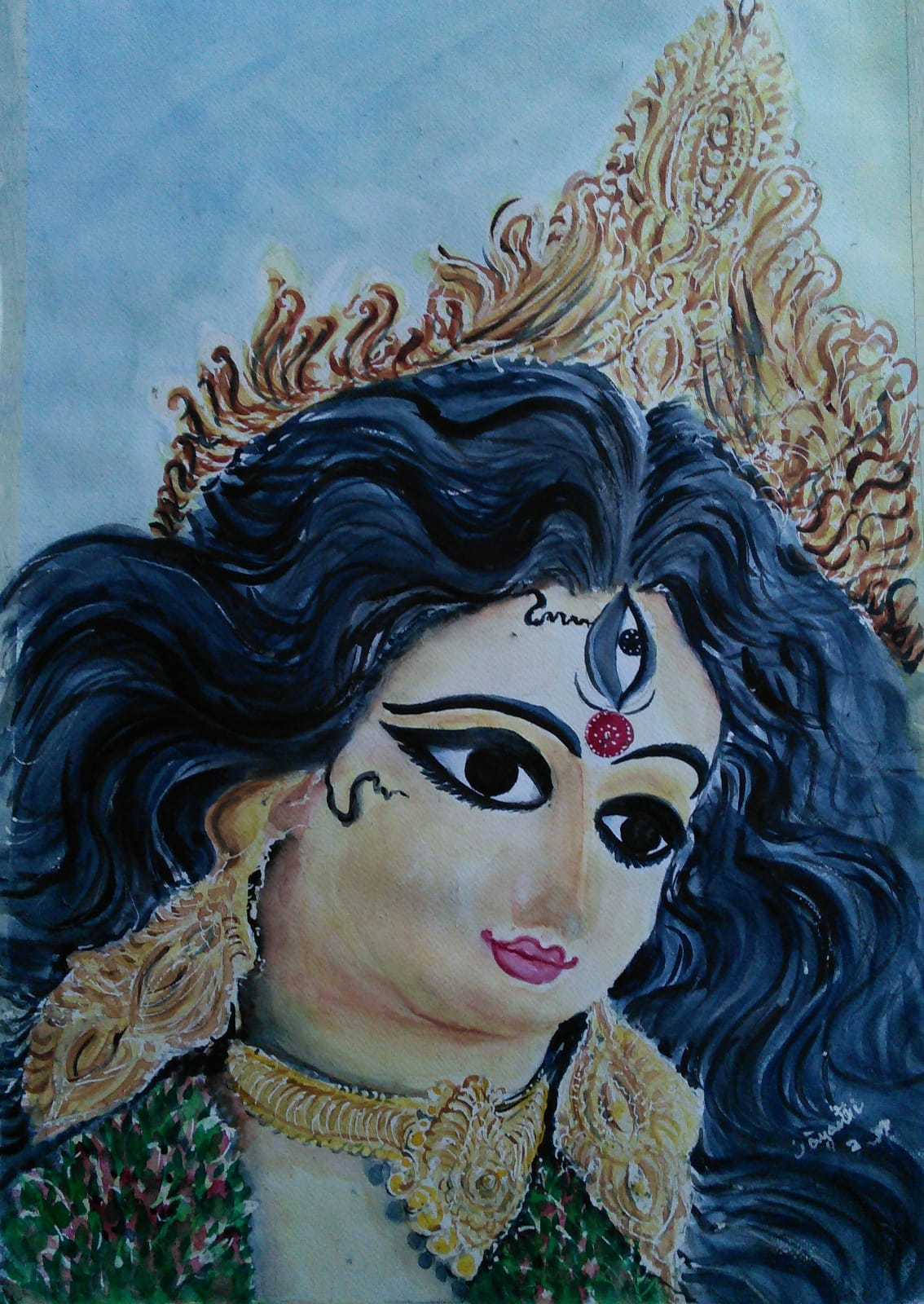
    As you can notice this is the first time I’ve matched a festival season, though by a mere coincidence. The basic pencil sketches and needed maskings of these two Devis on A1 sized 300mg watercolour papers were ready two months back but I couldnt paint because of a few unexpected jobs that demanded more of my time and attention. And when I revisited them a few days back Navratri / Pooja / Dassera had just begun. As I’d wanted, finally, these paintings helped me break the monotony that was building. Very happy Navratri! The back light in Kali ma taught me certain technics and my learning continues.

    Share
  • Annakannan Ideas – 36

    Annakannan Ideas – 36

    Dr.Annakannan

    After a heavy rain yesterday, I had a ride on my two-wheeler from Guindy to Tambaram on the GST road, Chennai. I was passing through the metro bridge, received few drops of water from the upper side for few minutes; it makes me feel good. Suddenly I got the idea about Rain Road.

    We can create any road into Rain Road with a roof & drizzle; these drops can be very little & micro. We can operate this according to traffic; if there is no traffic or less traffic, we can control this supply. Along with drops, we can create some air waves; we can raise standing garden in both sides & top. We can also play some mild / melody / romantic tunes.

    This will make an enjoyable ride, will cool riders & make them calm down. They may think positive & contribute well to the society. This will also bring down all dust from the air. Riders choosing this road can wear a rain coat; pedestrians, who don’t want to get wet, can keep an umbrella. We should make the special road to obsorb water instantly; so, we can avoid accidents. Can keep all Do’s & Don’ts, Disclaimers, Precautions in this road. This can be an adventurous ride upto some extent. We can charge a special toll to maintain, manage these roads.

    Share
  • Annakannan Ideas – 35

    Annakannan Ideas – 35

    Annakannan

    Recently travelled in a bypass road (Chennai Ambattur to Tambaram) after 11 PM. Witnessed a police patrol vehicle crossing me. Understood their purpose, if any accident or somebody in emergency need, they may come forward to help. But, they are rushing in more than 60 KM speed; in bypass, you can’t drive in lesser speed. Even if they saw something, they can’t comeback; because it’s one-way.

    Even if they keep CCTV in every kilometer, thay can’t cover the full area.

    I got a solution to this issue.

    Police can use drone patrol with a camera. Can move the drone camera, wherever they want, on the route. If they find any issue, they can send patrol vehicle or ambulance to the location. Not only in bypass, this drone patrol can be extended to all areas, in addition to CCTV. This is economical & highly flexible.

    There is a possibility to hack the drone. I suggest to create invisible drone or bird-like drone to tackle this. If it is traceable by any radar, then we have to apply military technologies to hide from radar.

    Share
  • Annakannan Ideas – 33

    Dr.Annakannan

    Today when I came across a road junction, there is no signal, every vehicle is trying to go first with speed and hurry. More noises, rush & confusions. I thought of an emergency light in every vehicle. Normally ambulances will have such light & sound to move quickly in medical emergency. What, if someone have to catch a train or flight? Heading to an interview or client meet? Rushing to school before the gate closed? Some people may drop their wards & coming back to home in leisure. We really don’t know who is in urgency. In such time, people will think & act differently. This may lead to accidents & damages.

    To solve this issue, we can keep an orange light in front & back (without sound) to show emergency; the other vehicle in leisure can blink a green light as a signal to let them go. People have to use this option carefully with civic responsibilities. We can add this in driverless vehicles too. Do you think, this individual signal will be useful?

    (Akavazhi 33)

    Share
  • My dear tiger

    My dear tiger

    Art by Jayanthi Sankar, Singapore

    While the eyes, tongues, mouth obviously demanded much, the teeth on the other hand required special attention – for details. Masked the teeth to work separately in the end. The two close-ups, on A3, 300 mg watercolour papers, were recommended images by my nephew Arun, London. Every time, I observe with interest- how my interactions with water colour bless me with the inner spiritual progress with better tolerance, endurance, acceptance, and empathy, also bringing a better understanding of my skills. 🙂

    Share
  • Obituary: Dr. Ayyadurai Dhamotharan (1935-2019)

    Obituary: Dr. Ayyadurai Dhamotharan (1935-2019)

    Dr. A. Dhamotharan, a Tamil scholar and former Lecturer of Tamil at  Heidelberg University, passed away on Friday, the 14th of June 2019, at the age of 84 in his hometown Thirumoolasthanam, Kattumannarkoil, Tamil Nadu.

    Dhamotharan completed his schooling in and around his native town and  went to Annamalai University for higher studies. There, he earned his  B.A. (Honours) in Tamil literature (1956-59). Then, serving as a lecturer of Tamil in a college for two years, he enrolled for Ph.D. under the guideship of Prof. V.I.Subramoniam, Department of Tamil, University of Kerala. His topic of research was “The Language of Thirukkural”, a well-known classical text in Tamil. To which he applied the syntactic theory, Tagmemics, expounded by the American linguist Kenneth L. Pike, who was all helpful in sending research materials related to theoretical and applied Tagmemics. Dhamotharan submitted his Ph.D. thesis in 1966. The external examiner for his thesis was Prof. Kamil V. Zvelebil, who highly commended it. While Dhamotharan was working as a lecturer (1967-68) at the Centre for Advanced Studies in Linguistics in Annamalai University, his alma mater, he got an invite from the South Asia Institute to join the language faculty.

    In 1969, Dr. Dhamotharan was appointed as Lecturer of Tamil at the South Asia Institute of Heidelberg University, Germany, by the then head of the Department of Indology Prof. Hermann Berger on the recommendation of the great Tamil and Dravidian scholar Kamil V. Zvelebil. With the appointment of Dr. Dhamotharan at Heidelberg University and Dr. P.R. Subramanian, Lecturer at Institute of Indology, University of Koeln (1972-83), Tamil Studies in Germany made a progress.

    Dr. Dhamotharan worked at Heidelberg University for the next 30 years. He mastered the German language very quickly. During the ensuing three decades he taught Tamil to German students in the medium of German on all levels of the then Master’s program of Indology. While teaching Tamil in a German environment for so many years, Dr. Dhamotharan developed a fine sense of Tamil and German lexicality. He put this linguistic acquisition in use in many Tamil-German translation classes with texts of his favourite Tamil author Jeyakanthan for the great benefit of his students. He also started working on a German-Tamil dictionary. Unfortunately, this project could not be completed.

    During his time at Heidelberg University, Dr. Dhamotharan co-supervised all Tamil Ph.D. projects done at the South Asia Institute; for instance, the theses on Tamil guardian deities by Eveline Meyer, on Tamil reduplication by Thomas Malten, on the grammar of Old Tamil by Thomas Lehmann, and on the Tamil verbal participle and infinitive by Jacques Deigner.

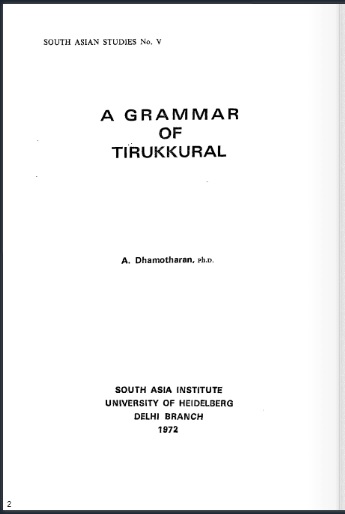
    His main research interest was the editorial work of the medieval Tamil grammatical text Naṉṉūl and its various commentaries. But, first he painstakingly collected the Thirukkural quotes employed by various commentators. He classified those quotes according to the purpose for which they were cited, and his work got published in 1970. Having published also his Grammar of Thirukkural (South Asian Studies No.5, University of Heidelberg, 1972) and a Bibliography of Tamil dictionaries in 1978, Dr. Dhamotharan prepared two fine editions of the Tamil grammatical text Naṉṉūl with the commentary by Kūḻaṅkaittampirāṉ (considered lost, till he found the mss at British library and copied it in his own, highly legible handwriting and published it as it is) in 1980 and with the Viruttiyurai commentary by Caṅkaranamacivāyar (with additions of Civañāṉa Muṉivar) in 1999. In his editorial work he was highly accurate and meticulous and showed his high degree of exact scholarship. In his 1999 edition of Naṉṉūl, Dhamotharan introduced a new feature in Tamil text editing and the format was well received in Tamil Nadu.

    In the year 2000, Dr. Dhamotharan retired from Heidelberg University at the age of 65 and one year later in 2001 he returned to Tamil Nadu. Known for his great expertise in Tamil text editing, he was invited by the Central Institute of Classical Tamil, Chennai, to participate in their project of preparing definite (critical) editions of classical Tamil texts.

    The task of preparing a critical edition of the 8th century text Iṟaiyaṉār Kaḷaviyal was entrusted to him, which he did diligently by comparing the available palm-leaf manuscripts (published in 2013). He worked as a consulting editor for the Tamil Lexicon revision project by Madras University and also for the revised and enlarged edition of Cre-A’s Dictionary of Contemporary Tamil (2008). He served as Honorary Professor at the International Institute of Tamil Studies (2001) and as a trustee of Mozhi, A Trust for Resource Development for Language and Culture, Chennai (2003–07). He brought out another edition of Kūḻaṅkaittampirāṉ’s commentary on Naṉṉūl with additions and notes (Cre-A, 2010).

    Though he had a good grounding in modern descriptive linguistics, his outlook and approach were more historical which helped him delve into the grammatical traditions of Tamil medieval commentaries.

    Because of illness he lived the last few years of his life secluded at his native place in Tamil Nadu. He will always be remembered as an excellent and patient teacher, a fine and erudite scholar and a good friend to many Tamil students and scholars both in Germany and India. He is survived by his wife and two sons. He has been blessed with granddaughters and grandsons.

    Dr. Thomas Lehmann
    South Asia Institute, Heidelberg

    Dr. P.R. Subramanian
    Mozhi Trust, Chennai

    ========================================================

    A Grammar of Tirukkural – e-book

    http://www.tamildigitallibrary.in/book-detail.php?id=jZY9lup2kZl6TuXGlZQdjZU2lJhy&tag=#book1/

    Share
  • A symphony with water colour

    A symphony with water colour

    Art by Jayanthi Sankar, Singapore

    Preserving the subjects with masking fluid to create the back grounds first – with the twilight, the reflections, water surface, the door, and the night sky were the most crucial. Removing masking fluid on the A3, 300mg watercolour papers to work on the subjects needed more care and very gradual building with dilute pigment. My constant dialogues with water in the past two years have been beautifully creating an effect of a symphony in me. Lovely experience🙂

    Share
  • (Peer Reviewed)“I am not a mercenary poet”: The Art of Giving in the Purananuru

    (Peer Reviewed)“I am not a mercenary poet”: The Art of Giving in the Purananuru

    Dr. M. Nazir Ali
    Associate Professor of English (Retired)
    Kanchi Mamunivar Centre for PG Studies
    Puducherry
    Orcid ID: orcid.org/0000-0002-5152-9751

    —————————————————————————————————————

    Abstract

    Giving or eekai has been a much valorised concept in classical Tamil literature and even chieftains have acquired fame much greater than that of the three great kings of ancient Tamilakam precisely because of their acts of giving. On a par with acts of valour, giving has made the giver a legendary figure. Besides, the poets and minstrels and the female entertainers known as viralis depended on this system of giving, a custom honoured by conventions. This paper looks into the intricacies of giving not only by examining the tinai and turais by which it is systematised but goes beyond them because almost every poem of the Purananuru is a praise poem. Instead of the praise becoming songs of sycophancy, the poet’s insistence on being treated with dignity transforms it into a fine art, giving us panegyrics of exemplary intricacy. Though valour and giving are not easily imagined as related acts, the paper attempts to see them as not only historically interdependent, even artistically so.

    Key words: eekai, parisitrurai, parisil katanilai, parisil vitai, paatan, attruppadai

    —————————————————————————————————————

    With the lone exception of the Invocation by Peruntevanar, almost all the poems of the Purananuru are praise poems (Marr 90). The kings and the chieftains and the other unnamed patrons find their valour or generosity and quite often both praised in these poems. The types of valour displayed on and off the battlefield follow a clearly marked system of tinais and turais – themes and situations – that I have discussed in an earlier paper[i]. The act of giving and receiving, on the other hand, has its own turais but it does not have an overarching set of rules and conventions that valour has. This want of rigidity, rather than impoverishing it, has supplied it with innumerable instances of individual giving, worthy enough to make them the stuff of legends and poetry, much more memorable than any act of bravery that the Purananuru has.

    Let me briefly cover the various tinai and turais of giving, a term I prefer to the more ponderous charity, as apt translation of eekai. The paatan tinai covers most praise poems, whether it is praise for a king’s bravery or generosity. Understandably it has the largest collection of poems. The various acts of giving and receiving come under these turais: parisitrurai, parisil vitai, parisil katanilai, paanatruppadai, pulavaratruppadai and viraliyatruppadai. Parisitrurai speaks of the king’s largesse and bards representing their needs to the patron. And it also includes reservations about accepting a gift given by a patron without knowledge of their true worth, a fact attesting to the dignity of the poets. Parisil vitai is sending off the poet laden with gifts, parisil katanilai solicits bounty from a king who keeps delaying his favour. The last three atruppadais are poems giving directions to the minstrel, poet and the danseuse respectively whose abject poverty and also itinerant lifestyle made them go in search of a patron (Marr 468-69).

    Normally referred to as eekai (giving), this attribute is valorised as kodai (munificence) and the one who displays is a vallal or a great giver. Apart from the three great kings of ancient Tamilakam, the muventar, there were also great chieftains whose fame quite often rivalled that of the kings and which proved to be a source of jealousy and war. Perunchitiranar, after listing the seven great chieftains renowned for their giving, observes that his patron Kumanan alone could fill in the void left by their deaths.

    There was Pari, the chieftain who fought his combats with kings
    while their sticks beat down on the royal drums and spotless
    bright conches were sounded, the lord of Parampu where a white fall
    of water rolling stones in its flow thunders down a tall mountain,
    and there was Ori with his powerful bow who ruled Kolli’s shining summit
    and Malaiyan, mighty in war, who was as generous as a rain cloud
    and who won his victories in battle astride his stallion Kari
    and Elini, who reigned astride his Stallion Mountain
    wearing his chaplet of kuvilam and his curving necklace, with his sharp spear,
    and there was Pekan, who ruled over a great mountain with towering summits
    watched over by an unassailable god, on its cold slopes caves full of darkness,
    and there was Ay, whom Moci, whose words are truth, has sung,
    and there was Nalli, who made his enemies flee from him, whose generosity
    was truly noble, who took it upon himself to utterly remove the poverty
    of those who came to him with desire – these seven dead,
    thinking of you now I have come here swiftly … . (158) (Hart 99-100) (My italics)*

    Tinai: Paatan   Turai: Parisil katanilai

    This poem is remarkable not only as a chronicle of the Classical Age, but also for marrying the heroism of the rulers with their generosity. The historical reason for the combination of these disparate traits might be that the conquests in the battle provided the winner with a surplus of goods because of the “Winner takes it all” policy and the spoils later got distributed to those close to them. However, there is an inherent impulse to give which transcends this material reason about which we will see later.

    The profession of composing poetry, the necessary erudition and observation it required, left little time for the poets to engage in any other occupation so that a professional poet like Kapilar could say, explaining the reason for the softness of his hand compared to the battle-hardened hands of his patron, the Cera King Valiyatan:

    You stand on your chariot
    and draw an arrow
    from the quiver on your back
    and fit it to the bowstring
    with your callused fingers.
    Your hands give gifts
    without cease to the prize winners.
    So Chief, your hands are big and powerful.
    But the hands of the one
    who sings your praises
    know only the painful skill
    of holding the staff which smells of meat,
    kindling the smoke that smells like incense
    and eating rice cooked with meat and fat
    but have no other skill – all
    of which make them soft. (Ali 14)

    Tinai: Paatan    Turai: Iyanmoli)

    One can see how Kapilar is able to harmonize the valour of his patron with his generosity as both acts contribute to the calluses in his hands. The profession of being a poet made them depend on a patron even for their daily needs, because, included in the list of objects given as prize, the reader very often finds food and beverages:

    Liquor flowed freely
    from the opened jar.
    With the slaughter of a he-goat
    there was a feast of rice and mutton.(113) (Ali 293)
    (Kapilar on Pari’s Parampu Hills)
    Tinai: Potuviyal   Turai: Kaiyarunilai

    Also, the first need of the travel-weary, itinerant poet who passed through tough terrains and harsh climates was food before he reached the safe portals of his patron. Some of the poems of Perunchitiranar present touching pictures of unimaginable poverty and hunger not necessarily overdone to evoke pity because the graphic details could not be altogether imagined:

    My mother is old. Over and over she complains about how many years
    have passed and she is still alive and her life will not end. Hobbling
    with so many small steps, a stick for an extra leg, her hair like
    spread spring, her eyesight gone, she cannot even walk to the verandah.
    And my love wears her one meagre, filthy garment and she is
    hungry and as she thinks of how things stand with her, she grieves.
    Her body is faded, her breasts withered as the many children moving
    beside her squeeze them and suck at them. In despair she plucks a young,
    half-grown shoot sprouting on a kirai plant on a garbage heap that others
    have picked near clean and she throws it into a pot without any salt
    and sets on the fire. She does not even remember when she ever
    had rice and without any buttermilk she eats the green leaves
    and complains about the Order of the World. (159) (Hart 100-01)

    (Perunchitiranar pleading with Kumanan)

    Tinai: Paatan   Turai: Parisil katanilai

    This also explains the extreme importance attached to food which in turn leads to the valorisation of farming and irrigation:

    Mighty king, who give food, give life itself,
    as the body, without water, cannot be.
    It is the food that makes up this mortal coil.
    And food comes from the union of land and water.
    Who bring water to the land
    are those who create the body and the soul. (18) (My translation)

    Poet: Kuta Pulaviyanar    Tinai: Potuviyal  Turai: MutuMoli Kanchi

    Whether the patrons really understood the historical and literary valuations in their extension of patronage to the poets is unclear. But they really valued the friendship with the poets is evident from this poem of Pandyan Neduncheliyan, winner of the famed battle fought at Talayalankanam. Here the king could be seen taking an oath to destroy his enemies and the consequences of failing to do so:

                                                                               And the poets
    praised for their great skill, Mankuti Marutan with his vast and lofty
    range of learning as well as all the others as firmly established
    as the earth, let them leave my land and sing no more about it! (72) (Hart 56)

    Tinai: Kanchi    Turai: Vanchinak kanchi

    The king not only forgoes the valued friendship of Mankuti Marutan but considers himself all the poorer for not being able to help others. This friendship with the poets manifests itself in extreme acts of giving as seen in these two poems, one by Avvaiyar and the other one by Peruntalai Saathanar. Many of Avvaiyar’s poems are on her patron and long-term friend Atiyaman Neduman Anci, ruler of Takadur (present day Dharmapuri), a friendship which is as much cherished as the one between Kapilar and Vel Pari.

    Without considering how difficult it is to obtain the sweet fruit
    of the myrobalan plant with its tiny leaves, which has to be plucked
    from a crevice on the summit of an ancient mountain hard to climb,
    you kept silence in your heart about its powers,
    and so that you might rescue me from death, you gave me that fruit! (91) (Hart 65)

    Tinai: Paatan   Turai: Valtiyal

    What Atiyaman had done was to give the life-enhancing nelli fruit to Avvaiyar, obtained after great effort, without disclosing its real worth to her. She was touched by this selfless act and the poem is her way of immortalising him. Peruntalai Saathanar, in the extremity of his poverty, approached his patron Kumanan who now lived in exile in the forest after his younger brother Ilankumanan dethroned him and also announced a reward on his brother’s head. More than the loss of his kingdom, what troubled Kumanan was his inability to help the poet in his hour of need and so he made a remarkable offer:

    “I can’t bear being so weak! When I see a great being in need, for him
    to go away without anything would be worse than losing my land!”
    So he handed me his and he offered me his head for there was nothing
    better for him to give me than himself! (165) (Hart 107)

    Tinai: Paatan   Turai: Parisil vitai

    Since then, these great acts of giving have become the stuff of legends and folklore. The legend has it that Ilankumanan became ashamed of his betrayal and restored the kingdom to his brother. The offer of oneself to alleviate the suffering of the poet is further reinforced in this poem of Kapilar praising Pari:

    Even if the singers
    come begging for his own person
    Pari, righteous soul,
    will not say ‘no’.
    He will give himself to them. (108) (Thangappa 147)

    Tinai: Paatan   Turai: Iyanmoli

    Sometimes the impulse to give seems to exceed all bounds of propriety, getting extended to the plants and birds too as it had happened in the case of Vel Pari and Vaiyavik Kopperum Pekan respectively. Pari was credited with the gift of his chariot as support to a jasmine climber as Kapilar states in a poem:

    These are the daughters of that Pari
    whose lofty virtues were known far and wide, who gave a tall chariot
    with sonorous bells, saying, “Take it!” to a jasmine vine adorned
    with flowers, so that it might climb, though the vine had never
    put scars on its tongue through singing that king’s praises! (200) (Hart 126)

    Tinai: Paatan   Turai: Parisittrurai

    Pari’s daughters were introduced to Vichiko through the act of kindness their father had shown to the jasmine vine, indication that even in Kapilar’s time it must have acquired legendary proportions. Paranar made the gift of a shawl to a shivering peacock by his patron Pekan known to the world by making it the stuff of a poem:

    Our king, Pekan, who has horses, who has elephants
    flowing with musth, once gave a garment to a peacock
    in the rain, though he knows they don’t wear clothes!
    Because he feels the poverty of others, because it is
    a virtue to give what one can, he is generous
    and not at all for the sake of a better birth in his next life! (141) (Hart 89-90)

    Tinai: Paatan   Turai: Paanatruppadai

    These extreme acts of kindness and generosity, which have now become textbook examples of Tamils’ culture of giving, may appear at first as simple-minded acts of misplaced generosity, if not downright foolish. One would like to construe them, however, as ecocritically sensitive acts spawned by a culture which fostered biodiversity as well as bioequality and which led to the creation of a whole body of Akam Poetry whose logic of tinai embraced all landscapes, seasons, animals and plants.[ii]

    If the kings and chiefs were by and large quite swift to come to the succour of the poets in need, there were a few who were a little bit tardy in rewarding them and which gave birth to a separate turai of eekai poems known as parisil katanilai:

    He welcomes us still
    as on the first of days,
    though we go there
    not just one day,
    or two days,
    but many days
    with many friends,
    does Atiyaman Anci
    of the jewelled elephant
    and the artful chariot.
    Whether the time for gifts
    comes right now
    or is put off for later,
    it’s like fodder
    left in reserve
    on the elephant’s tusk,
    always there
    at hand, waiting;
    it won’t become a lie.
    O wishful heart,
    do not scramble for it.
    Bless him,
    his works. (101) (Ramanujan 139)

    Poet: Avvaiyar Tinai: Paatan   Turai: Parisil katanilai

    Parisittrurai, though supposed to be a representation of poets to their patron on what they wanted, also has poems on how they wanted it given. It includes musings on the act of giving, a reminder to the king on the dignity that must go with giving and how in the wide world there is no dearth of patrons to the deserving poet. In brief, it inscribes the whole ideology of giving:

    It is disgraceful to beg.
    It is even more disgraceful
    not to give.
    It is ennobling to give.
    It is even more ennobling
    not to accept (204) (Thangappa 170)

    Tinai: Paatan   Turai: Parisittrurai
    (Kalaithin Yanaiyar on Valvil Ori)

    The poem goes on to compare the generous patron to a small pool of drinking water to which all come and the miser, though has wealth like the ocean, never attracts the needy. Perunchitiranar grew indignant at Atiyaman Anci when he sent him away with a gift without even seeing him. The poet insists on being treated with dignity:

    I am no money grabber[iii]
    to accept these riches
    given with indifference.
    I will accept with pleasure
    however small a gift is,
    if given with love
    and after due recognition. (208) (Thangappa 172)

    Tinai: Paatan   Turai: Parisitrurai

    Here is a poem by Avvaiyar written in anger against her patron Atiyaman Anci for the delay in giving her the gift:

    This is no empty world and all the wise
    and famous men are not dead. …
    Whether we go this way or whether we go that way, we will have rice![iv] (206) (Hart 130)

    Tinai: Paatan   Turai: Parisittrurai

    On occasions the patron treated all poets alike, a want of discernment which invited a mild rebuke from the poet as Kapilar does in this one:

    Thinking of the one in one direction
    many will come to get gifts
    from all the four.
    To know their ranks is difficult,
    giving gifts to them is all too easy.
    O mighty chief,
    if you are quite discerning
    do avoid treating all poets alike. (121) (Ali 302)

    Tinai: Potuviyal   Turai: Porun moli kanchi
    (Kapilar advising Malyaman Tirumudik Kari)

    On certain other occasions, the poet felt the need to remind his patron of life after death and how giving outlasted death:

    Even the rulers of countries go to the burning ground …
    And that day will come when you must go there as well,
    but your bad reputation will remain, and your good reputation. (359) (Hart 203)

    Poet: Kavitanar sings Antuvankiran. Tinai: Kanchi   Turai: Perunkanchi

    The poet goes on to counsel the king that giving horses and tuskers and chariots will ensure “your fame will remain here, shining and enduring.” (Hart 203) There were however patrons who preferred anonymity in giving, which made their giving all more remarkable. This poem by Vann Paranar praises Kandeerak Kopperu Nalli, one among the seven great givers, for his stubborn insistence on not disclosing his identity. He fed the poet and his starving relations with venison, gave the poet his necklace of pearls and an armlet:

    Then I asked, “What is your country?”
    but he would not tell me his country. When I asked him, “What
    is your name?” he would not tell me his name! (150) (Hart 94)

    Tinai: Paatan   Turai: Iyanmoli

    Only after asking others, the poet learnt that he was Nalli, the chief of Thotti Hills.

    Some of the patrons stunned the poets by giving gifts which far exceeded their expectations, a turai known as parisil vitai, which meant “sending off with gifts.” As if appearing to make fun of the overblown generosity of Nanjil Valluvan, Avvaiyar compliments him because all that she asked of him was only “a little bit of rice” but he had given her “a giant elephant like a hill.”

    Can one so much as imagine
    a more lopsided gesture of liberality?
    Don’t great men when they are generous show any proportion? (140) (Hart 89)

    Tinai: Paatan   Turai: Parisil vitai

    The poets, bards and other entertainers recognised themselves as belonging to a community of composers and singers and helped each other out in times of need, by directing the needy to a patron whose generosity they could rely on. These poems together form a considerable body known as “attruppadai poems” which meant “setting (the needy) in the right course.” This close-knittedness among the poets – for instance Kapilar is praised by numerous other poets – makes the idea of the existence of an academy of poets (Sangam) not a far-fetched one.

    The gratitude felt by the poets sublimated itself into innovative ways of praise. Kapilar’s very brief poem on Vel Pari comparing him to rain has become a classic in itself:

    “Pari, Pari,”
    -So go the varied praises
    of poets with fertile tongues.
    There is not only Pari
    but also rain
    to sustain this world. (107) (Ali 288)

    Tinai: Paatan   Turai: Iyanmoli 

    It will be observed that in the monsoon-dependent landscape of Tamil Nadu, the rains are vital and giving comes steeped in recurrent images of rain. The poet Mutamociyar asks, wondering at the generosity of his patron in giving elephants as prizes, “O Aai, /do the cow elephants in your land/ give birth to ten calves at a time?” (130)(Thangappa 152) There is also the image of the warrior king whose body bore multiple scars of battle and he is compared to a medicinal tree whose bark has been stripped for use in curing (180), a syncretic image of valour and giving. 

    * The number immediately after the quoted text is the number of the poem in the source text followed by pagination in the target text. The colophon gives the context where necessary. 

    —————————————————————————————————————

    Works Cited

    Ali, Nazir M. Trans. & Ed. (2016) There is also Rain: Collected Poems of Kapilar. New Delhi: Authorspress,. Print.

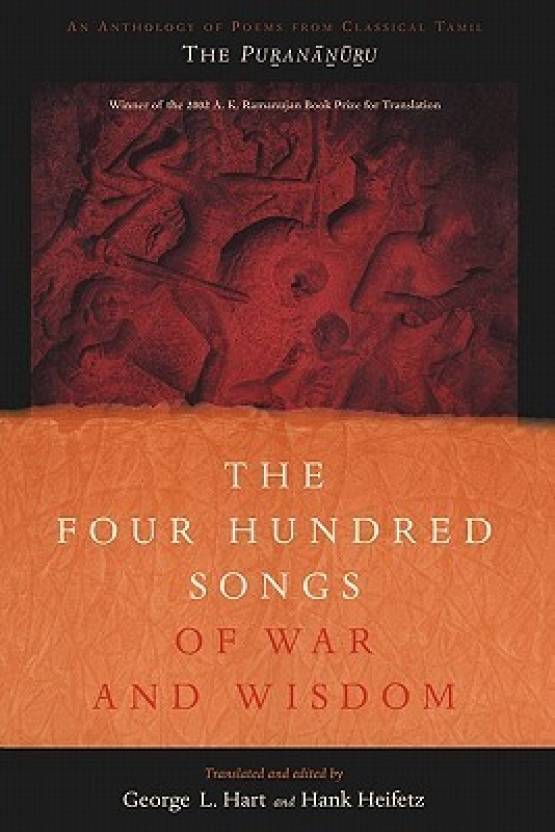
    Hart, George and Heifetz, Hank. Trans. & ED. (1999) The Four Hundred Songs of War and Wisdom. New York: Columbia University Press,. Print.

    Marr, John Ralston. (1985) The Eight Anthologies: A Study in Early Tamil Literature. Madras: Institue of Asian Studies,. Print.

    Ramanujan, A.K. (1999) Trans. Poems of Love and War. New Delhi: OUP,. Rpt.2013. Print.

    Thangappa, M. L.( 2010) Trans. Love Stands Alone: Selections from Tamil Sangam Poetry. New Delhi: Penguin, Print.

    Endnotes

    [i]  Refer “The Purananuru and the Tamil Concept of Valour”

    [ii] Refer “The Logic of Tinai in Akam Poetry”

    [iii] Marr translates it beautifully “I am no mercenary poet,” (188) to which my title is indebted. The source text reads like this: “Kanaatu eetha ip porutku yanor/vanikap parisilan illane”

    [iv] The condensation that Avvaiyar achieves is not even remotely attained by this translation: “Etthisai chelinum atthisai chore”

    —————————————————————————————————————

    Peer Review:

    The article entitled “I am not a mercenary poet”: The Art of Giving in the Purananuru by Dr. M. Nazir Ali, analyses extensively the eekai (charity) thurais in Purananuru such as parisitrurai, parisil katanilai, parisil vitai, paatan, and attruppadai.

    Western scholars Dr. George Hart, Dr. Ralston Marr, and Indian scholars Thangappa, A. K. Ramanujan and the author Dr. Ali’s English Translations on Purananuru are used appropriately in this article. The verses chosen for this article are magnificent, especially those written by Perunchitiranar and Peruntalai Saathanar pleading with Kumanan are soul-stirring.

    As far as poet Perunchitiranar is concerned, despite his penurious state, he refused the meager offering bestowed on him by king Ilaveliman. This poet is also praised for his feminist notions, who treated his wife with equity.

    There are no novel views regarding the verses, however, the explanations given by the author are lucid and clear-cut. In addition to this article, he has published the translation of the Ainkurunuru titled Classical Tamil Love Poetry and the collected poems of Kapilar as There is also rain. It shows his huge interest and fondness for Tamil literature which is a commendable deed indeed!

    —————————————————————————————————————

    Share
  • Why there is a walking stick?

    Why there is a walking stick?

    Dr.Annakannan

    Most of the symbols, icons, cliparts for elders are with walking stick, which I feel irrelevant. This will discourage & demotivate elders to depend on sticks.

    I see many elders without walking sticks; they will walk easily even after 70s & 80s. Elders age is starting at 60; but the need of stick may come to someone after 80 or 90, depends on their physical condition. Certain percentage of users only will use walking stick, I assume it will be around 20%. Keeping a symbol with stick for all elders will not suit.

    Better we can think some other icon for elders, which should be with cheer & celebration. I suggest United Nations to conduct an icon contest at global level to decide by online voting.

    Share
  • An idea to Modi

    An idea to Modi

    Dr.Annakannan

    Biometric authentication like thumb impression can be introduced instead of signing ledgers on the stage while swearing in ceremonies. In every successful thumb impression, a green light can appear to the entire audience. This will be a symboilc representation of Digital India to the entire world. This will convey a silent and strong message to every citizen that we are in a new techno era & India is the leader.

    Similarly, when every minister taking the oath, we can keep a large digital screen in the backdrop of stage & display the name, constiuency, state, with map, qualifications & achievements of that minister.

    While taking the oath & making thumb impression, automatically all government websites, apps, name boards can be updated across India with new minister and portfolios; all those can be displayed on the screen live & instant. We can automate this process. This will make a huge positive impact towards governance & goodwill. People will believe the new India born.

    My best wishes to the new ministry led by Shri.Narendra Modi. You all will make us proud, again and again.

    Share
  • (Peer Reviewed) Simplified Kundalini Yoga Practices for senior citizens

    (Peer Reviewed) Simplified Kundalini Yoga Practices for senior citizens

    Lalitha Ranganathan
    Research Scholar,
    World Community Service Centre, affiliated to Bharathiar University,
    Coimbatore, Tamil Nadu
    Email: lalithar6772@gmail.com

    Simplified Kundalini Yoga Practices for senior citizens

    Introduction

    “Matha, Pitha, Guru and Theivam” are holy words uttered by the intellectuals who realized the life and shown us a way to lead the life with joy and to attain the goal of fulfillment in life. Yoga has taken birth when the first man originated in the world was revealed as scriptures in the Sindhu civilization. The thoughts are recorded by them as Rig, Yajur, Sama and Atharvana Vadas.  After the formation of Vedas, Upanishads, Epics like Ramayana, Mahabharatha came to tell the facts that behind in human life how to face the challenges and to lead a successful life. Also, the Holy Bible, Quran, Granth Sahib, etc., given by the giants who realized the divinity.  But the human in the world today suffering a lot without the spiritual knowledge by reluctant to follow these holy books and suffers by their ignorance, carelessness, and emotions.   Maharishi Vedathri told that once the knowledge of science and spiritual equal in the state of mind among the human, the world will get peace.

    Spiritual knowledge shows a path to lead a life without hurting anyone.  Science must be used for advantages without any disadvantages may be realized by the individuals those having spiritual knowledge.  What is spiritual knowledge? The combination of Discipline, duty, and charity is spiritual knowledge.  Discipline is “Should not harm anyone either physically or mentally and help the needy as much as possible”.  Duty is “Do the service to society by physically as much as possible”.  Charity is “Help to others either physically or financially as much as possible”.

    In modern days, science attained a high place rather spiritual knowledge, if it balances in human life, then no sufferings, man is with full of happiness.

    SENIOR CITIZEN

    ‘National Policy on Older Persons’ was adopted by Government of India in January 1999.   This policy defines, “senior citizen or elderly as a person at the age of 60 years or above”.

    STATUS OF SENIOR CITIZEN

    Integrated care for older people reports by the World Health Organization states that the population of older people has increased substantially in most of the regions around the world.  It also states that increasing age brings risks of disease and dependency, the major burden of disability and death, age-related losses like moving, seeing, hearing, and conditions such as chronic respiratory disorder, diabetes, heart disease, dementia, stroke, musculoskeletal conditions such as osteoarthritis and back pain.  It further recommended community-level approaches in preventing physical and mental capacities and to deliver interventions in support of caregivers.

    Help Age India, 2018 report says that according to 2011 census 8% of the population was 60 years and above and it might be around 12.5% and 20%  by 2026  and  2050 respectively.   This increasing scenario alarms to take care of elders in health care, shelter, finance. Elders reported that due to the usage of phones/computers attention towards them by the adult children/grandchildren decreased.  Thus, this study concluded that attention should be paid against the problems faced by elders for income generation and sensitization programmes for adult children/grandchildren.  (Help Age India, 2018).

    The legislation is enacted by Ministry of Social Justice and Empowerment, Government of India in the year 2007 called “Maintenance and Welfare of Parents and Senior Citizens Act, 2007”  for the welfare of parents as well as senior citizens.  This Act enables the senior citizens who are neglected by their children or heirs by providing maintenance allowance.  Some States in India implemented this Act and other States are taking steps to implement except Jammu and Kashmir.  Once upon a time, the joint family is a backbone of Indian society.  Withering of its culture, the elders are forced to face many problems including physical, financial, social and emotional.  This Act is a remedy to such an extent in relieving elderly problems.  This Act also emphasizes the obligation of children to take care of their parents/grandparents and also the relative of senior citizens to maintain such senior citizens. Also, this Act has provision for the setting of old age homes for needy senior citizens.  If any children/relative are not maintaining their parents/senior citizens, then the senior citizens approach the Tribunal constituted under this Act to enforce the maintenance for the senior citizen. (Wikipedia)

    The publication “Elderly in India” 2016 by Ministry of Statistics and Programme Implementation, Government of India delivered that according to population census 2011, the total elderly population in India is 104 million of which 53 million females and 51 million are males.  The growth rate of elder population has shot up to 36% from 25% between 2001 to 2011.  Population plays a vital role in the development of a country.  Also, development depends on workforce potential.  The transformation of social economic, political affects the human attitude.  The reasons behind our rapid industrialization, urbanization, and migration resulted in the nuclear family.  As a result, a part of the family, particularly, elder faces problems physically, mentally as well as financially.  Hence, a holistic approach is needed to frame programmes for welfare to deal with aging.

    SENIOR  CITIZEN AT OLD AGE HOME

    Generally, the reason behind the people who are residing at an old age home is because of their insecurity.  In India, a deliberate outline is prevailing that son only should take care of their old age parents.  Because of that reason, no one likes to spend their old age along with their daughters, even though they are willing to accompany and take care of them.  Also due to the migration of the younger generation for their employment abroad, their older parents remain lonely without security which leads them to dwell at old age home.  Another thing because of no support from relatives and society people like to live at an old age home.

    Affinity, tolerance, adjustment, and sacrifice were not taken into consideration in today’s modern life.  Many people like to lead their life mostly with privacy and in a short minded.  Technology has developed tremendously but spiritual life consisting of moral, duty and charity have not developed that much when comparing to scientific modern life.  Culture plays an important role in society’s development.  The government implemented many schemes for the welfare of old age people. It must also take appropriate steps by inculcating good moral and law of nature to the citizens then only old age people at home may be excused and live peacefully with their loved ones.

    In the above circumstances, yoga plays a predominant role in solving the old age problem both physically as well as mentally to some extent. Every one hearing the word yoga in the world today.  What is the meaning of yoga?  Doing exercises for the wellness of health is yoga.  No.  Yoga consists of physical exercises as well as meditation.  The origin of yoga takes place in India through the immense efforts of saints by researching on the divine force.  This study has taken into consideration of Simplified Kundalini Yoga framed by Vethathiri Maharishi.

    DEFINITION OF YOGA

    Improving the body to become healthy and the mind to be wealthy by regulating the activities accordingly clear in identifying our own mistakes and nullifying the same, eradicating the old imprints of mind, leading one’s own life happily and getting the ability to help others to lead their life happily is called yoga.                                              

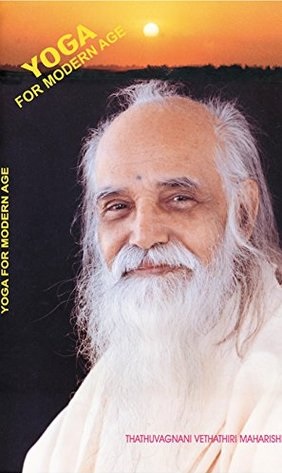
                                                                                                               VETHATHIRI MAHARISHI

    SIMPLIFIED KUNDALINI YOGA

    Vethathiri Maharishi has designed Simplified Kundalini Yoga through years of research and meticulous practice in such a manner that they don’t take much strain to the body.  It has four processes on the whole.  They are Meditation, Introspection, Sublimation, and Perfection.  Also, it consists of Simplified Physical Exercises and Kaya Kalpa.

    SIMPLIFIED PHYSICAL EXERCISES

    There are many kinds of physical exercises in the world.  Vethathiri Maharishi has formulated simplified physical exercises after many years of research taking into consideration his medicinal experiences and their uses.  Maharishi designed these exercises in a simple manner that they don’t strain the physical body much.  There are two stages in the physical exercise.  One is posture and another is movement. There are nine types of physical exercises. By performing these exercises, all parts of our body from head to foot become healthy.  Blood circulation, heat circulation, and air circulation will be regulated.  All Endocrine glands will function well.  Simply, physical exercises bring physical as well as mental health.

    KAYA KALPA

    Kaya means physical body, kalpa means strength. Therefore kayakalpa means strengthening our body for a healthy and long life as the name defines.  Vethathiri Maharishi spent nearly forty years to formulate this practice for the welfare of humankind.  Through this exercise, the energy could be raised.  This is the feather in the crown of the system of Simplified Kundalini Yoga.  There are a lot of benefits.  The prominent one is it prevents the onset of diseases, retains youth, delays old and postpones death.

    Meditation

    Vethathiri Maharishi has through years of research and meticulous practice, being able to simplify the process of meditation and raising the Kundalini power, whereby it has become easy for everyone whether male or female, to practice.  He has devised a method by which the Kundalini power of an aspirant can be raised from its original location and moved to the Agna Chakra, with the help of a person adept in the practice of Kundalini Yoga. During meditation, sensory perceptions and the working of the mind are halted, as a result of which biomagnetism is conserved.

    Introspection

    Only when an individual examines himself and sincerely works to remove the impurities in his personality can he have good physical and mental health and lead a successful life. Such an examination is called ‘introspection’ or self-analysis.  Introspection consists of an analysis of thought, the moralization of desire, neutralization of anger, eradication of worries and realization of self.

    Benefits of Introspection

    One who introspects himself gets reformation in his character thereby possesses enlightenment ultimately results to lead life peacefully and happily.  By constant practice, dissipate the imprints of sins occur. As a result, the aim of mankind to attain perfection happens.

    SUBLIMATION AND PERFECTION

    With the realization of self, whoever practices introspection with full effort can be able to keep his body and mind well.  If we are physically well, our mind can automatically think about our mental health.  At the initial stage of meditation, we will be able to realize a bit of inner peace. By our continued effort to do meditation regularly gives inner peace for the whole of our life.  In that state of affairs, anyone can practice introspection following meditation with awareness and planned action could achieve the fruit of sublimation.  Perfection is the real consciousness and this transformation occurs in mankind ultimately at the end by one’s continuous efforts.

    OBJECTIVE OF THE STUDY

    Old age had never been a problem for a country like India where the culture respects elders whereas the disintegration of joint family and impact of economic change have brought peculiar problems which the old age people now face in our country.  In the above circumstances, a senior citizen at old age home, as well as senior citizens in general, suffers both physically and mentally.  Hence to find out a solution to the above problem arises as an essential need of the hour.  There are so many researches on Simplified Kundalini Yoga practices shows much improvement in physical as well as mental health.

    SIGNIFICANCE OF THE STUDY

    Nowadays people started to understand the importance of yoga in the day to day affairs of life slightly.  The significance of study based on the benefits of physiological and psychological variables, it is an immense tool to improve physical health and mental health.

    SIMPLIFIED  KUNDALINI YOGA PRACTICES FOR SENIOR CITIZENS

    Practices:

    • Prayer to Divine grace and Guru                                                                5 minutes
    • Neuromuscular breathing exercise and Relaxation exercises                 15 minutes
    • Agna meditation                                                                                           5 minutes
    • Thuriya meditation                                                                                     10 minutes

    Introspection                                                                                               10 minutes

    Total of                                                                                                         45 minutes

    Conclusion

    • Taking into consideration of the age factor and other conditions, Senior citizens with the knowledge and practice a part in SKY yoga as detailed above regularly, will get good physical and mental strength which in turn blossom good results to them as well as to the society at large.

    References:

    (1) Value Education for Health, Happiness and Harmony – Based on The Philosophy and Teachings of Shri Vethathiri Maharishi, Published by Vethathiri Publications, Erode, Tamil Nadu, India, Third Edition April 2015

    (2) Yoga for Modern Age by Vethathiri Maharishi Published by Vethathiri Publications, Erode, Tamil Nadu, India, ISBN: 978-93-85801-45-7   20th Edition, May 2017

    (3) Embrace introspection as a way to deepen your inner-peace and happiness by Sophia Ojha

    (4) Psychological change with introspection and meditation by themeditationblog.com

    (5) The Art of Introspection in a self-obsessed world by Jennie Lee

    (6) Integrated care for older people report by World Health Organisation

    (7) Help Age India, 2018 report

    (8) “Maintenance and Welfare of Parents and Senior Citizens Act, 2007” enacted by Ministry of Social Justice and Empowerment, Government of India.

    (9) “Elderly in India” 2016 by Ministry of Statistics and Programme Implementation, Government of India

    (10) Rajkumar, G.R.Valliammal, “A Study on improving physiological and psychological personalities of the students by Vethathiri Maharishi’s nine-center meditation using electroencephalography” International Journal of Educational and Psychological Researches Vol.1/Issue 2/April-June 2015

    (11) Sudhanshu Kacker, Neha Saboo, Sonali Sharma, Mahima Sharma, Mohit Sharma, Jitender, “Effect of Meditation on Time and Frequency Domain Parameters of Heart Rate Variability” International Journal of Medical Research Professionals P.ISSN: 2454-6356; E-ISSN: 2454-6364 DOI: 10.21276/ijmrp

    (12) Chen YW, Wang HH, “The effectiveness of acupressure on relieving pain: a systematic review” – PubMed – NCBI, Epub 2013 Feb 15

    (13) Ravishankar Tejvani, Kashinath G. Metri, Jyotsna Agrawal, H.R.Nagendra “Effect of Yoga on anxiety, depression, and self-esteem in orphanage residents: A pilot study AYU: Vol.37; Issue I; January-March 2016

    (14) Derebai Gururaja, Kaori Harono, kenaga Toyotake, Haruo Kobayashi “Effect of yoga on mental health; Comparative study between young and senior subjects in Japan”, International Journal of Yoga 2011 Jan-Jun 4(1) 7-12

    (15) Frank Jakel and Cornell Schreiber “Introspection in Problem Solving” Journal of Problem Solving October 2013 DOI 10 7771/1932-6246 1131Dr.

    (16) R.Sharma, Ph.D., Principal, G.S.College of Yoga and Cultural Synthesis, Kaivalyadhama, Lonavla, India “Yoga for Health and Healing”

    ****************************************************************************************
    Peer Review:

    This article points out that our society gives a high place to science rather than spiritual knowledge. If both of them are well balanced in human life, then humankind will be happier and stress-free.

    The substantial increase in the population of senior citizens (age 60 and above) are mentioned here with proper statistical data. The author states that even though the life span of the elderly is increased, family support to them is very less due to the prevalence of the modern nuclear family system. Besides these people are suffering from various physical diseases and disorders too. To overcome these problems the author suggests that these people should get involved in Simplified Kundalini Yoga (SKY) designed and developed by Vethathiri Maharishi. The author’s suggestion is highly appreciable. But, Kundalini Yoga and other physical exercises associated with this yoga should be learned properly from a professional guru to avoid unwanted complications. If she has emphasized that aspect also it would be more meritorious.

    ******************************************************************************************

    Share
  • EFFECTIVE STUDY ON TRANSFORMATION OF MODERN LIFE  IN TO BLISSFUL LIFE THROUGH YOGA

    EFFECTIVE STUDY ON TRANSFORMATION OF MODERN LIFE IN TO BLISSFUL LIFE THROUGH YOGA

    -J.S.SUBHASHINI and Dr.V.RAMADAS

     Ph.D. Research Scholar, Associate Professor

    Department of Yoga for Human Excellence, WCSC- Vision SKY Research Center, Temple of Consciousness, Aliyar, Pollachi- 642101, Tamil Nadu

     (Email ID: subhajanani2011@gmail.com, rammarine@yahoo.in)

    *****

    ABSTRACT

    “Modern life is moving faster than the speed of thoughts, or thoughtfulness” – Rebecca Solnit

                The given maxim is absolutely right because we live in a super-fast, crowded and busy period. We have been performing multiple tasks throughout our whole day for earning more money. However, we overlook that worthy well-being is much more important for our healthy life as air and water for the physique. In earlier days, life was not so hectic. It was quite humble and free. Human beings are healthy as they had to accomplish all the daily routine activities on their own. But now, in this technological world survival has become easy and comfortable but frantic because of the competitions. Nowadays, life has become costly, hard and unhealthy as everything like air, water, environment, food, etc., has become contaminated, infected and polluted. We should never forget that our healthiness is the only prosperity of our life. It is essential to earn money for fulfilling some basic needs. But it is also required to live a healthy and peaceful life which needs good well-being. Good health needs proper rest with sleep, cleanliness, healthy environment, fresh air and water, individual hygiene and daily physical activities. Maintaining good health is for better than shunting between hospitals and home. In this modern life, retaining good health is a good custom that must be practiced from childhood. Yoga is the best lifestyle modification, which aims to attain the unity of mind, body, and spirit through asanas (exercise), pranayama (breathing), and meditation. The health of people is more important for the betterment of the future world. Hence this article deals with the transformation of one’s vague modern life into blissful life through yoga.

    Key Words: Challenges of Modern Life -Yoga Practice – Good Health-Transformation – Blissful life. 

    Introduction

    Yoga is much more than contorting a human body into different poses. It’s a technique of life. If our mind, body, and soul aren’t where we want to be, yoga can help us to improve flexibility. It lows our stress and increases our confidence, contributing to a healthier lifestyle. It is the practice that leads us to combat stress, improve physical fitness and help manage chronic disorders like pain, anxiety, and insomnia.

    Most of the people know that good health is only maintained by physical fitness, but they fail to comprehend that good mental health is also equally important. Health is not simply an absence of disease; it extends beyond the physiological aptness to psychological calmness, emotional constancy, and cheerful expressions. Moreover, body, mind, and spirit are like the steering engine and gear of the car. The malfunctioning of even one can create an imbalance in our life and lead to ill health. Yoga is the simple technique of generating coherence among these three components. Yoga is an old-style discipline with roots in the Vedic insight that eradicates filths from the levels of mind. One can get spiritual elevation through the continuous practice of yoga encompassing of meditation, pranayama, diet, and asana. It also leads an individual on the path of healthy living with greater consciousness.

    Modern Life

                Modern technology is machinery oriented. It creates life easier and saves time comparing to the old fashion way. We travel in more comfort with a number of welfares. It includes easing people’s lives, saving people from the fatal endemic diseases by the new era of medicine and vaccines. On the other hand, different modern lifestyle patterns have negative effects on health physically, psychologically, and socially. One of these modern ways of living in the high consumption of fast foods with lack of physical activity. Modern lifestyle increases the risk of obesity and leading to diabetes, heart diseases cancers and so on. Another fact is the pollution caused by machines and transport causing respiratory diseases. These are the sources for creating more stress and depression. Today our health condition, fitness, and ailments are seriously influenced by our modern lifestyle. This covers many aspects of human behaviors like patterns of eating, drinking alcohol, smoking, drug intake, human reproduction, sexual behaviours, etc. The public relationships and communications are hindered by modern lifestyle. Social isolation occurs due to spending long time on computer and internet. These conflicts should be removed from human life to lead a happy life.

    Health and Wellness

                The two concepts “Health” and “Wellness” paves more to lead a better lifestyle with good excellence. Optimum “Health” includes high level mental, social, emotional, spiritual, and physical fitness within limits of one’s heredity and individual disabilities. “Wellness” is the combination of all parts of health and fitness in the form of mental, emotional, spiritual and physical that magnifies one’s potential to live and to work successfully. This makes a significant contribution to society. Regular physical activity leads to a healthy lifestyle which can ensure an improved feeling of wellness. Only healthy people make a healthy society and country.

    Healing Through Yoga

                 Human beings are the creation with three major components, body, mind and soul. These three need health, knowledge and inner peace. Healthiness is essential for physical, knowledge for psychological needs and inner peace for spiritual need. When all the three are sufficient, there is harmony.  This harmony is reached only by Yoga. Yoga is the most ancient method of art. It is practiced for uniting of body, mind, and soul. Yoga stimulates one’s mind, emotion, soul, and body to feel happy and relaxed. It gives energy, strength and perfect health too. Regular practice of yoga with Pranayama is very much beneficial in achieving a healthy body and peace of mind. Self-realization is the greatest achievement of yoga. It is attained through meditation. An individual realizes about himself and his surroundings through systematic yoga practice. It helps in widening self-confidence, awareness, consciousness, peace of mind, better health and overall well-being. In a nutshell, yoga works on every individual life to achieve a better, healthier and perfect way of life. 

    “Yoga means union – the union of body with consciousness and consciousness with the soul.
    Yoga cultivates the ways of maintaining a balanced attitude
    in day-to-day life and endows skill in the performance of one’s actions.”
    -B.K.S. Iyengar

    Yoga is a light, which once lit, will never dim.
    The better your practice, the brighter the flame
    .
                                                                                                                -B.K.S. Iyengar

    Inhale and God approaches you.
    Hold the inhalation, and God remains with you.
    Exhale and you approach God.
    Hold the exhalation, and surrender to God.
                                                                              
    -Krishnamacharya

    The above quotes given by eminent yoga experts reveal the benefits of yoga and pranayama.

    Merits of Yoga for Blissful Life

    • Expands Flexibility
    • Builds muscle forte
    • Perfects our posture
    • Protects and strengthens our bristle
    • Enhances our bone health
    • Increases our blood flow
    • Regulates all the glands
    • Helps us to focus well
    • Lowers blood sugar and blood pressure
    • Maintains our nervous system properly
    • Releases tension in our limbs
    • Helps us to have a deep sleep
    • Boosts the human immune system functionality
    • Gives peace of mind and happiness
    • Increase your self-esteem
    • Helps us to serve others

    Conclusion

                  To sum up, modern lifestyle affects our health physically, psychologically, and socially. The essence of yoga is to make our life as efficient and enjoyable as possible in all aspects. It unlocks life’s wonder and unleashes hidden energies. The miracle transformation leads towards a blissful life if the day starts with yoga. Thus, spiritual development of an individual can be attained this Vedic practice “Yoga”.

    References

    1. K.S. Iyengar, Light on Yoga, George Allen, and Unwin, 1966
    2. Gary Kraftsow, Yoga for Transformation: Ancient Teachings and Practices for Healing the Body, Mind, and Heart, 2002
    1. https://www.yogajournal.com/meditation/make-meditation-way-of-life
    2. https://www.yogajournal.com/lifestyle/count-yoga-38-ways-yoga-keeps-fit


    Share
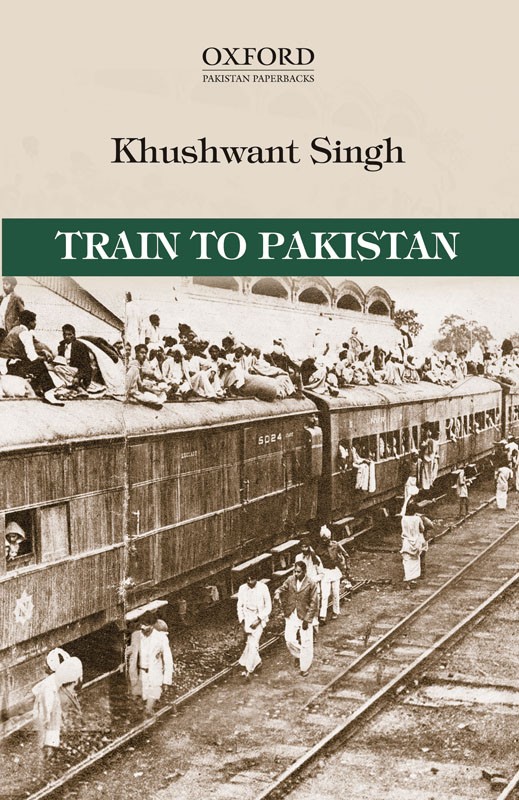
  • (Peer Reviewed) A Critical Analysis of Story Telling – Khushwant Singh’s  Train to Pakistan

    (Peer Reviewed) A Critical Analysis of Story Telling – Khushwant Singh’s Train to Pakistan

    E. Rengadevi M.A., M.Phil., B.Ed.,
    Asst.Prof. of English
    P.G. & Research Dept of English
    Sanghamam College of Arts & Science
    Annamangalam 604 210
    Mel Malaiyanur T.k

    *****

    Abstract

                Indian English Literature originated as a necessary outcome of the introduction of English education in India under colonial rule. In recent years, it has attracted widespread interest, both India and abroad. It is now recognized that Indian English Literature is not only part of the Commonwealth Literature, but also occupies a great significance in World Literature. Today, a number of Indian writers, in English, have contributed substantially to modern English Literature. Fiction, being the most powerful form of Literary expression today. Indian English fiction occupies its proper place in the field of Literature. This article analyzes the storytelling of Khushwant Singh’s ‘Train to Pakistan.’

    Khushwant Singh’s biggest attribute is that he speaks what he feels. He is honest to the extent that he offends even his friends and icons revered by people. He brought history to our doorsteps.

    Narrative Discourse

                “As an adjective, ‘narrative’ means ‘characterized by or relating to storytelling’. Thus, a narrative technique is the method of telling stories and narrative poetry is the class of poems (including ballads, epics, and verse romances) that tell stories, as distinct from dramatic and lyric poetry”. (Narrative: A Critical Linguistic Introduction, p.41)

    The narrative is a telling of some true or fictitious event or connected sequence of events, recounted by a narrator to narrate, although there may be more than one of each. A narrative will consist of a set of events (the story) recounted in a process of narration or discourse, in which the events are selected and arranged in particular order (the plot). The category of narratives includes both the shortest accounts of events and the longest historical or biographical works, diaries, travelogues, as well as novels, ballads, epics, short stories, and other fictional forms. Literally speaking, the narrative is a story and it can be conveyed through pictures, songs, poetry, speech, fiction, non–fiction as well. Narrative discourse is vastly an aesthetic enterprise. It is a binding vine of the narrative. A narrator detains the past, holds present and prepares the reader for the future. There has been much exaggeration in the narrative techniques since 1938 when Raja Rao’s ‘Kanthapura’ is published. It is perhaps the first most successful and influential novel by an Indian writer in English.

    Key Words: Mano Majra, Narrative, Punjab, Train to Pakistan.

    Train to Pakistan – Introduction

    Train to Pakistan has a fine blending of growth in space and movement in time. The novel grows out of a chronological sequence of time with a synthesis of reality and value. It expresses creatively as to how the movement of trains, which used to set a tone of the village, signaling time for action, rest and sleep, became a symbol of despair, darkness, and destruction. This technique of contrast is very suggestive. The novelist has recreated imaginatively the likes of Hukum Chand, the commissioner, reformist, Iqbal, criminals Juggat Singh and Malli gang, still visible in the Indian society. In moneylender Ram Lal’s murder case Jugga and Iqbal are put behind the bars, while the real culprit Malli is released after arrest. Is such a drama not enacted even today? Also, the lodging together of Jugga, the criminal, and Iqbal, the reformist, gives a peep into the police way of functioning then and even today.

    In his realistic depiction of the prevailing atmosphere of hatred and violence and distrust between the Hindus and the Muslims, Khushwant Singh narrative spares neither:

    “Mullahs roamed Punjab and the Frontier
    Province with boxes of human skulls said to be
    those of Muslims killed in Bihar”
    (Train to Pakistan, p.9)

    The Position of the Society

    The novelist has described three levels of Governmental strata. Commenting on this, V.A., Shahane in his book, Khushwant Singh, says:

    “Three levels of Governmental strata are depicted.
    Hukum Chand belongs to the upper level of the
    Punjab district administration; the sub-inspector of
    police comes from the middle level; constables
    belong to the lower level of this hierarchical,
    administrative structure. Hukum Chand is a type as
    well as an individual, a person as well as a
    bureaucrat, and, in various ways, an evolving
    character.”
    (Khushwant Singh, p.80)

    Khushwant Singh has beautifully portrayed the man’s multidimensional mind, especially in the case of Jugga, the criminal, in love with Nooran, the Muslim Mullah’s daughter. Jugga visits the Gurudwara and asks for the Guru’s blessings to prepare himself for the final sacrifice which he does make. This is also true in the case of Hukum Chand whose mind flies to Haseena, the dancing girl, heading for Pakistan with a hope that she would be safe. This ambivalence of mind has exquisitely been brought out by Singh in the novel. Shahane comments on the character of Juggat Singh and says:

    “One finds a “rare combination of the criminal and
    the lover, which is a baffling aspect of the realities
    and complexities of life. He embodies the
    ambivalence of moral values.”
    (Khushwant Singh, p.80)

    There were reports of Pakistani police helping and protecting Muslims who were attacking and killing Hindus. The atrocities inflicted on Hindus in Lahore have been described by the novelist through a police constable who reports:

    “…It was the Muslim police taking the side which made
    the difference in the riots. Hindu boys of Lahore
    would have given the Muslims a hell if it had not
    been for their police. They did a lot of ZULUM…
    their army is like that, too, Baluch soldiers have
    been shooting people whenever they were sure there
    was no chance of running into Sikh or Gurkha
    troops.”
    (Train to Pakistan, p.59)

    The novelist had maintained a balance in condemning atrocities on both sides. As a realist in his factual depiction of the violent scenes, he narrates the story of four Sikh Sardars on a killing spree in a jeep alongside the column of mile-long Muslim refugees on foot.

     “…without warning they opened fire with their sten guns, God alone knows how many they killed… .” (Train to Pakistan, p.61)

    Narrative Technique

    In a rare narrative technique, the novelist has depicted forces of division and unity, hate and love, anger and affection, revenge and sacrifice alternating in the novel. Shahane commenting on this aspect says:

    “Train to Pakistan presents rural Punjab with its
    religious and caste divisions, which result in
    alienation, alternating with forces of the union, which
    result in amity. Hate alternates with love; anger
    alternates with affection; the desire for revenge
    alternates with the impulse to sacrifice”
    (Khushwant Singh, p.78)

    Singh in this novel has also artistically explored the mind of the Sikh priest Meet Singh and the reformist Iqbal, who discuss the urgent need for stopping the communities on the Indian side from taking retaliatory actions by blowing the train heading for Pakistan with Muslim refugees from Mano Majra on the railway overbridge mid-river. Meet Singh is helpless and so is the reformist Iqbal as the voice of sanity had been stilled and drowned in the communal frenzy, provoked and ignited by arrival and disposal of trainloads of the slain bodies from across the borders. Both Meet Singh and Iqbal in the given situation find themselves incapable of any positive action and also find themselves out of place.

    Singh mixes Hindi words in his narration to reinforce the impact of his narrative. He has made typical usages bordering on bad English. Urdu-Hindi words such as Salaam, Kalyug, Kos, Nar Admi, Annas, Karmat etc. On the strength of the above, it may be said that in his narration of the story, Singh had followed humanistic and realistic tradition in the Indo-English Literature.

    Conclusion

    Khushwant Singh proves his own identity through his writings. He created most of the characters in his novel were real people when he met. His novels reveal about a lot of social problems during the partition of India-Pakistan. Singh emphasizes his narrative ability to the readers. The study of Singh’s novels has been a highly fascinated Endeavour resulted in making not a good man know really on endearing man to know. 

    Works Cited

    • Singh, Khushwant. Train to Pakistan, New Delhi: Orient Longman Pvt. Ltd., 2006, Print.
    • Shahane, V. A. Khushwant Singh, New Delhi: Twayne Publishers, 1972, Print.
    • Toolan, Michael J., Narrative: A Critical Linguistic Introduction, London: Rutledge, Second Edition, 1997, Print.

    ******************************************************************

    Peer Reviewer’s comments: 

    “Train to Pakistan” is the most well-known classic novel of the Indian author and journalist Khushwant Singh. This novel is a faithful record of how human disaster has taken place during the gruesome period of Indian partition in 1947.

    Khushwant Singh states, “I think it is a documentary novel of the partition, an extremely tragic event which hurt me very much. I had no animosity against either the Muslims or the Pakistanis, but I felt that I should do something to express that point of view.” (V. A. Shahane 352)

    As far as the author of this research article is concerned, she brought the main characters and important events of this novel into our attention lucidly. Some significant passages of the novel are highlighted in this article, which gives a realistic feeling of reading the original novel directly. These are appreciable aspects of this analysis.

    However, the narrative discourse and the narrative technique sections, keep repeating the same information over and over again which bring down the interest of reading this article. To improve this research article, unwanted repetitions should be avoided, grammar and typos should be checked as well.

    ******************************************************************


    Share
  • Samasam in Keralapaniniyam and Veerachozhiyam

    -Dr. Hepsy Rose Mary. A

    Leelathilakam, Malayala Bhasha viyakaranam  and Kerala paniniyam are notable Grammatical works of Malayalam Language.  Among these Keralapaniniyam is practiced well from the school to College in the State of Kerala.  In his introduction, A.R. Rajarajavarma mentions that Kerala Paniniyam mostly follows the Grammatical work of Paniniyam in Sanskrit.   Veerachoziyam a grammatical book in Tamil written after a thousand years of Tholkappiyam.  It is one of the notable works in the history of Tamil Grammar. This book was written for the Tamil Scholars to learn Sanskrit Grammar.  This study deals with the comparative study of samasam in Veerachozhiyam and Keralapaniniyam.

    Definition of Samasam

    Samasam is equalize as Tokai in Tamil Grammatical works.  Tolkappiyam does not describe the definition of compound words in his work.   But the term ‘tokai’ is chosen by him to denote compound. Keralapaniniyam and veerachozhiyam have references for this Grammatical category.  Tokai is combination of two or more words are joining together and absence of affixes in combined words- These concepts prevails in the Tamil Grammatical tradition.

    Tolkappiyam says in his work ‘Ella thokayum oru soll nadaya’  tol.sol 420,’ vettumai thokaye vettumai yiyala’  and ‘vinayin thokaye kaalathiyalum’ .  From these sutras it’s clear that tolkappiyar’s idea on tokai or compound words is the combination of words.

    Veerachozhiyam explains samasam as “Namangalin porutham porul narthokai’ that is a single word contains two or more words reveal one and the same meaning. When explains samasa the author of Kerala Panini depicts as ‘vibakthik kuri kudathe, pathayogam samasam’ ( k.P.181).   It means that compounds as the joining of words without the case marker.  It can be understood from this sutra samasa is the combination of nouns devoid of case markers.  So, it is the common opinion on samasam of all authors.

    Classification of Samasa

    Tolkappiyar divides the compound, in the Tamil language into six kinds.  They are ‘Vetumaithokai (the declension compound) ‘uvamaithokai’ (the compound of comparison, Vinaithokai (the verb compound), panpputhokai ‘(the qualitative compound) ‘ummaithokai’ (the conjunctival or conjunctional Compound) and ‘ anmozhithokai ( the metonymical compound).

    Veerachozhiyam illustrates as follows,

    Tarpurudan palanel kanmathaarayam thangkiya seer
    Narthuvikuthokai  naavaar thuvanthuvam nalla theyvac
    Sorpayan mantharkalal avviyapavam ethennuthonmai
    Karpakamappakarnthaat thokai aarum kanankuzaye’              (v.c 45)

    That is,

    1. Tharpuruda samasam –           declension compound
    2. Palanel samasam ( bahuviri)    – metonymical compound (bahuvrihi is called anmozithokai in Tamil.  P. Meenakshi Sundaram explains the meaning of bahuvirihi, he says that bahu means ‘Much’ virihi means rice; both together denote ‘a person with much rice. Viracoliyam adopt this meaning and named bahuvirihi samasa as palanel samasa.)
    3. Kanmataaraya samaasa –            qualitative compound (the first word is a qualitative or attributive word)
    4. Dvigu samaasam –             ennodupunartha enthokai (dvigu samasa are those compounds which may be called numerical compound where there is a number word and also a noun.  Pirayoka vivekam explains this in Tamil as ennotu porul punarnta entokai.)
    5. Dvandva samaasam –           conjunctional Compound (dvandva samasa is a compound of two or more words in coordinate construction but where the conjuctive particles um / and is absent. It is called ummaithokai in Tamil)
    6. Avviyabva samaasam –     conjunctional Compound (avyayibhava samasa is a compound where a noun is either preceded or followed by indeclinable particle. Pirayoka vivekam explains that in Tamil as follows Munnum pinnum moliyatuttu varum itaicol tokai)

    The verb compound and the compound of comparison are not seen in Sanskrit language.  The avyabava samasa is absent in Tamil language.  The Tamil grammarians include avyabava samasa into conjunctional Compound and tuviku samasa into qualitative compound.   Subramaniya Deetshidar the author of prayoigaviveka opined that   the compound of comparison has been included in qualitative compound.

    The table follows clearly shows the samasa in Tolkappiyam, veerachozhiyam, and Keralapaniniyam.

    Sl. No  

    Tolkappiyam


    Veerachoziyam


    Keralapaniniyam

    1. vettumaithokai Tarpurudan Tarpurudan
    2. Anmozithokai Palanel/ bahuvirhi bahuvirhi
    3 ummaiththokai Tuvanthuvan Tuvanthuvan
    4 panputhokai Kanmathaarayam
    5 uvamaththokai Thuviku
    6 vinaithokai avviyabavam

    The significance of meaning in samasa

    Tolkappiyam explains that the above six kinds of compounds significance of meaning lies in four different was as follows.

    1. Meaning lies on the prior words
    2. Meaning lies on the later words
    3. Meaning lies on the Prior words and later words
    4. Meaning lies outside the compound word

    Viracoliyam does not have its own opinion on this.  But it follows the system above mentioned by Tolkappiyam.

    In Malayalam Keralapaniniyam follows only three types, taking the importance of component parts into consideration.  They are,

    1. Tatpurusan – importance given for the later words

    Eg: talavedana- tala _ vedana

    1. Bahuvirhi – importance given for word standing outside the compounded words.

    Eg. Tamarakkannan

    1. Dvantavan – some importance given to all words

    Eg. Achanammamar

    Meaning lies on the prior words are not explains by Keralapaniniyam.

    Structure of samasa

    The Structure of Samasa are not mentioned in Tolkappiyam and Veerachozhiyam. But it is described by the commemntators. The author of Kerala Paninayam describes it in detail. He denotes the structure with the words in samasam. This reveals the peculiar ability of author of Kerala Paniniam

    1. With Infinitive Verb+Verb –            Rekshichu Kolka
    2. Noun + Verb                      –           Nila Nilkuka
    3. Adjectival Participle +Noun –            Pettamma
    4. Noun – Adjectival Participle + Noun Thenolum Vani
    5. Noun+Noun                        –           Porkudam , Ramanattam
    6. Adjective + Noun –           Vensamaram, Sembaruthi
    7. Tatpirusa samasa – declensional Compound

    When a compound word is devoid of the case marker  and the elaborated word meaning is hidden,  it is called vettumai  thokai.  When the case marker can be seen clearly in a compound and when it is hidden also will expressed the same meaning if the meaning differs in two cases does not mean as a compound word.

    As discussed vettumai thokai is the combined form of a word which has the hidden case markers inside, the meaning of the line combined word form must be equal to that of the unhidden case markers.

    Structure of tatpurusa samasa

    The Commentators Described that the structure of Vettumai Thokai is Noun + Noun. But in veerachozhiyam and Kerala Paniniyam, the difference in the above said structure can be seen.

    Eg. Nilamkadanthaan (nilathai kadanthaan)  non + verb

    Classification of tatpurusa

    Tolkappiyam does not classified declension compound into further categories.  But it is clear from his examples that declension compound has six categories.  Viracoliyam classifies tatpurusa samasa into eight different kinds as follows,

    ‘eluvai muthalodu vettumaiyOdum ezum thadaiyil
    Vazhuvatha nanjodum ettaam tarpurudan    –            v.c 46

    The author of viracoliyam and its commentators does not use any Sanskrit technical terminology for the classifications of its tatpurusa samasa. (declensional compound.) But Kerala paniniyam uses all kinds of Sanskrit terminology.

    The table follows clearly the the classification of tatpurusa  samasa in veerachozhiyam and Keralapaniniyam are arranged side by side along with examples.

    Sl. No  Viracoliyam Keralapaniniyam
    1  Eluvia vettumai tatpurusan

    Eg. Markalitinkal

    1.     Nirdesika – fedam avuka

    2.     Karrmadharayan- Eg. Konna thennku-


    2 Irandam vettumai  tatpurusa

    Eg: kutitanki, malaitanki

    Pratigraahiha –  Eg. Paakku vetti
    3 Muntam vettumai tatpurusa

    Eg. Taai naalvar

    Samyojika – Eg. panthokkum
    4 Nankam vettumai tatpusa

    Eg. Malzaikudai

    Uddesika- Eg. homapura
    5 aintam vettumai tatpusa

    Eg:aattuppaal


    Prajojika – Eg. Mangakari
    6 Aaraam  vettumai tatpusa

    Eg: kottan mahan


    Sambandika – Eg.marappodi
    7 Elam  vettumai tatpusa

    UUrkuruvi


    Adarika- Eg. toolvala
    8 Nannju  tatpurusa

    Eg. atharma

     Ninnu – Nadu ninngi
    9 – Kurichu – aanappranthu

    The eighth variety of tatpurusa is called nannju tatpurusa.  As started in Viracoliyam ( 46) it occurs only in Sanskrit where a negative particle na occurs as a before the consonant and as an before vowels

    Eg. Na+ asvam-       = an + asvam – anasva- one which is other than the horse.

    Na+ darma – = a + darma – adarma

    In Veerachozhiyam and Kerala Paninaim Instead of the structure Noun + Noun; Noun + Verb is also seen.

    Eg. Malai thaangki, naadu ningi

    Bahuvirihi samasa Metonymical

    Acording to Tolkappiyar  anmzhithokai or the metonymical compound is formed of the qualitative, conjunctival r declension  compound.  The member of the anmolitokai may stand to each other to any of the three relations viz qualifier non relation, conjunctive relation or case relation.

    Eg. Vellaithai vanthal – qualifier noun

    Takaranazal pusinaal – takaramum nazalum enaitha santhu – conjuctive

    Pottodi  vanthal – case relation

    Heralapanniiniyam says that ‘A visesana is compounded with visesya to show the among ‘one whohas is a bahiviri samasa. Eg: naan muhan

    Types of bahuvirihi samasa

    Keralapaniniyam following Sanskrit grammatical  works  and divides bahuvrihi samasa  into three divisions.

    1. Upamagarbha: That with a middle word indicating sameness is upamaafarbham

    Eg.      Kaanjaneermizhi – a lady whose eye is like a lotus.

    Here the word denoting similarity is mentioned.

    1. Upamaluptham – where the word showing similarity.

    Eg. Matimuhi  –  one whose face is like a moon

    1. Upamanaluptham – That in which the modifier ( upamanam) is lost is

    Eg. Pedakanni – a lady whose eyes are like those of  a deer.

    The above said three division comes under tholkappiyars ummaithogai the author of keeralapaniniyam describes these with the Sanskrit terminologies.

    Veerachozhiyam states the kind of bahuvirihi samasa as follows,

    Irumozhi panmozhi pinmozhi ennodirumozhi enn
    Maruvum vithiyaarilakkana mattai sahamunmozhi
    Paravun thikantharalathodai ennap palanel toka
    Viriyumorezavai vettu mozhipporl melliyale. Vc 40

    Anmozhithogai is known as palanelhogai by puthamithiranar perunthevanar, the commentator of virachozhiyam  called this as bahuvirr samasa.   Viracozhiyam divides bahuvirihi samasa in seven kinds.

    1. Irumolithokai: Compound with two words.

    Eg. Kaluthadai – one who wears a cloth around his neck.

    1. Panmozithokai: a compound having more than two words.

    Eg.  Mayiladuthurai- a place name

    1. Pinmozhi entokai: A compound where the second word is a number.

    Eg. Inna narpathu, purananuuru

    1. Irumozhi entokai: both the words denote a number.

    Eg. Aintaru

    1. Vithiyariklakkanatokai: This does not occur except in Sanskrit.

    Eg. Desadesi: when a fight spreads from country to country it is called desadesi

    Dandadandi- when a fight starts with striking with clubs it is called dandadandi.

    1. Cakamunmolithokai: saneethi were saha become

    Sa + neethi (nithiyodu kuudi varupavan)

    1. Tikantharalat tokai

    Direction in between two directions given by the two members of a compound.

    Eg. Tenkilakku, thenmerukku.

    The table follows clearly shows the classification of bahuvirihia  samasa in veerachozhiyam and Keralapaniniyam are arranged side by side along with examples.

    Sl. No Veeracholiyum                                              Kerala paniniyam
    1 Irumozhithogai upamakapam
    2 Panmozhithokai upamalupatham


    3 Pinmozhi entokai upamanalupatham
    4 Irumozhienthokai


    5 Vithiyariklakkanatoka
    6 Cakamunmolithokai
    7 Tikantharalat tokai

     Dvandva samasam

    Dvandva samasa is  ummaithokai in Tamil.  Ummaittokai or the conjunctival compound is that in which two nouns many nouns, nouns of measurement, nouns denoting countable objects, nouns of weights or numerals are combined together.  It is evident from tolkappiyam that only the conjenctival compounds may be formed of more than two words. Eg. Kapila paranar, puliverkondai.  Keralapaniniyam says that, words of equal importance are combined omitting the coplative conjunction.

    Classification of duvandva samasa

    Tholkappiyar divides it into six types ummaithokai in tamil.  They are,

    1. Irupeyar ummai thogai
    2. Palpeyar ummai thogai
    3. Alavupeyar umai thogai
    4. Enniyar peyar ummai thogai
    5. Nirai peyar ummai thogai
    6. Enpeyar ummai thogai

    Veeracholiyam describes it based on tholkappiyam.

    Ex: Irupeyar ummai thogai –Payaru thovarai

    Palpeyar ummai thogai – sulabumikae thippu

    Alavupeyar umai thogai – thooni pathoku

    Enniyar peyar ummai thogai -muppathumoovar

    Nirai peyar ummai thogai – kolanjakal

    Enpeyar ummai thogai- pathinmotu,aayinathu

    In Sanskrit, it is known as danduva samasam and it is of two kinds

    1.itharethara dvanva

    2.samakaram dvandva

    Itharetharthokai –   It is the dvandva which ends in the human plural.  The examples for two words are kapila paranar, cera cola pandiyar is the examples for more than two words.

    Ex: kapilaparanar

    Cholapandiyar

    Samakaraha dvandva —  samahara dvandva is in Tamil  iray vanta akkirinai ummaittokai. The dvandva which acts as neuter singular.  This may consist of two or more words.

    Eg. Aram poruk, uvappathinanku

    Kerala panniniyam describes this as word of equal importance are combined omitting the compilative conjunction. The dvandva compounds of numerals show the meaning.

                Ex:  accanammamar, Ancharu, Pathu pathinanchi, kaikalu

    Conclusion

    When we compare Veeracholiyam and Keralapaniniyam generally we found these two grammars follow paniniyam.  Keralapaniniyam not talk about the avyabhava samasam and duvihusamasam.  Even though Veeracholiyam and Keralapaniniyam follows Sanskrit moduels. Among these Keralapaniniyam has given more importance to Malayalam Samasa in many ways.

    Bibliography

    • Eluthachan .K. N The History of the Grammatical Theories in Malayalam, DLA, Trivandrum.
    • T. V(Editor) Veerachozhiyam, Nachiyar Publication, Trichy, 2005.
    • M, Treatment of Morphology in Tolkappiyam , DLA, Trivandrum, 1973.
    • Meenakshi Sundaram. T.P – Foreign Models in Tamil Grammar – D.L.A, 1974.
    • C. J- KeralaPaaniniyam, ISDL, Trivandrum
    • Subramania Thedshithar – Prayokavivekam, Madras the S.I.S.S.W Publishing society, Tirunelveli ltd, 1973.

    *****

    The writer is an Assistant Professor
    Department of Tamil, University of Kerala


    Share